




How many faces, edges & vertices are there in the following figures:
A) Cylinder
B) Sphere
Answer
 Verified
609.3k+ views
Hint:
Here, we will use the concept of geometry. Firstly we will draw the diagram of the given shape. Then we will analyze the given shape and by using the basic definition of the faces, edges and vertices, we will calculate the number of faces, edges and vertices of that shape.
Complete step by step solution:
a. The shape is a cylinder.
Firstly, we will draw the given shape

We know that a face is a flat surface in a shape, edge is the line segment of a shape and vertex is a corner in a shape. Therefore by using this basic definition we calculate the number of faces, edges and vertices. Therefore, we get
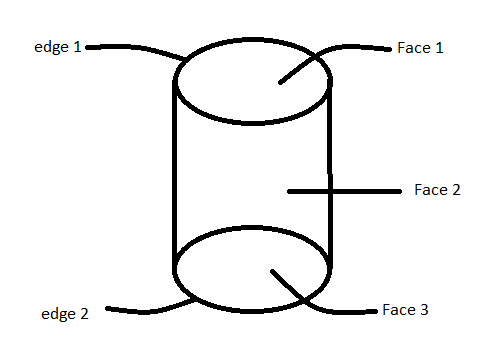
Number of faces of a cylinder is 3.
Number of edges of a cylinder is 2.
Number of vertices of a cylinder is 0.
b. Given shape is a sphere. Sphere is a three dimensional shape.
Firstly, we will draw the given shape
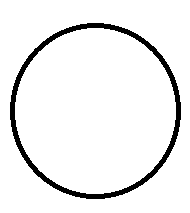
We know that a face is a flat surface in a shape, an edge is the line segment of a shape and vertex is a corner in a shape. Therefore by using this basic definition we calculate the number of faces, edges and vertices. Therefore, we get
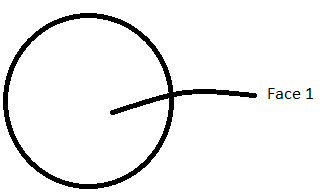
Number of faces of a sphere is 1.
Number of edges of a sphere is 0.
Number of vertices of a sphere is 0.
Note:
Geometry is the branch of mathematics that deals with points, lines and shapes. We should know the diagrams of the basic shapes.
There are some basic definitions which we need to know:
When two or more lines cross each other in a plane, they are called intersecting lines and the point where these lines intersect is called a Point of Intersection or vertex.
A triangle is a polygon with three edges or sides and three vertices. Side is one of the straight line segments which are used to construct or draw a polygon.
Here, we will use the concept of geometry. Firstly we will draw the diagram of the given shape. Then we will analyze the given shape and by using the basic definition of the faces, edges and vertices, we will calculate the number of faces, edges and vertices of that shape.
Complete step by step solution:
a. The shape is a cylinder.
Firstly, we will draw the given shape
We know that a face is a flat surface in a shape, edge is the line segment of a shape and vertex is a corner in a shape. Therefore by using this basic definition we calculate the number of faces, edges and vertices. Therefore, we get
Number of faces of a cylinder is 3.
Number of edges of a cylinder is 2.
Number of vertices of a cylinder is 0.
b. Given shape is a sphere. Sphere is a three dimensional shape.
Firstly, we will draw the given shape
We know that a face is a flat surface in a shape, an edge is the line segment of a shape and vertex is a corner in a shape. Therefore by using this basic definition we calculate the number of faces, edges and vertices. Therefore, we get
Number of faces of a sphere is 1.
Number of edges of a sphere is 0.
Number of vertices of a sphere is 0.
Note:
Geometry is the branch of mathematics that deals with points, lines and shapes. We should know the diagrams of the basic shapes.
There are some basic definitions which we need to know:
When two or more lines cross each other in a plane, they are called intersecting lines and the point where these lines intersect is called a Point of Intersection or vertex.
A triangle is a polygon with three edges or sides and three vertices. Side is one of the straight line segments which are used to construct or draw a polygon.
Recently Updated Pages
Master Class 11 English: Engaging Questions & Answers for Success

Master Class 11 Social Science: Engaging Questions & Answers for Success
Master Class 11 Maths: Engaging Questions & Answers for Success
Master Class 11 Biology: Engaging Questions & Answers for Success
Master Class 11 Physics: Engaging Questions & Answers for Success
Master Class 11 Chemistry: Engaging Questions & Answers for Success
Trending doubts