




Explain the mechanism of ‘sex determination’ in birds. How does it differ from that of the human being?
Answer
 Verified
618k+ views
Hint: The biological system involved in defining the sexual characteristics of an individual is called sex determination. In birds, females are heterogametic, whereas in human beings’ males are heterogametic.
Complete answer:
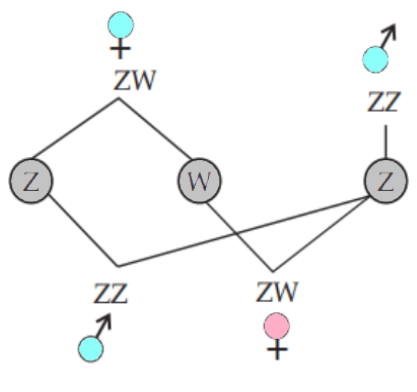
Birds show the ZZ-ZW system of sex determination. In this system, the female is heterogametic (ZW), and the male is homogametic (ZZ). During gametogenesis, half of the eggs have a Z chromosome and the other half will have a W chromosome. For males, all sperm contains a single Z chromosome. On fertilization of Z egg with Z sperm, a male with ZZ genotype is produced. When W egg fertilizes with Z sperm, a female with ZW genotype is produced. Snakes, butterflies, some amphibians, and some fishes also exhibit this type of sex determination.
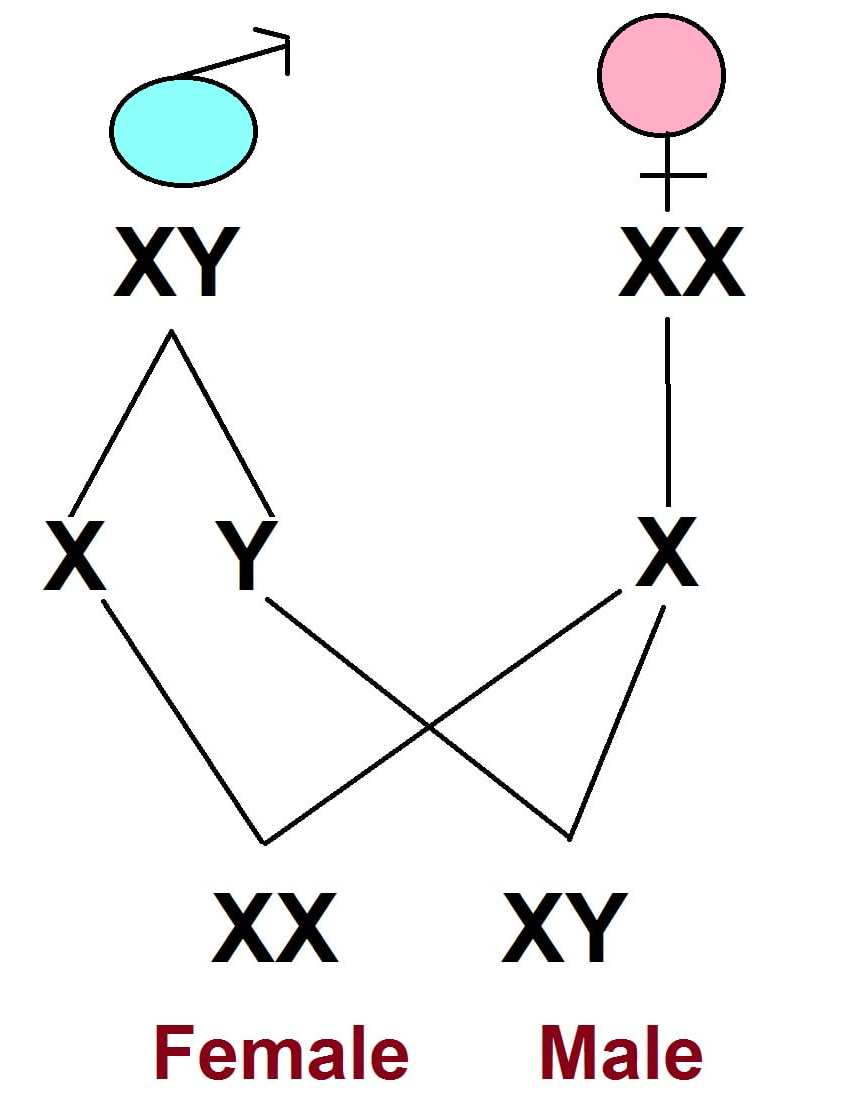
In human beings, the cells of males and females have the same number of chromosomes. In this type of sex-determination system, the male is the heterogametic sex (XY) and the female is homogametic (XX). During gametogenesis, half of the sperms have an X chromosome and the other half will have a Y chromosome. For females, all eggs contain a single X chromosome. The XX-XY sex-determining system is exhibited by many organisms, such as some plants, insects, and reptiles, and all mammals. Other organisms have variations of the XX-XY system of sex determination, including the duck-billed platypus in which females have five pairs of X chromosomes and males have five pairs of X and Y chromosomes.
Note:
- The sex chromosomes in ZZ-ZW system are called Z and W to prevent confusion with the XX-XY system,
- The Y chromosome is acrocentric in human beings and most organisms. The Y shaped is commonly assumed.
Complete answer:
Birds show the ZZ-ZW system of sex determination. In this system, the female is heterogametic (ZW), and the male is homogametic (ZZ). During gametogenesis, half of the eggs have a Z chromosome and the other half will have a W chromosome. For males, all sperm contains a single Z chromosome. On fertilization of Z egg with Z sperm, a male with ZZ genotype is produced. When W egg fertilizes with Z sperm, a female with ZW genotype is produced. Snakes, butterflies, some amphibians, and some fishes also exhibit this type of sex determination.
In human beings, the cells of males and females have the same number of chromosomes. In this type of sex-determination system, the male is the heterogametic sex (XY) and the female is homogametic (XX). During gametogenesis, half of the sperms have an X chromosome and the other half will have a Y chromosome. For females, all eggs contain a single X chromosome. The XX-XY sex-determining system is exhibited by many organisms, such as some plants, insects, and reptiles, and all mammals. Other organisms have variations of the XX-XY system of sex determination, including the duck-billed platypus in which females have five pairs of X chromosomes and males have five pairs of X and Y chromosomes.
Note:
- The sex chromosomes in ZZ-ZW system are called Z and W to prevent confusion with the XX-XY system,
- The Y chromosome is acrocentric in human beings and most organisms. The Y shaped is commonly assumed.
Recently Updated Pages
Master Class 12 Business Studies: Engaging Questions & Answers for Success

Master Class 12 Chemistry: Engaging Questions & Answers for Success
Master Class 12 Biology: Engaging Questions & Answers for Success
Class 12 Question and Answer - Your Ultimate Solutions Guide
Master Class 11 English: Engaging Questions & Answers for Success
Master Class 11 Social Science: Engaging Questions & Answers for Success
Trending doubts
Which are the Top 10 Largest Countries of the World?
Draw a labelled sketch of the human eye class 12 physics CBSE
The end of compass needle which points towards north class 12 physics CBSE
Differentiate between homogeneous and heterogeneous class 12 chemistry CBSE
In order to find out the different types of gametes class 12 biology NEET_UG
Why is the cell called the structural and functional class 12 biology CBSE