




Earthworms are hermaphrodite and reproduce primarily by
A. Self-fertilization
B. Cross-fertilization
C. Asexually
D. All of the above
Answer
 Verified
579.9k+ views
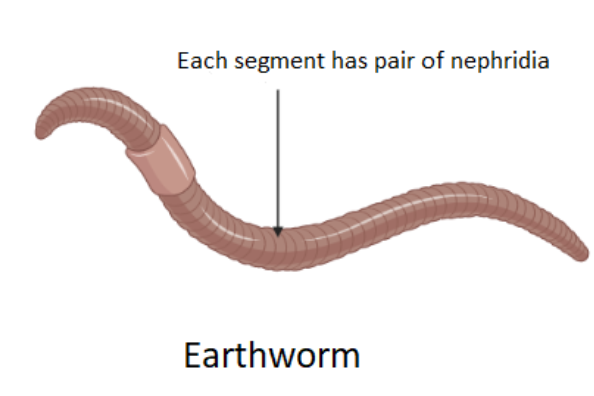
Hint: An earthworm is an invertebrate which belongs to the order Opisthopora. In reproductive biology, a hermaphrodite is an organism that produces gametes usually associated with both the male and female sexes possessing full or partial reproductive organs.
Complete answer: The fertilization of an ovum from one person with another's spermatozoa is allogamy or cross-fertilization. Autogamy, by contrast, is the term used for self-fertilization. In humans, an instance of allogamy is the fertilization event. In hermaphroditic species, self-fertilization occurs when the two gametes fuse in fertilization come from the same entity. In plants and certain protozoa, cross-fertilization is common. Earthworms are hermaphrodites, but due to their relative male and female genital aperture location, they do not fertilize their own eggs and are protandrous (that is, male sex mature earlier than female gametes). So, instead of self-fertilization, cross-fertilization takes place. Male and female gametes (sex cells) are fused from various individuals of the same species. In dioecious plants (those with male and female organs on different individuals) and in all animal species in which separate male and female individuals exist, cross-fertilization must occur. Many species have well-developed mechanisms that ensure cross-fertilization, even among hermaphrodites, i.e., those organisms in which the same individual produces both sperm and eggs. In addition, many of the hermaphroditic species that are capable of self-fertilization and also have cross-fertilization capabilities.
So, option B is the correct option.
Note: In animals, methods of cross-fertilization are similarly diverse. The males and females each shed their sex cells into the water and external fertilization occurs among most species that breed in aquatic environments. There is also internal fertilization between certain fishes and other aquatic breeders.
Complete answer: The fertilization of an ovum from one person with another's spermatozoa is allogamy or cross-fertilization. Autogamy, by contrast, is the term used for self-fertilization. In humans, an instance of allogamy is the fertilization event. In hermaphroditic species, self-fertilization occurs when the two gametes fuse in fertilization come from the same entity. In plants and certain protozoa, cross-fertilization is common. Earthworms are hermaphrodites, but due to their relative male and female genital aperture location, they do not fertilize their own eggs and are protandrous (that is, male sex mature earlier than female gametes). So, instead of self-fertilization, cross-fertilization takes place. Male and female gametes (sex cells) are fused from various individuals of the same species. In dioecious plants (those with male and female organs on different individuals) and in all animal species in which separate male and female individuals exist, cross-fertilization must occur. Many species have well-developed mechanisms that ensure cross-fertilization, even among hermaphrodites, i.e., those organisms in which the same individual produces both sperm and eggs. In addition, many of the hermaphroditic species that are capable of self-fertilization and also have cross-fertilization capabilities.
So, option B is the correct option.
Note: In animals, methods of cross-fertilization are similarly diverse. The males and females each shed their sex cells into the water and external fertilization occurs among most species that breed in aquatic environments. There is also internal fertilization between certain fishes and other aquatic breeders.
Recently Updated Pages
Master Class 12 Business Studies: Engaging Questions & Answers for Success

Master Class 12 Chemistry: Engaging Questions & Answers for Success
Master Class 12 Biology: Engaging Questions & Answers for Success
Class 12 Question and Answer - Your Ultimate Solutions Guide
Master Class 11 English: Engaging Questions & Answers for Success
Master Class 11 Maths: Engaging Questions & Answers for Success
Trending doubts
Which is more stable and why class 12 chemistry CBSE
Which are the Top 10 Largest Countries of the World?
Draw a labelled sketch of the human eye class 12 physics CBSE
Differentiate between homogeneous and heterogeneous class 12 chemistry CBSE
What are the major means of transport Explain each class 12 social science CBSE
Sulphuric acid is known as the king of acids State class 12 chemistry CBSE