




Draw a plot showing the variation of (i) inductive reactance and (ii) capacitive reactance with the frequency of Ac source.
Answer
 Verified
610.5k+ views
Hint: When a capacitor or inductor gets connected with an AC source, due to change in the input AC voltages, capacitor and inductor develops a reactance. This reactance of capacitor and inductor will be dependent on frequency of AC source. If you take a resistance value of a resistor real, resistance of capacitors or inductors are purely imaginary.
Complete step by step answer:
We are assuming that voltage of the source is \[V={{V}_{0}}\sin \omega t\], where \[{{V}_{0}}\]is amplitude of the voltage and \[\omega =2\pi f\] is angular frequency and f is frequency of the AC source. Now for a pure capacitor with capacitance C, have impedance
Z=j/\[\omega \]
C=j/\[2\pi fC\], where \[{{j}^{2}}=-1\] ,
which means it is purely imaginary. And for a pure inductor with inductance L, have impedance Z=j\[\omega \]
L =j\[2\pi fL\] which also means it is purely imaginary. We can represent it as amplitude with a phase. The reactance is the amplitude part of the impedance for both cases.
Now, if we plot both inductor reactance and capacitor reactance with respect to frequency of AC voltage source, we will get,
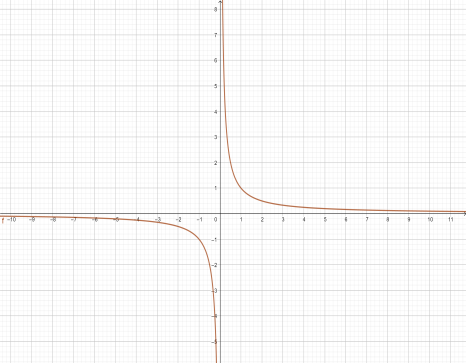
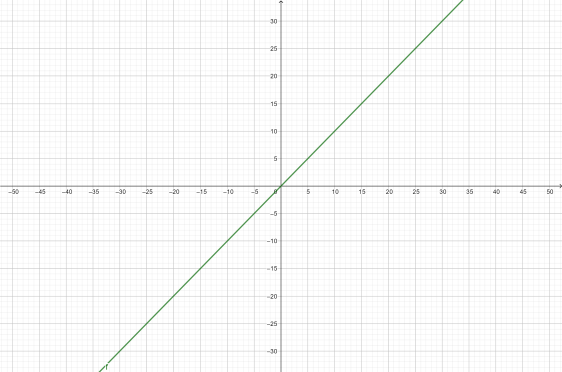
Fig-1: Capacitor reactance Fig-2: Inductor reactance
For the case of capacitor and inductor reactance, the slope of the curve is constant.
Note:
The current of the system will always be lagging to its voltage because of the phase of capacitor reactance and will always be leading to its voltage because of the inductor reactance. The phase difference will be\[\dfrac{\Pi }{2}\]in both cases. In most of the circuit with real resistors, the power will dissipate by heat energy. In some cases, it may be as radiation energy.
Complete step by step answer:
We are assuming that voltage of the source is \[V={{V}_{0}}\sin \omega t\], where \[{{V}_{0}}\]is amplitude of the voltage and \[\omega =2\pi f\] is angular frequency and f is frequency of the AC source. Now for a pure capacitor with capacitance C, have impedance
Z=j/\[\omega \]
C=j/\[2\pi fC\], where \[{{j}^{2}}=-1\] ,
which means it is purely imaginary. And for a pure inductor with inductance L, have impedance Z=j\[\omega \]
L =j\[2\pi fL\] which also means it is purely imaginary. We can represent it as amplitude with a phase. The reactance is the amplitude part of the impedance for both cases.
Now, if we plot both inductor reactance and capacitor reactance with respect to frequency of AC voltage source, we will get,
Fig-1: Capacitor reactance Fig-2: Inductor reactance
For the case of capacitor and inductor reactance, the slope of the curve is constant.
Note:
The current of the system will always be lagging to its voltage because of the phase of capacitor reactance and will always be leading to its voltage because of the inductor reactance. The phase difference will be\[\dfrac{\Pi }{2}\]in both cases. In most of the circuit with real resistors, the power will dissipate by heat energy. In some cases, it may be as radiation energy.
Recently Updated Pages
Master Class 12 Business Studies: Engaging Questions & Answers for Success

Master Class 12 Biology: Engaging Questions & Answers for Success
Master Class 12 Chemistry: Engaging Questions & Answers for Success
Class 12 Question and Answer - Your Ultimate Solutions Guide
Master Class 11 Social Science: Engaging Questions & Answers for Success
Master Class 11 English: Engaging Questions & Answers for Success
Trending doubts
Which is more stable and why class 12 chemistry CBSE
Which are the Top 10 Largest Countries of the World?
Draw a labelled sketch of the human eye class 12 physics CBSE
Differentiate between homogeneous and heterogeneous class 12 chemistry CBSE
What are the major means of transport Explain each class 12 social science CBSE
Sulphuric acid is known as the king of acids State class 12 chemistry CBSE