




Draw a diagram of the microscopic structure of human sperm. Label the following parts in it and write their functions: (a) Acrosome (b) Nucleus (c) Middle piece.
Answer
 Verified
580.8k+ views
Hint: Sperm is a tadpole-like structure with the presence of a single flagella known as the tail of sperm and it is covered with plasma membrane all around its surface. A sperm is divided into four parts: head, neck, middle piece and tail, where the head part consists of a nucleus with chromosomal material.
Complete answer:
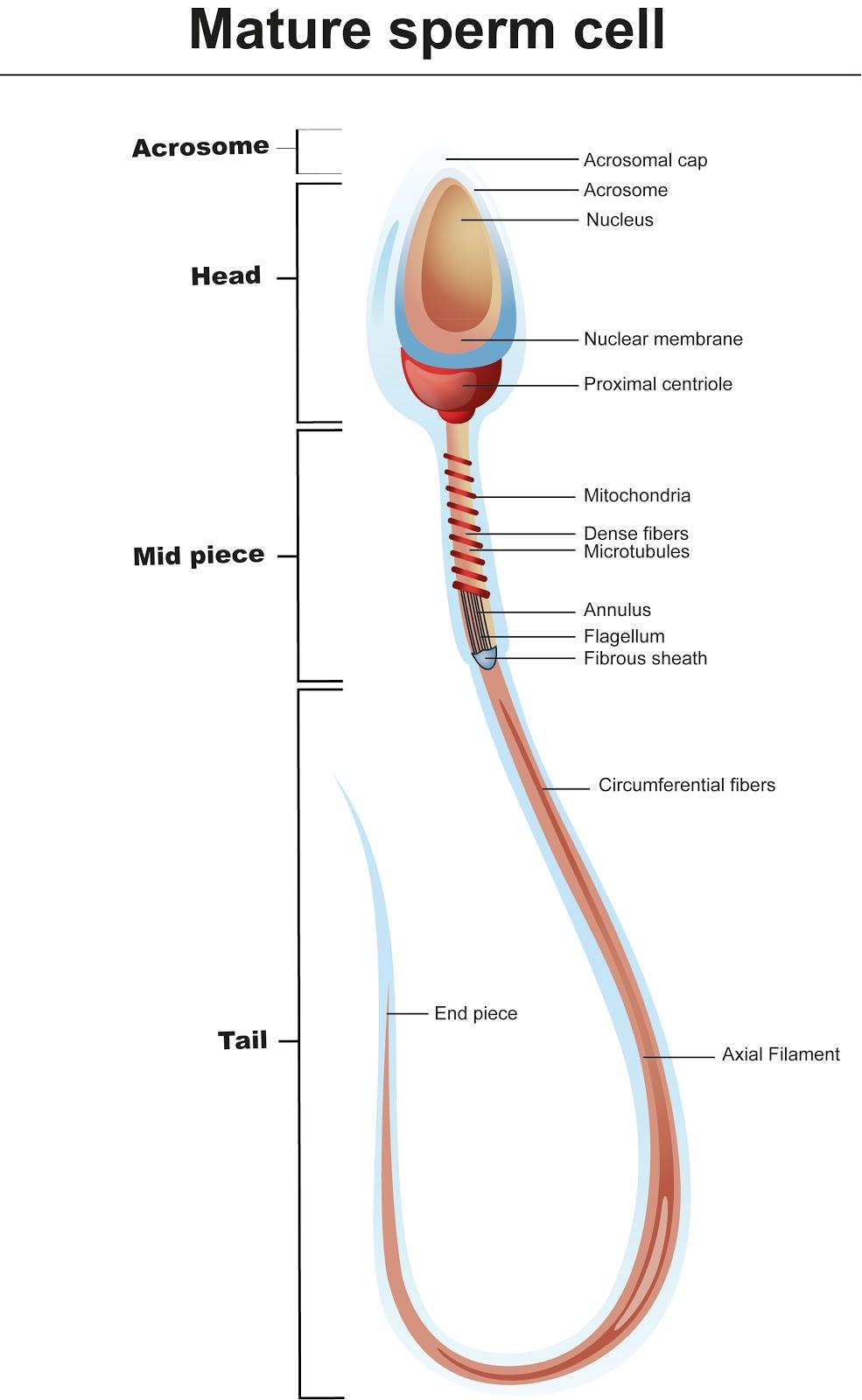
A sperm is a tadpole-like uniflagellate, which is covered with plasma membrane all around its surface. A sperm has mainly four parts like head, neck, middle piece and tail.
-Acrosome is present anterior to the head part of sperm which covers around two-third part of the head surface. It is also called a cap-like acrosome. It consists of enzymes like hyaluronidase, corona penetrating enzyme, acrosin and zona lysin and these enzymes are collectively known as sperm lysin. Enzyme acrosin helps in gamete fusion and zona pellucida penetration which enable the entry of sperm inside the ovum by breaking the thick zona pellucida membrane and fusion of both plasma membranes which results in fertilisation.
-Nucleus is present inside the headpiece of sperm with less dense surface known as nuclear vacuoles. It is haploid with 23 chromosomes which after fertilization with ovum form diploid zygote.
- The middle piece of sperm is a long cylindrical structure which is 5-7 micrometre in length and about 1 micrometre in diameter. It consists of axial filaments of microtubules which are covered by a mitochondrial spiral sheath. This mitochondrial sheath helps in providing energy for sperm swimming toward the ovum. It also resists the death of sperm cells.
Note:
The function of acrosome is similar to lysosome as both consist of lysosomal enzyme hyaluronidase and acrosin. The acrosome is derived from the Golgi complex of spermatid whereas lysosome is derived from the Golgi complex of a normal cell.
In teleost fish acrosomes are absent and fertilisation takes place by the entry of sperm through the micropylar region of the egg.
Complete answer:
A sperm is a tadpole-like uniflagellate, which is covered with plasma membrane all around its surface. A sperm has mainly four parts like head, neck, middle piece and tail.
-Acrosome is present anterior to the head part of sperm which covers around two-third part of the head surface. It is also called a cap-like acrosome. It consists of enzymes like hyaluronidase, corona penetrating enzyme, acrosin and zona lysin and these enzymes are collectively known as sperm lysin. Enzyme acrosin helps in gamete fusion and zona pellucida penetration which enable the entry of sperm inside the ovum by breaking the thick zona pellucida membrane and fusion of both plasma membranes which results in fertilisation.
-Nucleus is present inside the headpiece of sperm with less dense surface known as nuclear vacuoles. It is haploid with 23 chromosomes which after fertilization with ovum form diploid zygote.
- The middle piece of sperm is a long cylindrical structure which is 5-7 micrometre in length and about 1 micrometre in diameter. It consists of axial filaments of microtubules which are covered by a mitochondrial spiral sheath. This mitochondrial sheath helps in providing energy for sperm swimming toward the ovum. It also resists the death of sperm cells.
Note:
The function of acrosome is similar to lysosome as both consist of lysosomal enzyme hyaluronidase and acrosin. The acrosome is derived from the Golgi complex of spermatid whereas lysosome is derived from the Golgi complex of a normal cell.
In teleost fish acrosomes are absent and fertilisation takes place by the entry of sperm through the micropylar region of the egg.
Recently Updated Pages
Master Class 12 Business Studies: Engaging Questions & Answers for Success

Master Class 12 Chemistry: Engaging Questions & Answers for Success
Master Class 12 Biology: Engaging Questions & Answers for Success
Class 12 Question and Answer - Your Ultimate Solutions Guide
Master Class 11 English: Engaging Questions & Answers for Success
Master Class 11 Social Science: Engaging Questions & Answers for Success
Trending doubts
Which are the Top 10 Largest Countries of the World?
Draw a labelled sketch of the human eye class 12 physics CBSE
Differentiate between homogeneous and heterogeneous class 12 chemistry CBSE
Differentiate between Pyramid of energy and pyramid class 12 biology CBSE
Why is the cell called the structural and functional class 12 biology CBSE
Draw the diagram of the pyramid of energy Explain In class 12 biology CBSE