




Define excretion and Defecation.
Answer
 Verified
658.8k+ views
Hint: Removal of wastes is done in these processes but both are eliminating different kinds of waste products. These two processes are part of a different system of our body.
Complete answer:
It is the elimination of metabolic waste products from the animal body to regulate the composition of body fluids and tissues. It is a part of the excretory system.
Defecation: It is the removal of wastes and undigested food, collectively called faeces through the anus. It is a part of the digestive system.
Additional Information: -The urinary tract consists of the kidneys, ureters, bladder and urethra. Your kidneys filter your blood, creating urine, which travels through the ureters to the bladder, where it is stored. When the appropriate time comes, the muscles of your bladder contract and urine exits your body through your urethra. Urinary disorders include any diseases, disorders or conditions that affect your kidneys, ureters, bladder or urethra, or that affect their function.
-Constipation is defined as small, hard, difficult, or infrequent stools. Constipation may be caused by: Inadequate "roughage" or fibre in the diet, not drinking enough fluids, Poor habits, especially delaying using the toilet, movement problems in the large bowel, including slow or uncoordinated movement. A person who is constipated may strain during a bowel movement or just pass a very hard stool.
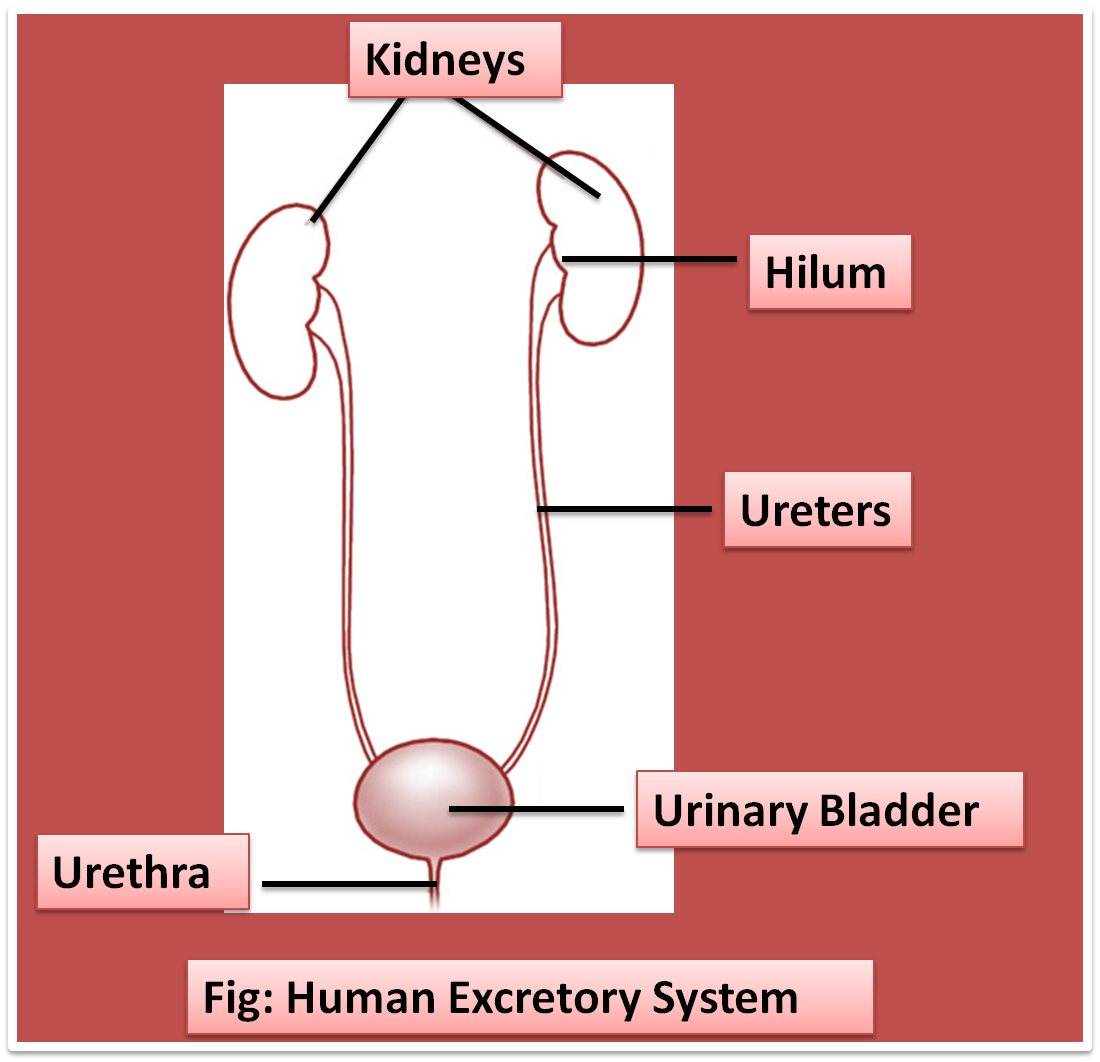
Note: -The excretory system is the passive biological system that removes excess, unnecessary materials from the body fluids of an organism so that it can help maintain internal chemical homeostasis and stop damage to the body.
-Excretory systems regulate the chemical composition of body fluids by removing metabolic wastes and retaining the correct amounts of water, salts, and nutrients. Components of this technique seen in vertebrates include the kidneys, liver, lungs, and skin.
Complete answer:
It is the elimination of metabolic waste products from the animal body to regulate the composition of body fluids and tissues. It is a part of the excretory system.
Defecation: It is the removal of wastes and undigested food, collectively called faeces through the anus. It is a part of the digestive system.
Additional Information: -The urinary tract consists of the kidneys, ureters, bladder and urethra. Your kidneys filter your blood, creating urine, which travels through the ureters to the bladder, where it is stored. When the appropriate time comes, the muscles of your bladder contract and urine exits your body through your urethra. Urinary disorders include any diseases, disorders or conditions that affect your kidneys, ureters, bladder or urethra, or that affect their function.
-Constipation is defined as small, hard, difficult, or infrequent stools. Constipation may be caused by: Inadequate "roughage" or fibre in the diet, not drinking enough fluids, Poor habits, especially delaying using the toilet, movement problems in the large bowel, including slow or uncoordinated movement. A person who is constipated may strain during a bowel movement or just pass a very hard stool.
Note: -The excretory system is the passive biological system that removes excess, unnecessary materials from the body fluids of an organism so that it can help maintain internal chemical homeostasis and stop damage to the body.
-Excretory systems regulate the chemical composition of body fluids by removing metabolic wastes and retaining the correct amounts of water, salts, and nutrients. Components of this technique seen in vertebrates include the kidneys, liver, lungs, and skin.
Recently Updated Pages
If x a + bt + ct2 where x is in meters and t is in class 11 physics CBSE

A car covers the first half distance between two places class 11 physics CBSE
The resultant of two vectors overrightarrow P and overrightarrow class 11 physics CBSE
Find the value of cos 135 class 11 maths CBSE
A mass M is held in place by an applied force F and class 11 physics CBSE
A solution of glucose in water is labelled as 10 dfracwv class 11 chemistry CBSE
Trending doubts
One Metric ton is equal to kg A 10000 B 1000 C 100 class 11 physics CBSE
Find the value of the expression given below sin 30circ class 11 maths CBSE
What do you mean by retardation What is its SI uni class 11 physics CBSE
Draw a diagram of nephron and explain its structur class 11 biology CBSE
10 examples of friction in our daily life
Difference between physical and chemical change class 11 chemistry CBSE