




Cystic fibrosis is an autosomal recessive genetic disorder. What are the chances that the child would have the disease if any of the parents (either mother or father) is the carrier of the faulty cystic fibrosis gene (Cc)?
A. 100 per cent
B. 50 per cent
C. 25 per cent
D. 0 per cent
Answer
 Verified
414.6k+ views
Hint:
Mendelian disorders and chromosomal disorders are the two types of genetic disorders. Alteration or mutation in a single gene is the cause of mendelian disorders. Thalassemia, Haemophilia, Sickle Cell Anaemia and Cystic fibrosis are some examples of mendelian disorders. These can be dominant or recessive, autosomal or linked to the sex chromosome.
Complete step by step solution:
Cystic fibrosis is an autosomal recessive gene. Genes are inherited in pairs in which one gene of a pair comes from each parent. Due to some mutations, genes get defective and do not function properly. A person having only one gene defected is a carrier and shows no symptoms of the disease but can pass these defective genes to the next generation. A person will suffer from the disease only when both parents are the carrier of the disease and pass the defective gene to the child. Even if both parents are the carrier of the disease, there are 25 percent chance that both will pass the defective gene to the child.
Hence, in order for the child to suffer from cystic fibrosis both parents should be the carrier of the disease and there is 0 percent chance that the child would have the disease if any of the parents is the carrier of the faulty cystic fibrosis gene. The following is the diagram of the pedigree chart of cystic fibrosis:
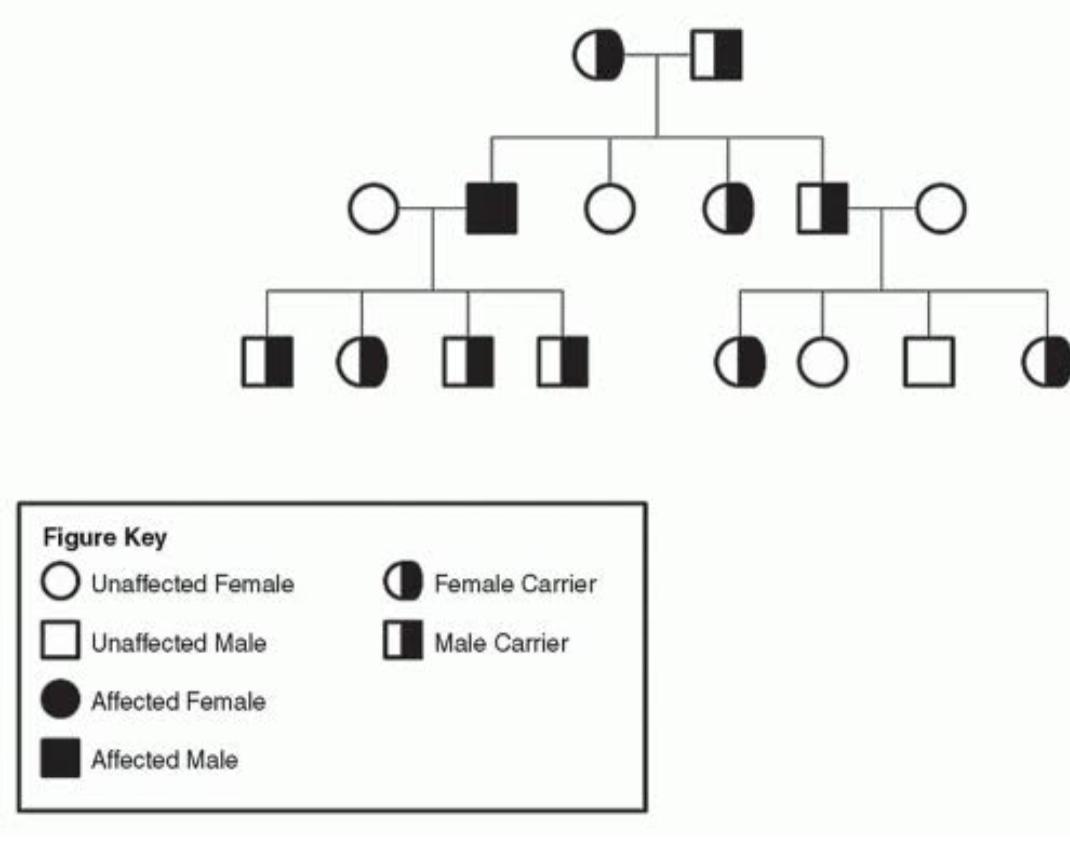
Thus, the correct answer is 0 per cent.
Option ‘D’ is correct
Note:
Cystic fibrosis leads to life-threatening lung infections as they produce abnormally thick sticky mucus that clogs the lungs. Males affected with cystic fibrosis are infertile but this disease has no effect on intelligence.
Mendelian disorders and chromosomal disorders are the two types of genetic disorders. Alteration or mutation in a single gene is the cause of mendelian disorders. Thalassemia, Haemophilia, Sickle Cell Anaemia and Cystic fibrosis are some examples of mendelian disorders. These can be dominant or recessive, autosomal or linked to the sex chromosome.
Complete step by step solution:
Cystic fibrosis is an autosomal recessive gene. Genes are inherited in pairs in which one gene of a pair comes from each parent. Due to some mutations, genes get defective and do not function properly. A person having only one gene defected is a carrier and shows no symptoms of the disease but can pass these defective genes to the next generation. A person will suffer from the disease only when both parents are the carrier of the disease and pass the defective gene to the child. Even if both parents are the carrier of the disease, there are 25 percent chance that both will pass the defective gene to the child.
Hence, in order for the child to suffer from cystic fibrosis both parents should be the carrier of the disease and there is 0 percent chance that the child would have the disease if any of the parents is the carrier of the faulty cystic fibrosis gene. The following is the diagram of the pedigree chart of cystic fibrosis:
Thus, the correct answer is 0 per cent.
Option ‘D’ is correct
Note:
Cystic fibrosis leads to life-threatening lung infections as they produce abnormally thick sticky mucus that clogs the lungs. Males affected with cystic fibrosis are infertile but this disease has no effect on intelligence.
Recently Updated Pages
Master Class 12 Economics: Engaging Questions & Answers for Success

Master Class 12 Social Science: Engaging Questions & Answers for Success
Master Class 12 English: Engaging Questions & Answers for Success
Master Class 12 Maths: Engaging Questions & Answers for Success
Master Class 12 Physics: Engaging Questions & Answers for Success
Master Class 12 Biology: Engaging Questions & Answers for Success
Trending doubts
How many sides does a circle have a 10 sides b 20 sides class 8 maths CBSE
The common name of Rheo leaf is A Oyster plant B Boat class 9 biology CBSE
What is BLO What is the full form of BLO class 8 social science CBSE
Explain the Treaty of Vienna of 1815 class 10 social science CBSE
Draw a labelled sketch of the human eye class 12 physics CBSE
Which are the Top 10 Largest Countries of the World?