




How to convert phenol to benzoquinone?
Answer
 Verified
602.1k+ views
Hint: To solve the conversion we should quickly recollect the various reactions in organic chemistry. Here the given molecule is phenol and is getting converted to benzoquinone so an oxidation reaction should be carried out to yield the desired result.
Complete step-by-step answer:In the question, a conversion reaction is given and we have to analyse which reaction should be carried out to get the desired result and identify the chemicals used in the chemical reaction.
In the question phenol is given, we know that phenol is an aromatic hydrocarbon which has a benzene ring and a C of benzene ring attached to –OH functional group, ie phenol is an alcohol.
The structure of phenol is as follows:
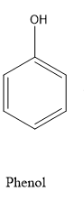
And the product that should be formed is benzoquinone. Quinone with one benzene ring is called a benzoquinone structure, it will have two ketonic groups which are para to each other. And hence the structure to be formed is 1, 4-benzoquinone and the structure is as follows:
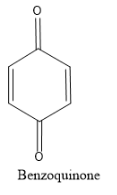
In the quinone structure there is a ketonic group instead of an alcohol group, hence the reaction that should be carried out should be an oxidation reaction.
So we can use oxidizing agents to convert phenol to benzoquinone.
Since alcohols can be converted into ketones and aldehydes by carrying out oxidation reactions according to the type of alcohol present.
So here the phenol is a secondary carbon and the alcoholic group will be converted to a ketonic group using an oxidation reaction.
But in the structure of benzoquinone an extra O is present so we should use a strong oxidizing agent to carry out the reaction.
We use sodium dichromate along with sulphuric acid to convert phenol to benzoquinone.
The reaction is as follows:

Note:Using an oxidizing agent if we carry out an oxidation reaction with primary alcohol then an aldehyde will be formed. If we use oxidizing agents like potassium permanganate, potassium dichromate then the product will be ketone and will have only one oxygen atom, whereas in the benzoquinone two ketonic groups are present.
Two structures of benzoquinone are possible- 1, 2-benzoquinone and 1,4-benzoquinone but the most common one is 1,4-benzoquinone.
Complete step-by-step answer:In the question, a conversion reaction is given and we have to analyse which reaction should be carried out to get the desired result and identify the chemicals used in the chemical reaction.
In the question phenol is given, we know that phenol is an aromatic hydrocarbon which has a benzene ring and a C of benzene ring attached to –OH functional group, ie phenol is an alcohol.
The structure of phenol is as follows:
And the product that should be formed is benzoquinone. Quinone with one benzene ring is called a benzoquinone structure, it will have two ketonic groups which are para to each other. And hence the structure to be formed is 1, 4-benzoquinone and the structure is as follows:
In the quinone structure there is a ketonic group instead of an alcohol group, hence the reaction that should be carried out should be an oxidation reaction.
So we can use oxidizing agents to convert phenol to benzoquinone.
Since alcohols can be converted into ketones and aldehydes by carrying out oxidation reactions according to the type of alcohol present.
So here the phenol is a secondary carbon and the alcoholic group will be converted to a ketonic group using an oxidation reaction.
But in the structure of benzoquinone an extra O is present so we should use a strong oxidizing agent to carry out the reaction.
We use sodium dichromate along with sulphuric acid to convert phenol to benzoquinone.
The reaction is as follows:
Note:Using an oxidizing agent if we carry out an oxidation reaction with primary alcohol then an aldehyde will be formed. If we use oxidizing agents like potassium permanganate, potassium dichromate then the product will be ketone and will have only one oxygen atom, whereas in the benzoquinone two ketonic groups are present.
Two structures of benzoquinone are possible- 1, 2-benzoquinone and 1,4-benzoquinone but the most common one is 1,4-benzoquinone.
Recently Updated Pages
Explain the structure of megasporangium class 12 biology CBSE

Why is chloroform kept in dark coloured bottles class 12 chemistry CBSE
Derive the balancing condition of a Wheatstone bri class 12 physics CBSE
Draw VI characteristics of a pn junction diode Explain class 12 physics CBSE
Is it possible to carry pride in ones language too class 12 english CBSE
In a population at Hardy Weinberg equilibrium the allele class 12 biology CBSE
Trending doubts
Draw a labelled sketch of the human eye class 12 physics CBSE
Which are the Top 10 Largest Countries of the World?
Draw ray diagrams each showing i myopic eye and ii class 12 physics CBSE
Which is the correct genotypic ratio of mendel dihybrid class 12 biology CBSE
Differentiate between homogeneous and heterogeneous class 12 chemistry CBSE
Give 10 examples of unisexual and bisexual flowers