




Who cleans the local public areas?
A. Sweeper
B. Housekeeping person
C. Farmer
D. None of the above
Answer
 Verified
654.9k+ views
Hint: A street-sweeping person would use a broom and shovel to clean off litter, animal waste, and filth that accumulated on streets.
Complete answer: The sweeping of streets is such a humble occupation that it rarely attracts the technical interest of the managers responsible for such activities.
1. This is an area in which public relations are very important. Much of the work arises directly from shortcomings in public behavior, such as throwing litter on the streets and open spaces.
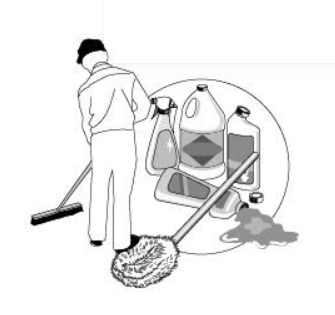
2. Natural wastes Include dust blown from unpaved areas, sometimes from within the city and sometimes from a great distance, and decaying vegetation such as fallen leaves, blossoms, and seeds that originate from trees and plants in the city.
3. Motor vehicles deposit oil, rubber, and mud; in addition, there is sometimes accidental spillage of a vehicle’s load. Animals drawing vehicles deposited on adjacent roads; in wet weather, this can cause danger to other traffic by skidding.
4. The main source of wastes is litter thrown by pedestrians and houses or shop-wastes swept or thrown out of private premises instead of being placed in a suitable container meant for the purpose.
5. A street normally comprises three distinct paved surfaces: a highway for motor traffic, footway on both sides for pedestrians.
6. Cleansing of the public roads, streets, lanes, by-lanes should be done daily if there is habitation or commercial activity on one or both sides of the street. Different cities have adopted different working hours depending on the local workforce.
So the correct answer is (A)
Note: The function of the broom is to gather the street wastes into small heaps, Which then have to be picked up completely, and placed in a receptacle.
The Conventional tool for this purpose is a large straight-blade shovel.
A Shovel is ineffective because dried leaves fall off or are blown away during transfer.
A good solution to this problem is to use a pair of flat boards, usually, plywood, between which the wastes are retained by hand-pressure.
Complete answer: The sweeping of streets is such a humble occupation that it rarely attracts the technical interest of the managers responsible for such activities.
1. This is an area in which public relations are very important. Much of the work arises directly from shortcomings in public behavior, such as throwing litter on the streets and open spaces.
2. Natural wastes Include dust blown from unpaved areas, sometimes from within the city and sometimes from a great distance, and decaying vegetation such as fallen leaves, blossoms, and seeds that originate from trees and plants in the city.
3. Motor vehicles deposit oil, rubber, and mud; in addition, there is sometimes accidental spillage of a vehicle’s load. Animals drawing vehicles deposited on adjacent roads; in wet weather, this can cause danger to other traffic by skidding.
4. The main source of wastes is litter thrown by pedestrians and houses or shop-wastes swept or thrown out of private premises instead of being placed in a suitable container meant for the purpose.
5. A street normally comprises three distinct paved surfaces: a highway for motor traffic, footway on both sides for pedestrians.
6. Cleansing of the public roads, streets, lanes, by-lanes should be done daily if there is habitation or commercial activity on one or both sides of the street. Different cities have adopted different working hours depending on the local workforce.
So the correct answer is (A)
Note: The function of the broom is to gather the street wastes into small heaps, Which then have to be picked up completely, and placed in a receptacle.
The Conventional tool for this purpose is a large straight-blade shovel.
A Shovel is ineffective because dried leaves fall off or are blown away during transfer.
A good solution to this problem is to use a pair of flat boards, usually, plywood, between which the wastes are retained by hand-pressure.
Recently Updated Pages
Which of the following graphs shows the variation of class 12 physics CBSE

Draw a labelled diagram of the human male reproductive class 12 biology CBSE
Describe the experiment to compare the emf of two cells class 12 physics CBSE
What is standard hydrogen electrode
What is conventional current and electric current class 12 physics CBSE
2Bromopentane is treated with an alcoholic KOH solution class 12 chemistry CBSE
Trending doubts
Draw a labelled sketch of the human eye class 12 physics CBSE
Which are the Top 10 Largest Countries of the World?
Differentiate between homogeneous and heterogeneous class 12 chemistry CBSE
Draw ray diagrams each showing i myopic eye and ii class 12 physics CBSE
Which is the correct genotypic ratio of mendel dihybrid class 12 biology CBSE
What is the Full Form of PVC, PET, HDPE, LDPE, PP and PS ?