




Carry out following conversions
a.Benzene to m-Chloro bromobenzene
b.Chloromethane to Ethanoic acid
c.Aniline to p-Chloroaniline
Answer
 Verified
542.7k+ views
Hint: We will use different types of reaction to carry out the given conversions. In the first conversion we will perform nitration, chlorination hydrogenation, Oxidation, Bromination in order. In the second conversion we will use Grignard agent and Carbon dioxide and then perform hydrolysis. In third conversion we will convert aniline to chlorobenzene then perform nitration and chlorination.
Complete answer:
Let’s see the first conversion
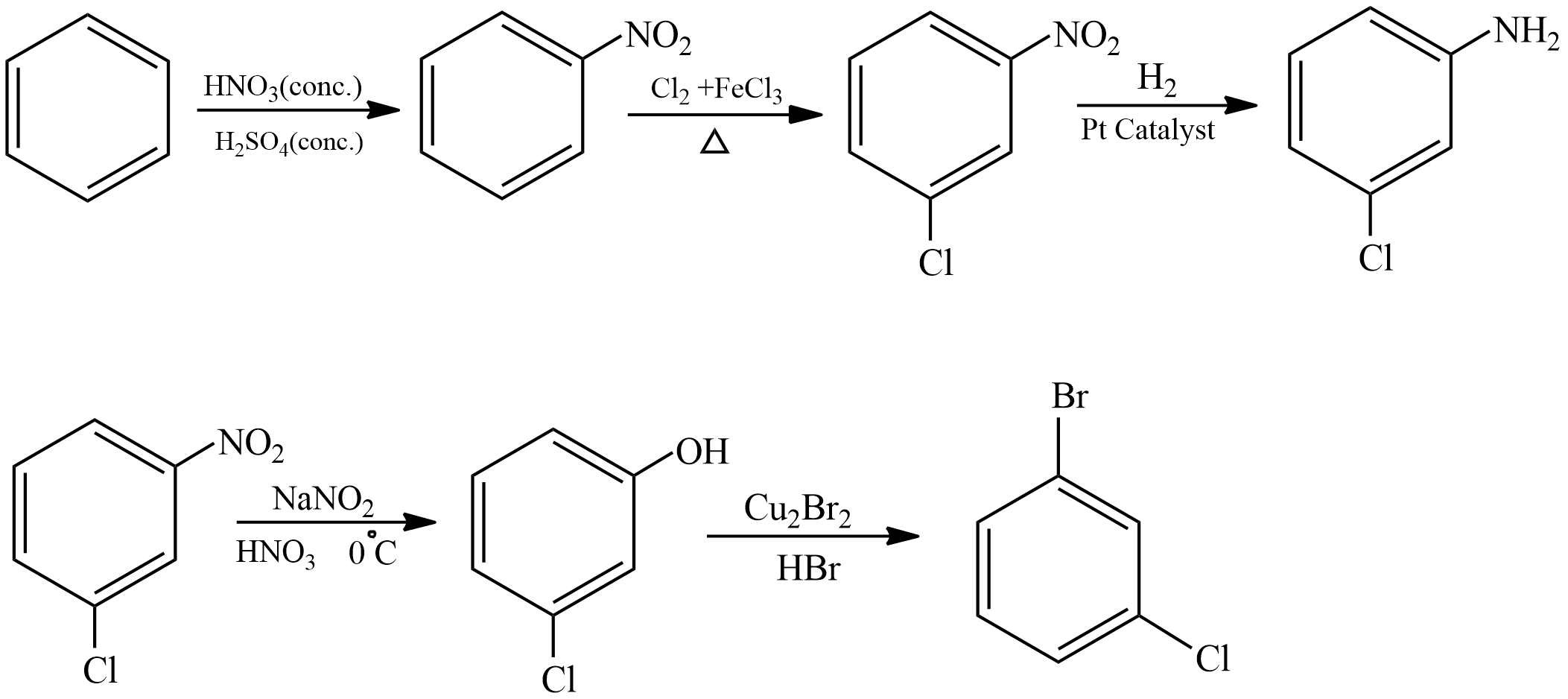
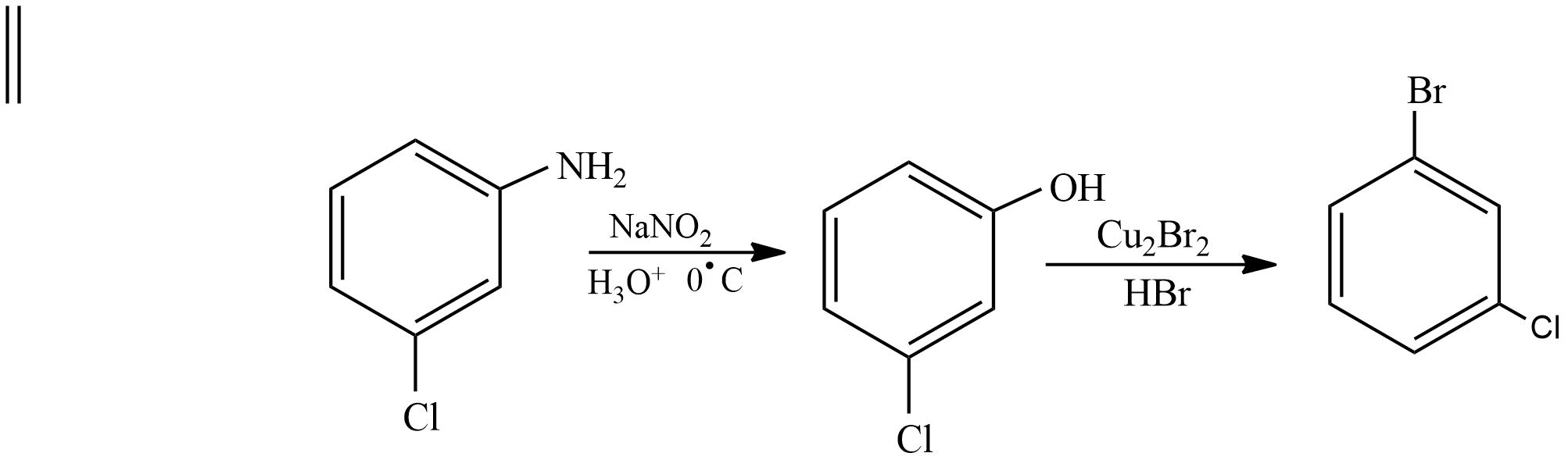
First benzene is treated with concentrated nitric acid and concentrated sulphuric acid to form Nitrobenzene. Then nitrobenzene is heated with Chlorine in presence of Iron (III) chloride as the Nitro group is a meta director Chlorine is attached to meta position. Then m-Nitro chlorobenzene undergoes hydrogenation in presence of platinum catalyst, Nitro group is converted into amine and product formed is known as m-Chloroaniline. Then it undergoes Sandmeyer reaction and an amine group is converted into Hydroxyl group, product formed is known as m-Chlorophenol. Then it undergoes substitution reaction with Hydrogen bromide in presence of copper bromide and Hydroxyl group is substituted with Bromine the product formed is m-Chloro bromobenzene.
Let’s see the second conversion
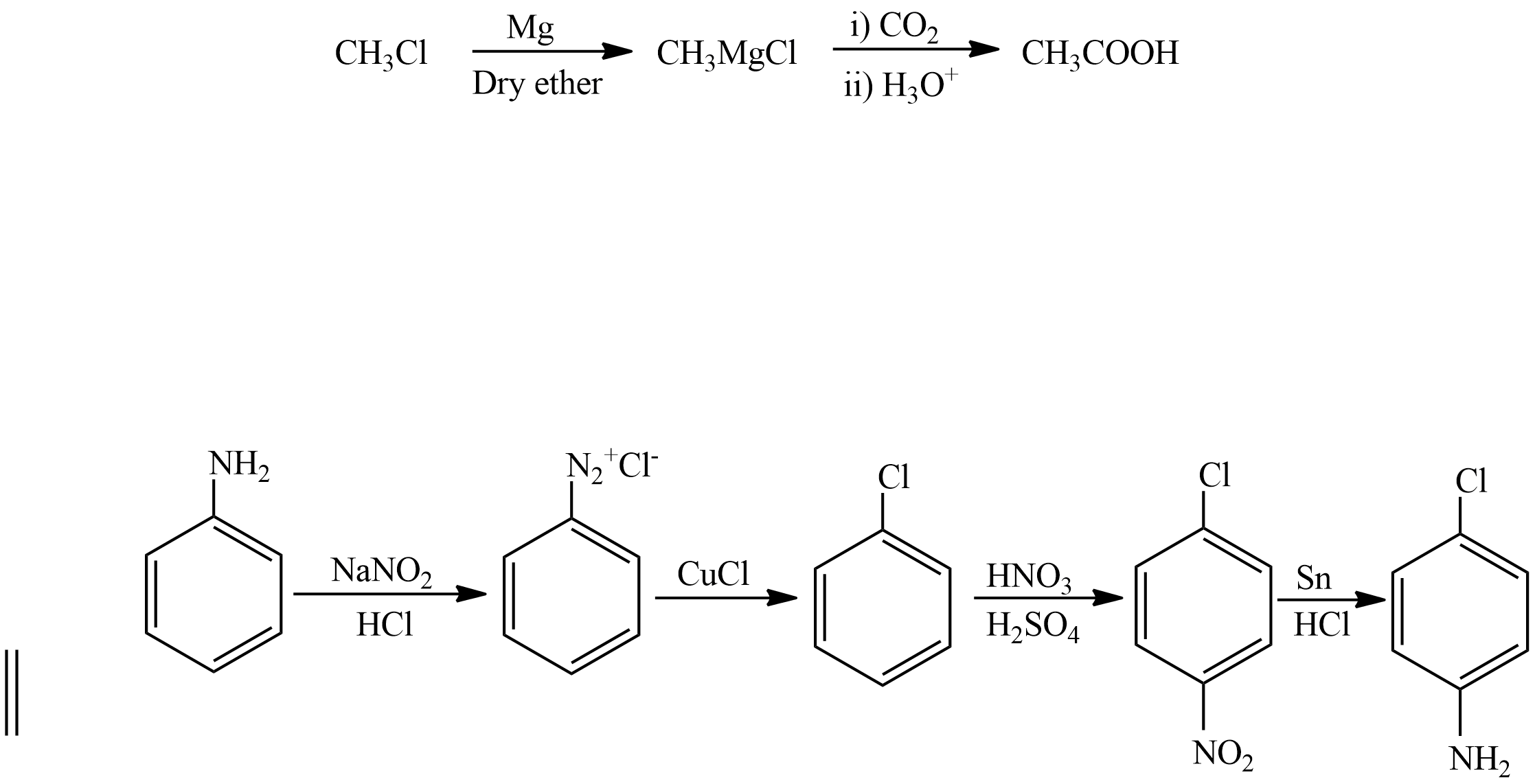
Chloromethane is treated with Magnesium in presence of Dry ether to form a magnesium chloride salt, it is known as Grignard reagent then it is treated with carbon dioxide followed by acidification to form ethanoic acid.
Let’s see the third conversion
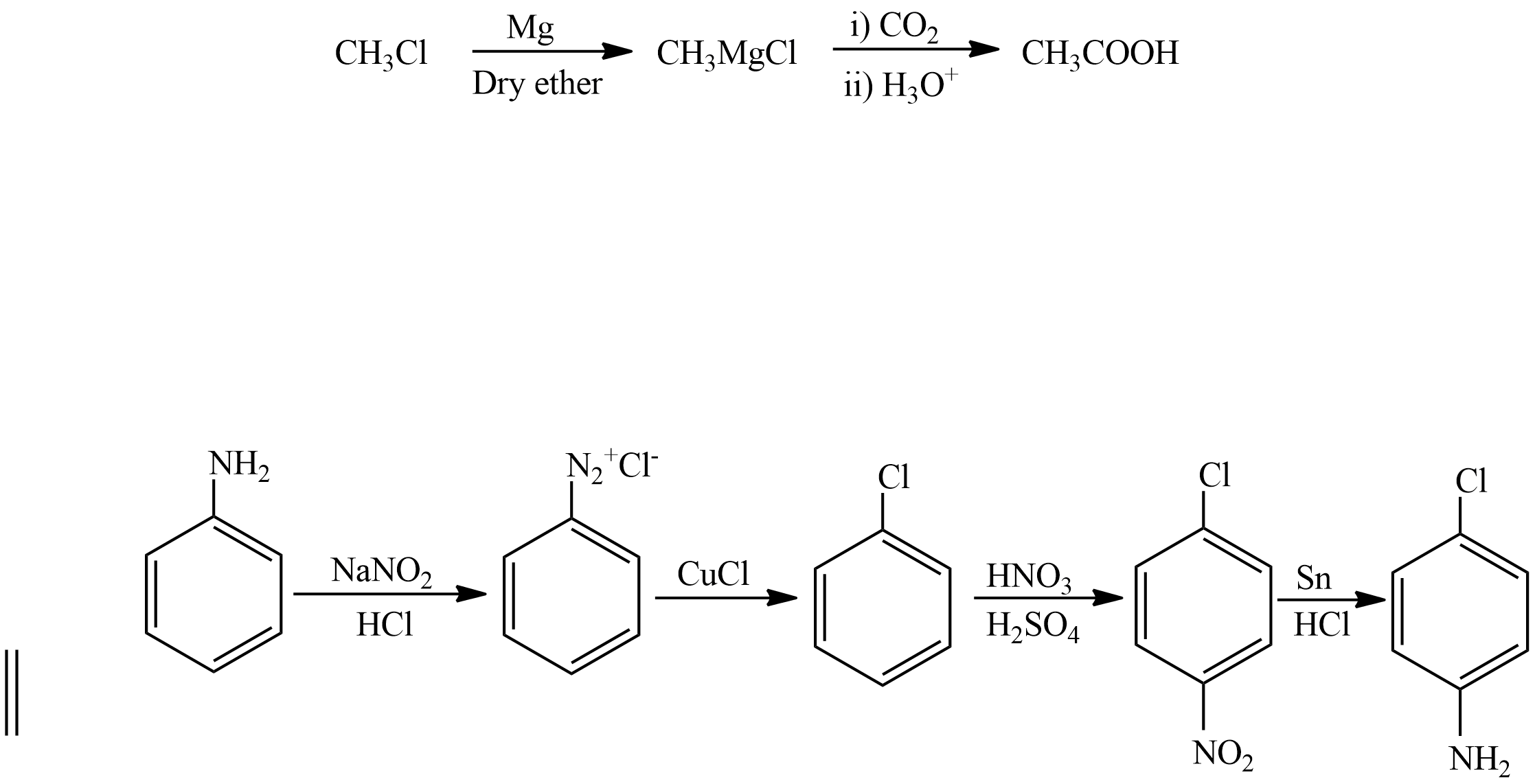
Aniline is treated with Sodium nitrite with Hydrochloric acid to form Benzene Diazonium chloride then it is treated with copper chloride to form Chlorobenzene. Chlorobenzene undergoes nitration in presence of Nitric acid and Sulphuric acid, then it undergoes Reduction in presence of Tin and hydrochloric acid to form p-Chloroaniline.
Note:
Grignard reagent on reaction with carbon dioxide gives a product known as carboxylates, when these carboxylates are subjected to acidification in presence of strong acid, they form carboxylic acid. Since the carbon of Carbon dioxide is added, the Carboxylic acid will contain one more carbon than the Grignard reagent.
Complete answer:
Let’s see the first conversion
First benzene is treated with concentrated nitric acid and concentrated sulphuric acid to form Nitrobenzene. Then nitrobenzene is heated with Chlorine in presence of Iron (III) chloride as the Nitro group is a meta director Chlorine is attached to meta position. Then m-Nitro chlorobenzene undergoes hydrogenation in presence of platinum catalyst, Nitro group is converted into amine and product formed is known as m-Chloroaniline. Then it undergoes Sandmeyer reaction and an amine group is converted into Hydroxyl group, product formed is known as m-Chlorophenol. Then it undergoes substitution reaction with Hydrogen bromide in presence of copper bromide and Hydroxyl group is substituted with Bromine the product formed is m-Chloro bromobenzene.
Let’s see the second conversion
Chloromethane is treated with Magnesium in presence of Dry ether to form a magnesium chloride salt, it is known as Grignard reagent then it is treated with carbon dioxide followed by acidification to form ethanoic acid.
Let’s see the third conversion
Aniline is treated with Sodium nitrite with Hydrochloric acid to form Benzene Diazonium chloride then it is treated with copper chloride to form Chlorobenzene. Chlorobenzene undergoes nitration in presence of Nitric acid and Sulphuric acid, then it undergoes Reduction in presence of Tin and hydrochloric acid to form p-Chloroaniline.
Note:
Grignard reagent on reaction with carbon dioxide gives a product known as carboxylates, when these carboxylates are subjected to acidification in presence of strong acid, they form carboxylic acid. Since the carbon of Carbon dioxide is added, the Carboxylic acid will contain one more carbon than the Grignard reagent.
Recently Updated Pages
Master Class 12 Business Studies: Engaging Questions & Answers for Success

Master Class 12 Chemistry: Engaging Questions & Answers for Success
Master Class 12 Biology: Engaging Questions & Answers for Success
Class 12 Question and Answer - Your Ultimate Solutions Guide
Master Class 11 English: Engaging Questions & Answers for Success
Master Class 11 Social Science: Engaging Questions & Answers for Success
Trending doubts
Which are the Top 10 Largest Countries of the World?
Draw a labelled sketch of the human eye class 12 physics CBSE
Differentiate between homogeneous and heterogeneous class 12 chemistry CBSE
Differentiate between Pyramid of energy and pyramid class 12 biology CBSE
Why is the cell called the structural and functional class 12 biology CBSE
Draw the diagram of the pyramid of energy Explain In class 12 biology CBSE