




Bithionol added to soap solutions as an additive to function as an:
A. Buffering agent
B. Antiseptic
C. Softener
D. Dryer
Answer
 Verified
682.5k+ views
Hint: Recall the properties of Bithionol and what its used for not just in soap solutions, but also the medical industry and in day-to-day life.
Step-by-Step Solution:
Bithionol is an aryl sulphide that is a diphenyl sulphide in which each phenyl group is substituted at position 2 by hydroxy and at positions 3 and 5 by chlorine.
A fungicide and anthelmintic, it was used in various topical drug products for the treatment of liver flukes, but withdrawn after being shown to be a potent photosensitizer with the potential to cause serious skin disorders.
It has a role as an anti platyhelminthes drug and an antifungal agrochemical. It is an aryl sulphide, an organochlorine pesticide, a dichlorobenzene, a polyphenol, a bridged diphenyl fungicide and a bridged diphenyl antifungal drug.
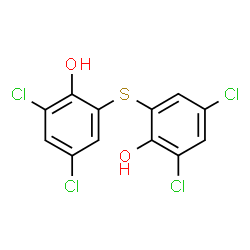
Bithionol is generally added to the soaps as an additive to function as an antiseptic as it helps to reduce the odour produced by bacterial decomposition of organic matter on the skin.
Therefore by our analysis, the answer to this question is b) Antiseptic.
Note:
There is no way to intuitively know the answer to this question and the answer to this can only be known if the student is completely familiar with the action of bithionol in soap.
Additional Information:
Bithionol, formerly marketed as an active ingredient in various topical drug products, was shown to be a potent photosensitizer with the potential to cause serious skin disorders.
Bithionol is bis-dichlorophenol, and it is structurally similar to hexachlorophene.
It is the anthelmintic drug of choice for treating humans infected with Fasciola hepatica. It is also an alternative drug to praziquantel that is used for treating pulmonary and cerebral paragonimiasis.
Step-by-Step Solution:
Bithionol is an aryl sulphide that is a diphenyl sulphide in which each phenyl group is substituted at position 2 by hydroxy and at positions 3 and 5 by chlorine.
A fungicide and anthelmintic, it was used in various topical drug products for the treatment of liver flukes, but withdrawn after being shown to be a potent photosensitizer with the potential to cause serious skin disorders.
It has a role as an anti platyhelminthes drug and an antifungal agrochemical. It is an aryl sulphide, an organochlorine pesticide, a dichlorobenzene, a polyphenol, a bridged diphenyl fungicide and a bridged diphenyl antifungal drug.
Bithionol is generally added to the soaps as an additive to function as an antiseptic as it helps to reduce the odour produced by bacterial decomposition of organic matter on the skin.
Therefore by our analysis, the answer to this question is b) Antiseptic.
Note:
There is no way to intuitively know the answer to this question and the answer to this can only be known if the student is completely familiar with the action of bithionol in soap.
Additional Information:
Bithionol, formerly marketed as an active ingredient in various topical drug products, was shown to be a potent photosensitizer with the potential to cause serious skin disorders.
Bithionol is bis-dichlorophenol, and it is structurally similar to hexachlorophene.
It is the anthelmintic drug of choice for treating humans infected with Fasciola hepatica. It is also an alternative drug to praziquantel that is used for treating pulmonary and cerebral paragonimiasis.
Recently Updated Pages
Which of the following graphs shows the variation of class 12 physics CBSE

Draw a labelled diagram of the human male reproductive class 12 biology CBSE
Describe the experiment to compare the emf of two cells class 12 physics CBSE
What is standard hydrogen electrode
What is conventional current and electric current class 12 physics CBSE
2Bromopentane is treated with an alcoholic KOH solution class 12 chemistry CBSE
Trending doubts
Draw a labelled sketch of the human eye class 12 physics CBSE
Which are the Top 10 Largest Countries of the World?
Draw ray diagrams each showing i myopic eye and ii class 12 physics CBSE
Which is the correct genotypic ratio of mendel dihybrid class 12 biology CBSE
Which is the strongest oxidising agent out of the following class 12 chemistry CBSE
Differentiate between homogeneous and heterogeneous class 12 chemistry CBSE