




What atomic model is in use today?
Answer
 Verified
539.1k+ views
Hint: The Bohr model encapsulates the modern understanding of the atom in general. This model is frequently depicted in artwork as a central atomic nucleus with oval lines representing electron orbits. Orbitals are a common representation of these probabilities which are clouds of electron density. This will help you in answering this question.
Complete step-by-step solution:
However, we know that electrons do not behave in the same way that planets orbiting a central star do. Such particles can only be described by stating where they will most likely be most of the time. Orbitals, which are clouds of electron density, are a common representation of these probabilities. Simple spheres make up the lowest level orbitals. They take on more interesting shapes at higher levels, determining the geometry and strength of chemical bonds between atoms.
There is no analytical solution for these except for the Hydrogen Atom. We are able to make very accurate numerical approximations. Most computational models of chemical interactions, however, employ a variety of models described by the field of Molecular Orbital Theory. All of these are essentially attempting to approximate the forces between atoms by describing the shape of their electron clouds with a mathematical function that is very similar to what we believe electrons do in reality. When it comes to predicting chemical properties, these models are frequently very accurate. And they frequently miss the mark when it comes to accurately describing real chemical behavior.
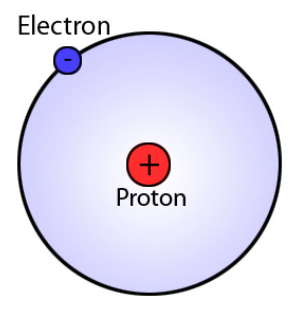
Note: For many theoretical predictions, the general picture described by the Bohr Model is still correct and useful. It's fine to say "The Bohr Model" if your teacher only wants one answer. In reality, depending on the needs of the science being studied, many variations of this model are used.
Complete step-by-step solution:
However, we know that electrons do not behave in the same way that planets orbiting a central star do. Such particles can only be described by stating where they will most likely be most of the time. Orbitals, which are clouds of electron density, are a common representation of these probabilities. Simple spheres make up the lowest level orbitals. They take on more interesting shapes at higher levels, determining the geometry and strength of chemical bonds between atoms.
There is no analytical solution for these except for the Hydrogen Atom. We are able to make very accurate numerical approximations. Most computational models of chemical interactions, however, employ a variety of models described by the field of Molecular Orbital Theory. All of these are essentially attempting to approximate the forces between atoms by describing the shape of their electron clouds with a mathematical function that is very similar to what we believe electrons do in reality. When it comes to predicting chemical properties, these models are frequently very accurate. And they frequently miss the mark when it comes to accurately describing real chemical behavior.
Note: For many theoretical predictions, the general picture described by the Bohr Model is still correct and useful. It's fine to say "The Bohr Model" if your teacher only wants one answer. In reality, depending on the needs of the science being studied, many variations of this model are used.
Recently Updated Pages
Master Class 12 Economics: Engaging Questions & Answers for Success

Master Class 12 English: Engaging Questions & Answers for Success
Master Class 12 Social Science: Engaging Questions & Answers for Success
Master Class 12 Maths: Engaging Questions & Answers for Success
Master Class 12 Physics: Engaging Questions & Answers for Success
Master Class 9 General Knowledge: Engaging Questions & Answers for Success
Trending doubts
Which are the Top 10 Largest Countries of the World?
Draw a labelled sketch of the human eye class 12 physics CBSE
Differentiate between homogeneous and heterogeneous class 12 chemistry CBSE
Why is the cell called the structural and functional class 12 biology CBSE
Draw ray diagrams each showing i myopic eye and ii class 12 physics CBSE
Which is the correct genotypic ratio of mendel dihybrid class 12 biology CBSE