




What are the three main types of Phagocytes?
Answer
 Verified
535.8k+ views
Hint: Immunity is a well-known term which everyone is aware of. Immunity describes the defense mechanism of our body or human beings. It is present in almost all animals or organisms. Every organism is born with some kind of immunity and some immunity gets adapted as organisms grow up. There is a different line of immunity in our body.
Complete answer:
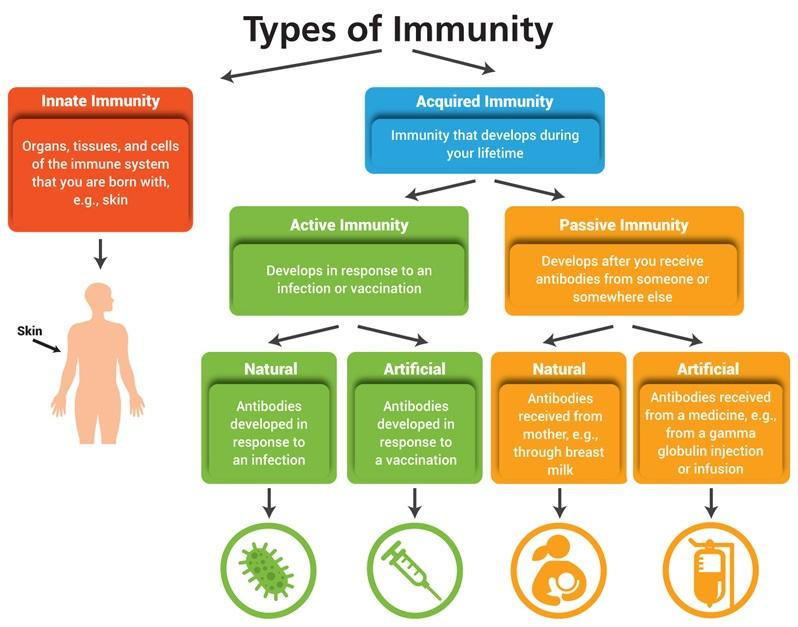
Innate immunity is the kind of immunity which is present since birth. It is the primary level of immunity. Innate immunity examples are- monocytes. Monocytes are cells of the immune system that represent immune effector cells with chemokine receptors. It has pathogen detector receptors which immediately recognize and attack the invader and kill it. Innate immunity alone cannot defend a lot of invaders hence some outer immunity or mechanisms are required.
The outer help is the adaptive immunity. As the name suggests-adaptive means a person or organism adapts according to their growth from diet or nutrients which they uptake. Adaptive immunity is stronger and powerful than innate immunity. It can help to fight serious health causing microbes or bacteria which can be harmful to the body.
Main types of phagocytes such as- monocytes, neutrophils, mast cells, macrophages.
Phagocytes are cells which attack the invaders or foreign particles by simply engulfing them. Firstly, they surround the foreign cells and engulf them.
Note:
As we discussed about immunity, when an outer component such as- dust particles, pollen or microbes which are invisible to the eyes enters the body the body develops an immediate action like- coughing or sneezing. Adaptive immunity can be also developed by taking supplements rather than just having food. Antibiotics, probiotics, and vitamins also help in boosting immunity.
Complete answer:
Innate immunity is the kind of immunity which is present since birth. It is the primary level of immunity. Innate immunity examples are- monocytes. Monocytes are cells of the immune system that represent immune effector cells with chemokine receptors. It has pathogen detector receptors which immediately recognize and attack the invader and kill it. Innate immunity alone cannot defend a lot of invaders hence some outer immunity or mechanisms are required.
The outer help is the adaptive immunity. As the name suggests-adaptive means a person or organism adapts according to their growth from diet or nutrients which they uptake. Adaptive immunity is stronger and powerful than innate immunity. It can help to fight serious health causing microbes or bacteria which can be harmful to the body.
Main types of phagocytes such as- monocytes, neutrophils, mast cells, macrophages.
Phagocytes are cells which attack the invaders or foreign particles by simply engulfing them. Firstly, they surround the foreign cells and engulf them.
Note:
As we discussed about immunity, when an outer component such as- dust particles, pollen or microbes which are invisible to the eyes enters the body the body develops an immediate action like- coughing or sneezing. Adaptive immunity can be also developed by taking supplements rather than just having food. Antibiotics, probiotics, and vitamins also help in boosting immunity.
Recently Updated Pages
Master Class 12 Economics: Engaging Questions & Answers for Success

Master Class 12 English: Engaging Questions & Answers for Success
Master Class 12 Social Science: Engaging Questions & Answers for Success
Master Class 12 Maths: Engaging Questions & Answers for Success
Master Class 12 Physics: Engaging Questions & Answers for Success
Master Class 12 Business Studies: Engaging Questions & Answers for Success
Trending doubts
Which are the Top 10 Largest Countries of the World?
Draw a labelled sketch of the human eye class 12 physics CBSE
Differentiate between homogeneous and heterogeneous class 12 chemistry CBSE
Why is the cell called the structural and functional class 12 biology CBSE
Draw ray diagrams each showing i myopic eye and ii class 12 physics CBSE
Which is the correct genotypic ratio of mendel dihybrid class 12 biology CBSE