




What are the steps associated with the process of constructing a hybrid orbital diagram?
Answer
 Verified
548.1k+ views
Hint: The hybrid orbital diagram describes and shows the sigma and pi bonding present in a compound. With the help of this diagram the number of sigma and pi bonds can be calculated. To draw the hybrid orbital diagram, we need to know the hybridisation of the central atom present.
Complete answer:
We will take a molecule for reference and know the process of constructing a hybrid orbital diagram.
Consider the Ethylene molecule, also known as Ethene. It has two carbon atoms with a double bond present in between the two carbons. The molecular formula is $ {H_2}C = C{H_2} $. The steps of constructing a hybrid orbital diagram are as follows:
Step 1: Draw the Lewis structure of the ethene molecule.
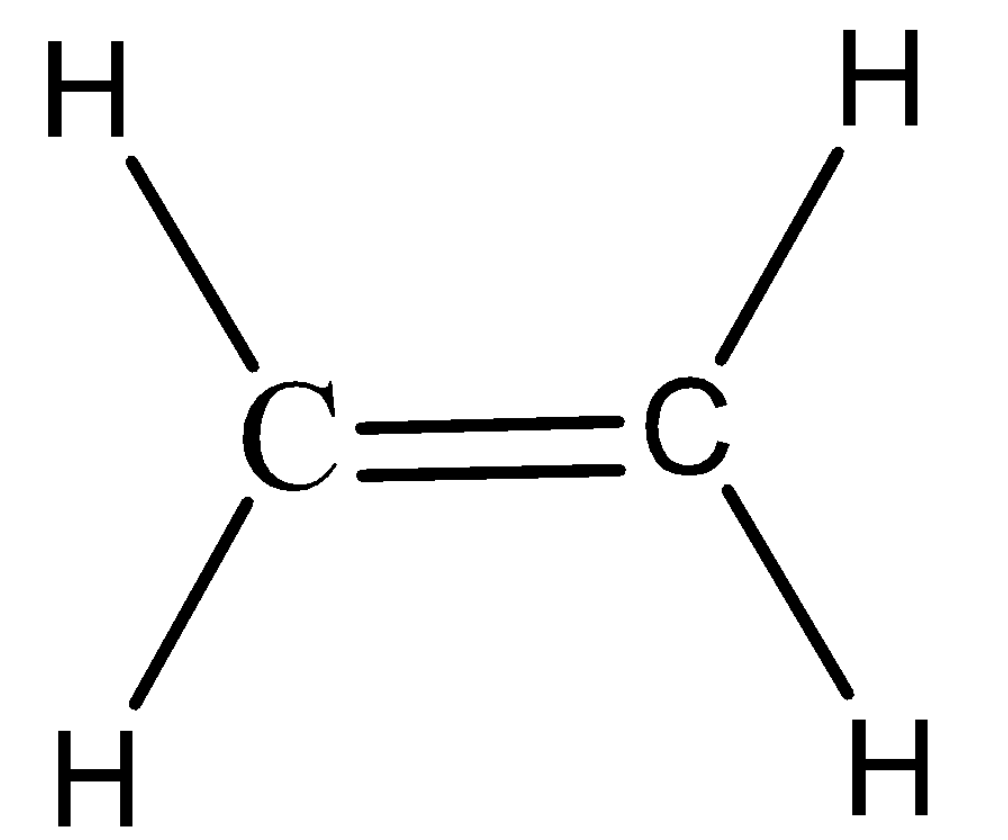
Step 2: We will determine the geometry around each central atom i.e. Carbon using the VSEPR theory. Here the carbon is attached to a double bond and two hydrogens. Therefore, we can say that it has a $ A{X_3} $ system , hence the geometry is Trigonal Planar.
Step 3: Determine the hybridization of the central atom using the geometry. Here the geometry is Trigonal Planar, hence the hybridisation will be $ s{p^2} $ . Each carbon atom in the ethene molecule has a $ s{p^2} $ hybridisation.
Step 4. Draw the two Carbon atoms side by side of each other and bring the next carbon and Hydrogen close to each other, such that they can overlap to form sigma and pi bonds. The sigma and pi bonding of ethene can be shown below:
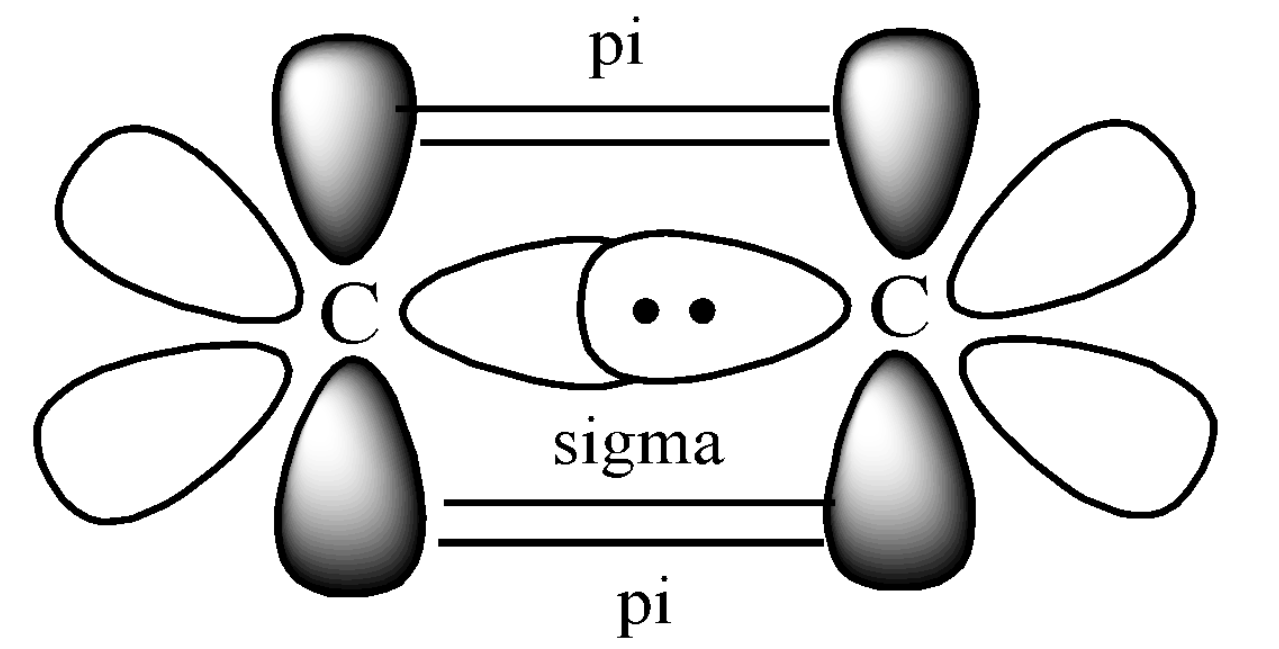
Here, the C-C head-on collision forms the sigma bond and the perpendicular overlap of the p orbitals forms the pi bond. Hence, we can say that ethylene has one sigma and one pi bond present between the two Carbon atoms. The perpendicular p-orbital will always form a pi bond, whereas the orbital in the plane will form a sigma bond only. This is the hybrid orbital diagram of ethene. We follow the same process for any molecule.
Note:
Sigma bonds are formed due to head-to-head collisions of orbitals that reside in the same plane. Pi bonds are formed by lateral overlap of orbitals which are perpendicular to the plane. Sigma bonds are stronger than pi bonds because of this reason only.
Complete answer:
We will take a molecule for reference and know the process of constructing a hybrid orbital diagram.
Consider the Ethylene molecule, also known as Ethene. It has two carbon atoms with a double bond present in between the two carbons. The molecular formula is $ {H_2}C = C{H_2} $. The steps of constructing a hybrid orbital diagram are as follows:
Step 1: Draw the Lewis structure of the ethene molecule.
Step 2: We will determine the geometry around each central atom i.e. Carbon using the VSEPR theory. Here the carbon is attached to a double bond and two hydrogens. Therefore, we can say that it has a $ A{X_3} $ system , hence the geometry is Trigonal Planar.
Step 3: Determine the hybridization of the central atom using the geometry. Here the geometry is Trigonal Planar, hence the hybridisation will be $ s{p^2} $ . Each carbon atom in the ethene molecule has a $ s{p^2} $ hybridisation.
Step 4. Draw the two Carbon atoms side by side of each other and bring the next carbon and Hydrogen close to each other, such that they can overlap to form sigma and pi bonds. The sigma and pi bonding of ethene can be shown below:
Here, the C-C head-on collision forms the sigma bond and the perpendicular overlap of the p orbitals forms the pi bond. Hence, we can say that ethylene has one sigma and one pi bond present between the two Carbon atoms. The perpendicular p-orbital will always form a pi bond, whereas the orbital in the plane will form a sigma bond only. This is the hybrid orbital diagram of ethene. We follow the same process for any molecule.
Note:
Sigma bonds are formed due to head-to-head collisions of orbitals that reside in the same plane. Pi bonds are formed by lateral overlap of orbitals which are perpendicular to the plane. Sigma bonds are stronger than pi bonds because of this reason only.
Recently Updated Pages
If x a + bt + ct2 where x is in meters and t is in class 11 physics CBSE

A car covers the first half distance between two places class 11 physics CBSE
The resultant of two vectors overrightarrow P and overrightarrow class 11 physics CBSE
Find the value of cos 135 class 11 maths CBSE
A mass M is held in place by an applied force F and class 11 physics CBSE
A solution of glucose in water is labelled as 10 dfracwv class 11 chemistry CBSE
Trending doubts
One Metric ton is equal to kg A 10000 B 1000 C 100 class 11 physics CBSE
Find the value of the expression given below sin 30circ class 11 maths CBSE
Draw a diagram of nephron and explain its structur class 11 biology CBSE
10 examples of friction in our daily life
Proton was discovered by A Thomson B Rutherford C Chadwick class 11 chemistry CBSE
Bond order ofO2 O2+ O2 and O22 is in order A O2 langle class 11 chemistry CBSE