




Why are minerals essential in photosynthesis?
Answer
 Verified
584.1k+ views
Hint: Photosynthesis is the process of production of food by the plant and stores it and utilizes it for its growth. It requires chlorophyll, sunlight, water, carbon dioxide.
Complete answer:
Hereby the process of photosynthesis is summarized below:
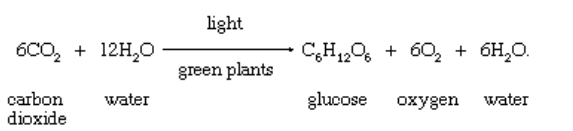
During photosynthesis not only carbohydrates but other substances such as amino acids, proteins, lipids, pigments and other organic compounds are synthesized during photosynthesis.
Plant has two types of minerals: essential microminerals and trace minerals.
Essential minerals include hydrogen oxygen carbon that assist in major photosynthesis and food formation.
Microelements include six types nitrogen (N), phosphorus (P), potassium (K), calcium (Ca), magnesium (Mg), and sulphur that are essential for plant growth flowering stem elongation etc depending upon the role of minerals.
Trace element: these are required in trace quantity. It includes boron (B), chlorine (Cl), copper (Cu), iron (Fe), manganese (Mn), sodium (Na), zinc (Zn), molybdenum (Mo), and nickel (Ni).
Deficiency of any of these elements would lead to deficiency symptoms as in curling of lead yellowish colour etc.
Minerals are very much needed for plant growth. All the minerals contribute to photosynthesis, but a major role is played by Potassium and magnesium and help in the subsequent long‐distance transport of photoassimilates.
Note:
Minerals play an important role in enhancing the plant resistance under high temperature and other environmental stresses. Different minerals have different roles like potassium K help in many physiological processes like maintenance of turgidity, photosynthesis and enzyme activation, etc.
Complete answer:
Hereby the process of photosynthesis is summarized below:
During photosynthesis not only carbohydrates but other substances such as amino acids, proteins, lipids, pigments and other organic compounds are synthesized during photosynthesis.
Plant has two types of minerals: essential microminerals and trace minerals.
Essential minerals include hydrogen oxygen carbon that assist in major photosynthesis and food formation.
Microelements include six types nitrogen (N), phosphorus (P), potassium (K), calcium (Ca), magnesium (Mg), and sulphur that are essential for plant growth flowering stem elongation etc depending upon the role of minerals.
Trace element: these are required in trace quantity. It includes boron (B), chlorine (Cl), copper (Cu), iron (Fe), manganese (Mn), sodium (Na), zinc (Zn), molybdenum (Mo), and nickel (Ni).
Deficiency of any of these elements would lead to deficiency symptoms as in curling of lead yellowish colour etc.
Minerals are very much needed for plant growth. All the minerals contribute to photosynthesis, but a major role is played by Potassium and magnesium and help in the subsequent long‐distance transport of photoassimilates.
Note:
Minerals play an important role in enhancing the plant resistance under high temperature and other environmental stresses. Different minerals have different roles like potassium K help in many physiological processes like maintenance of turgidity, photosynthesis and enzyme activation, etc.
Recently Updated Pages
Master Class 11 Social Science: Engaging Questions & Answers for Success

Master Class 11 English: Engaging Questions & Answers for Success
Master Class 11 Accountancy: Engaging Questions & Answers for Success
Master Class 11 Physics: Engaging Questions & Answers for Success
Master Class 11 Computer Science: Engaging Questions & Answers for Success
Master Class 11 Business Studies: Engaging Questions & Answers for Success
Trending doubts
Find the value of the expression given below sin 30circ class 11 maths CBSE
The teeth used for biting and cutting food are called class 11 biology CBSE
Bond order ofO2 O2+ O2 and O22 is in order A O2 langle class 11 chemistry CBSE
Frogs heart when taken out of the body continues to class 11 biology CBSE
10 examples of diffusion in everyday life
Can anyone list 10 advantages and disadvantages of friction