




All living organisms are made up of
A. Blood
B. Cells
C. Water
D. All of the above
Answer
 Verified
629.1k+ views
Hint: It was discovered by Robert hooke.
Complete answer:
The cell is the basic structural and functional unit of life, we can’t even imagine our life without cells, a complete cell constitutes for the whole organism, our body consists millions of cells, all cells are similar in structure as well as activities, a complete cell is responsible for existing life, anything less than a cell can’t be considered as living, our life results as an interaction between various kinds of cells in our body.
Additional information:
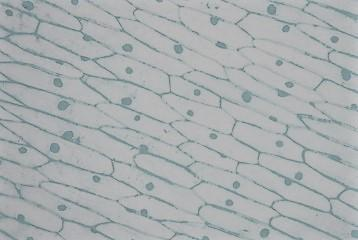
- Robert Hook discovered a cell in a thin slice of cork. It appeared like a honeycomb-like structure which was the cell walls of the dead piece of cork.
- Schleiden and Schwan together formulated cell theory which was later modified by Rudolf Virchow who said about the reason for the existence of cells in his statement “Omnis cellular cellular”.
- The largest cell ever seen is the ostrich egg.
- The smallest living cell ever found is mycoplasma also known as PPLO.
- The longest cell is the nerve cell.
- Nucleus was discovered by Robert Brown.
- Viruses are considered as an exception to cell theory; they are considered as lining as well as nonliving.
- Neurons are least likely to be replaced by new cells as they have the least regenerative power.
Hence the correct answer is the cell.
Note:
- Scheliden was a German botanist and Schwan was a british zoologist.
- PPLO means pleuropneumonia-like organisms i.e they have no fixed shape and size.
Complete answer:
The cell is the basic structural and functional unit of life, we can’t even imagine our life without cells, a complete cell constitutes for the whole organism, our body consists millions of cells, all cells are similar in structure as well as activities, a complete cell is responsible for existing life, anything less than a cell can’t be considered as living, our life results as an interaction between various kinds of cells in our body.
Additional information:
- Robert Hook discovered a cell in a thin slice of cork. It appeared like a honeycomb-like structure which was the cell walls of the dead piece of cork.
- Schleiden and Schwan together formulated cell theory which was later modified by Rudolf Virchow who said about the reason for the existence of cells in his statement “Omnis cellular cellular”.
- The largest cell ever seen is the ostrich egg.
- The smallest living cell ever found is mycoplasma also known as PPLO.
- The longest cell is the nerve cell.
- Nucleus was discovered by Robert Brown.
- Viruses are considered as an exception to cell theory; they are considered as lining as well as nonliving.
- Neurons are least likely to be replaced by new cells as they have the least regenerative power.
Hence the correct answer is the cell.
Note:
- Scheliden was a German botanist and Schwan was a british zoologist.
- PPLO means pleuropneumonia-like organisms i.e they have no fixed shape and size.
Recently Updated Pages
Master Class 11 Social Science: Engaging Questions & Answers for Success

Master Class 11 English: Engaging Questions & Answers for Success
Master Class 11 Maths: Engaging Questions & Answers for Success
Master Class 11 Chemistry: Engaging Questions & Answers for Success
Master Class 11 Biology: Engaging Questions & Answers for Success
Master Class 11 Physics: Engaging Questions & Answers for Success
Trending doubts
Differentiate between an exothermic and an endothermic class 11 chemistry CBSE
One Metric ton is equal to kg A 10000 B 1000 C 100 class 11 physics CBSE
Difference Between Prokaryotic Cells and Eukaryotic Cells
There are 720 permutations of the digits 1 2 3 4 5 class 11 maths CBSE
Draw a diagram of a plant cell and label at least eight class 11 biology CBSE
Two of the body parts which do not appear in MRI are class 11 biology CBSE