




A system X is neither in thermal equilibrium with Y nor with Z. The systems Y and Z:
A) Must be in Thermal Equilibrium
B) Cannot be In Thermal Equilibrium
C) May be in Thermal Equilibrium
D) Can’t be in Thermal Equilibrium
Answer
 Verified
558.9k+ views
Hint:There are four laws of thermodynamics and each of them have their own characteristics. The question we have been asked above is from thermodynamics, so definitely it will follow one of the fundamental laws of thermodynamics. We have to find out which laws agree with the condition we have given in the question.
Complete Step by step solution:
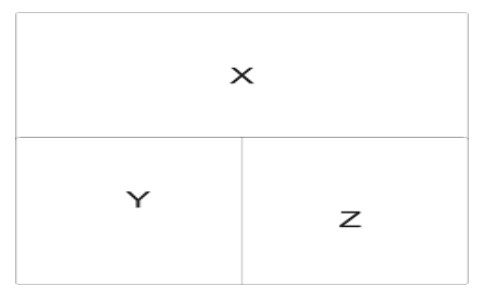
We have been given with three systems and stated that the system X is neither in thermal equilibrium with the system Y and nor with the System Z and then we are asked about the relationship between system Y and Z that if they are in thermal equilibrium with each other or not
The above statement which is according to the question satisfies the Zeroth Law of thermodynamics. Which states that if there are three systems and if two of the three systems are in thermal equilibrium with each other then the third system will also be in equilibrium with them.
So according to the question we know that X is neither in thermal equilibrium with Y and nor with Z hence we can say that the wall in between X and Y and X and Z is completely insulated. But this does not define anything with the wall property between Y and Z so we can not say that these systems will be in equilibrium with each other or not hence we will select the option (C) which states that they can be in thermal equilibrium with each other.
So, we can conclude that option (C) is the correct answer.
Note:
Since the wall property between Y and Z is not defined so we cannot say that these systems will be in equilibrium with each other or not. If the wall is conducting then they will be in thermal equilibrium and if the wall is insulated then they will not be in thermal equilibrium with each other. So the data given in the question is insufficient to tell surely if they will be in equilibrium or not.
Complete Step by step solution:
We have been given with three systems and stated that the system X is neither in thermal equilibrium with the system Y and nor with the System Z and then we are asked about the relationship between system Y and Z that if they are in thermal equilibrium with each other or not
The above statement which is according to the question satisfies the Zeroth Law of thermodynamics. Which states that if there are three systems and if two of the three systems are in thermal equilibrium with each other then the third system will also be in equilibrium with them.
So according to the question we know that X is neither in thermal equilibrium with Y and nor with Z hence we can say that the wall in between X and Y and X and Z is completely insulated. But this does not define anything with the wall property between Y and Z so we can not say that these systems will be in equilibrium with each other or not hence we will select the option (C) which states that they can be in thermal equilibrium with each other.
So, we can conclude that option (C) is the correct answer.
Note:
Since the wall property between Y and Z is not defined so we cannot say that these systems will be in equilibrium with each other or not. If the wall is conducting then they will be in thermal equilibrium and if the wall is insulated then they will not be in thermal equilibrium with each other. So the data given in the question is insufficient to tell surely if they will be in equilibrium or not.
Recently Updated Pages
Master Class 12 Economics: Engaging Questions & Answers for Success

Master Class 12 Physics: Engaging Questions & Answers for Success
Master Class 12 English: Engaging Questions & Answers for Success
Master Class 12 Social Science: Engaging Questions & Answers for Success
Master Class 12 Maths: Engaging Questions & Answers for Success
Master Class 12 Business Studies: Engaging Questions & Answers for Success
Trending doubts
Which are the Top 10 Largest Countries of the World?
What are the major means of transport Explain each class 12 social science CBSE
Draw a labelled sketch of the human eye class 12 physics CBSE
Why cannot DNA pass through cell membranes class 12 biology CBSE
Differentiate between insitu conservation and exsitu class 12 biology CBSE
Draw a neat and well labeled diagram of TS of ovary class 12 biology CBSE