




A straight line represents which electric component
A) load
B) resistor
C) conducting wire
D) cell
Answer
 Verified
478.5k+ views
Hint: In a schematic design of an electrical or electronic circuit, an electronic symbol is a pictogram used to represent different electrical and electronic equipment or functions, such as cables, batteries, resistors, and transistors. These symbols are now generally standardised globally, however historic traditions may differ from country to country or engineering discipline to engineering field.
Complete Step By Step Answer:
A circuit diagram is a depiction of an electrical circuit in graphical form. A pictorial circuit diagram utilises basic pictures of components, whereas a schematic diagram uses standardised symbolic representations to show the circuit's components and interconnections. The actual arrangements in the final device may differ from how the interconnections between circuit components are shown in the schematic diagram. A circuit diagram, unlike a block diagram or a layout diagram, depicts the actual electrical connections. Layout, physical design, or wiring diagram is a drawing that depicts the physical arrangement of cables and the components they link.
Circuit diagrams are drawings with symbols that have changed through time and vary from country to country, but are now mostly worldwide standardised. Simple components frequently featured symbols that represented some aspect of the device's physical structure. The symbol for a resistor, for example, dates back to when the component was built out of a long length of wire wrapped in such a way that it didn't cause inductance, which would have rendered it a coil.
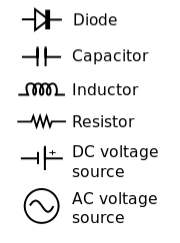
The straight line represents a conducting wire.
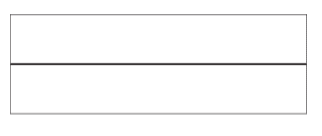
hence option C is correct.
Note:
The connections between leads used to be simple line crossings. The connection of two intersecting wires was represented by a crossing of wires with a "dot" or "blob" to signify a link before the introduction of computerised drafting. Simultaneously, the crossover was simplified to be the same as before, but without the "dot."
Complete Step By Step Answer:
A circuit diagram is a depiction of an electrical circuit in graphical form. A pictorial circuit diagram utilises basic pictures of components, whereas a schematic diagram uses standardised symbolic representations to show the circuit's components and interconnections. The actual arrangements in the final device may differ from how the interconnections between circuit components are shown in the schematic diagram. A circuit diagram, unlike a block diagram or a layout diagram, depicts the actual electrical connections. Layout, physical design, or wiring diagram is a drawing that depicts the physical arrangement of cables and the components they link.
Circuit diagrams are drawings with symbols that have changed through time and vary from country to country, but are now mostly worldwide standardised. Simple components frequently featured symbols that represented some aspect of the device's physical structure. The symbol for a resistor, for example, dates back to when the component was built out of a long length of wire wrapped in such a way that it didn't cause inductance, which would have rendered it a coil.
The straight line represents a conducting wire.
hence option C is correct.
Note:
The connections between leads used to be simple line crossings. The connection of two intersecting wires was represented by a crossing of wires with a "dot" or "blob" to signify a link before the introduction of computerised drafting. Simultaneously, the crossover was simplified to be the same as before, but without the "dot."
Recently Updated Pages
Master Class 12 Economics: Engaging Questions & Answers for Success

Master Class 12 Physics: Engaging Questions & Answers for Success
Master Class 12 English: Engaging Questions & Answers for Success
Master Class 12 Social Science: Engaging Questions & Answers for Success
Master Class 12 Maths: Engaging Questions & Answers for Success
Master Class 12 Business Studies: Engaging Questions & Answers for Success
Trending doubts
Which are the Top 10 Largest Countries of the World?
What are the major means of transport Explain each class 12 social science CBSE
Draw a labelled sketch of the human eye class 12 physics CBSE
Why cannot DNA pass through cell membranes class 12 biology CBSE
Differentiate between insitu conservation and exsitu class 12 biology CBSE
Draw a neat and well labeled diagram of TS of ovary class 12 biology CBSE