




A single slit Fraunhofer Diffraction pattern is formed with white light. For what wavelength of light, the third secondary maximum in the diffraction pattern coincides with the second secondary maximum in the pattern for red light of wavelength \[6500\mathop {\text{A}}\limits^0 \]?
(A) \[4400\mathop {\text{A}}\limits^0 \]
(B) \[\;4100\mathop {\text{A}}\limits^0 \]
(C) \[4642\mathop {\text{A}}\limits^0 \]
(D) \[9100{\text{ }}\mathop {\text{A}}\limits^0 \]
Answer
 Verified
618.9k+ views
Hint: To obtain the secondary maxima due to single slit in diffraction pattern is, $a\sin \theta = n\lambda $
Complete step by step answer:
Given,
The wavelength of the red light is \[6500\mathop {\text{A}}\limits^0 \]
We know that,
$x = \dfrac{{(2n + 1)}}{{2a}} \times \lambda D$
Where,
\[\lambda \]is the wavelength
\[D\] is the diffraction angle
To find the coincidence of the maximum diffraction pattern for the red light,
Substitute the \[\lambda \]value as 6500 \[\mathop {\text{A}}\limits^0 \]
\[x = \dfrac{{4 + 1}}{{2a}} \times 6500\mathop {\text{A}}\limits^0 \times D\]
We need other lights to compare it with the red light.
The maximum diffraction pattern for other light,
\[x = \dfrac{{6 + 1}}{{2a}} \times d \times \mathop {\text{A}}\limits^0 \]
The x value for the red and other light is same
\[\therefore 5 \times 6500 = 7\lambda \]
\[
\lambda = \dfrac{5}{7} \times 6500 \\
\\
\]
\[\lambda = 4642\mathop {\text{A}}\limits^0 \]
Therefore the \[\lambda \]value is \[6442\mathop {\text{A}}\limits^0 \] .
Hence, option(C) the correct option.
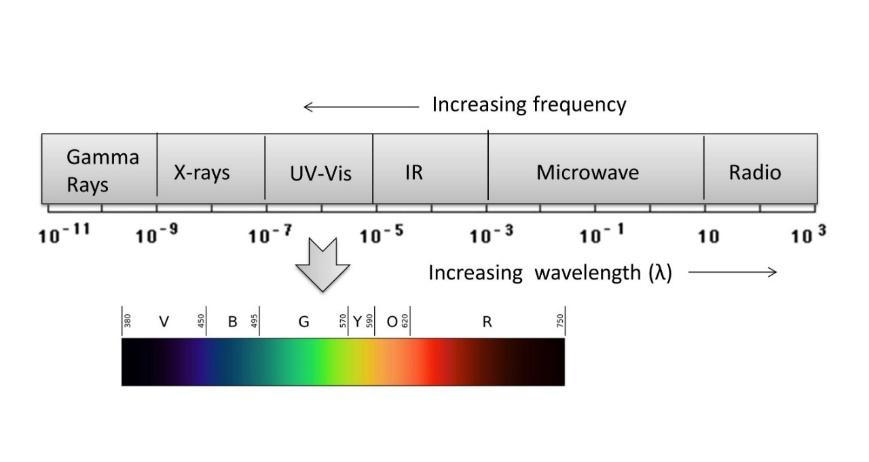
Additional information:
The formation of the diffraction pattern at a larger distance is known as Fraunhofer diffraction. In the Fraunhofer diffraction, the source and the screen are placed at an infinite distance. Mostly the Fraunhofer diffraction occurs on the spherical surface. The Fraunhofer diffraction can be done with the help of the two-converging lens. One lens is placed between the source of the light and the obstacle. Another lens is placed between the obstacle and the screen. The lens between the obstacle and the screen makes the rays parallel to each other while the lens between the obstacle and the screen focuses the parallel rays at the point on the screen.
The single slit diffraction patterns are photographed with a helium-neon laser. The slit diagrams are on the right side and we can obtain the difference between the first maxima by observing the diagram.
Note: There is a significant difference between the Fresnel and the Fraunhofer diffraction. The difference is that the wave fronts in the Fresnel diffractions falling on the obstacle are not planes. Whereas, the wave fronts in the Fraunhofer diffraction fall on the obstacle are planes.
Complete step by step answer:
Given,
The wavelength of the red light is \[6500\mathop {\text{A}}\limits^0 \]
We know that,
$x = \dfrac{{(2n + 1)}}{{2a}} \times \lambda D$
Where,
\[\lambda \]is the wavelength
\[D\] is the diffraction angle
To find the coincidence of the maximum diffraction pattern for the red light,
Substitute the \[\lambda \]value as 6500 \[\mathop {\text{A}}\limits^0 \]
\[x = \dfrac{{4 + 1}}{{2a}} \times 6500\mathop {\text{A}}\limits^0 \times D\]
We need other lights to compare it with the red light.
The maximum diffraction pattern for other light,
\[x = \dfrac{{6 + 1}}{{2a}} \times d \times \mathop {\text{A}}\limits^0 \]
The x value for the red and other light is same
\[\therefore 5 \times 6500 = 7\lambda \]
\[
\lambda = \dfrac{5}{7} \times 6500 \\
\\
\]
\[\lambda = 4642\mathop {\text{A}}\limits^0 \]
Therefore the \[\lambda \]value is \[6442\mathop {\text{A}}\limits^0 \] .
Hence, option(C) the correct option.
Additional information:
The formation of the diffraction pattern at a larger distance is known as Fraunhofer diffraction. In the Fraunhofer diffraction, the source and the screen are placed at an infinite distance. Mostly the Fraunhofer diffraction occurs on the spherical surface. The Fraunhofer diffraction can be done with the help of the two-converging lens. One lens is placed between the source of the light and the obstacle. Another lens is placed between the obstacle and the screen. The lens between the obstacle and the screen makes the rays parallel to each other while the lens between the obstacle and the screen focuses the parallel rays at the point on the screen.
The single slit diffraction patterns are photographed with a helium-neon laser. The slit diagrams are on the right side and we can obtain the difference between the first maxima by observing the diagram.
Note: There is a significant difference between the Fresnel and the Fraunhofer diffraction. The difference is that the wave fronts in the Fresnel diffractions falling on the obstacle are not planes. Whereas, the wave fronts in the Fraunhofer diffraction fall on the obstacle are planes.
Recently Updated Pages
Master Class 12 Business Studies: Engaging Questions & Answers for Success

Master Class 12 Chemistry: Engaging Questions & Answers for Success
Master Class 12 Biology: Engaging Questions & Answers for Success
Class 12 Question and Answer - Your Ultimate Solutions Guide
Master Class 11 English: Engaging Questions & Answers for Success
Master Class 11 Maths: Engaging Questions & Answers for Success
Trending doubts
Which is more stable and why class 12 chemistry CBSE
Which are the Top 10 Largest Countries of the World?
Draw a labelled sketch of the human eye class 12 physics CBSE
Differentiate between homogeneous and heterogeneous class 12 chemistry CBSE
What are the major means of transport Explain each class 12 social science CBSE
Sulphuric acid is known as the king of acids State class 12 chemistry CBSE