




How can a nonpolar molecule contain a polar bond.
Answer
 Verified
582.6k+ views
Hint: We should know about polar compounds and non-polar compounds. In some triatomic molecules polar bonds are observed in a non-polar compound. The polar bonds are formed by atoms having electronegativity difference by sharing electrons by each atom.
Complete step by step answer:
The covalent bond is formed by the mutual sharing of the electrons between the two atoms to form a molecule.
There are two types of covalent bond, polar covalent bond and non-polar covalent bond.
The polar covalent bond is formed between the two atoms by the mutual sharing of valence electrons by the two atoms. In polar covalent bonds, electronegativity difference is observed between the two atoms. The polar covalent bond between the atoms forms a polar covalent compound.
The non-polar covalent bond is formed between the two atoms by sharing of electrons between the two atoms. In non-polar covalent bond the electronegativity difference is not-observed. Both the atoms have the same electronegativity value. The non-polar covalent bond between the atoms form non-polar covalent compound.
In a non-polar compound like carbon dioxide, polar bonds are observed. It can be explained by first seeing the structure of carbon dioxide. In carbon dioxide, a carbon atom is bonded with oxygen atom by a double bond from one side and on the other side with another oxygen atom by a double bond.
The structure is shown below.
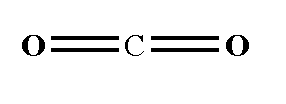
The oxygen atom is more electronegative than the carbon atom, therefore the electron pull will be towards the oxygen atom. Due to electronegativity difference the bond is polar. As on both sides of the carbon atom, two oxygen atoms are present therefore the electronegativity difference is cancelled out, then the carbon dioxide is a non-polar compound.
Note: You should know that the geometry of a carbon dioxide molecule is linear which means that the atoms present in the molecule form a line which have an angle of 180 degree.
Complete step by step answer:
The covalent bond is formed by the mutual sharing of the electrons between the two atoms to form a molecule.
There are two types of covalent bond, polar covalent bond and non-polar covalent bond.
The polar covalent bond is formed between the two atoms by the mutual sharing of valence electrons by the two atoms. In polar covalent bonds, electronegativity difference is observed between the two atoms. The polar covalent bond between the atoms forms a polar covalent compound.
The non-polar covalent bond is formed between the two atoms by sharing of electrons between the two atoms. In non-polar covalent bond the electronegativity difference is not-observed. Both the atoms have the same electronegativity value. The non-polar covalent bond between the atoms form non-polar covalent compound.
In a non-polar compound like carbon dioxide, polar bonds are observed. It can be explained by first seeing the structure of carbon dioxide. In carbon dioxide, a carbon atom is bonded with oxygen atom by a double bond from one side and on the other side with another oxygen atom by a double bond.
The structure is shown below.
The oxygen atom is more electronegative than the carbon atom, therefore the electron pull will be towards the oxygen atom. Due to electronegativity difference the bond is polar. As on both sides of the carbon atom, two oxygen atoms are present therefore the electronegativity difference is cancelled out, then the carbon dioxide is a non-polar compound.
Note: You should know that the geometry of a carbon dioxide molecule is linear which means that the atoms present in the molecule form a line which have an angle of 180 degree.
Recently Updated Pages
Master Class 11 English: Engaging Questions & Answers for Success

Master Class 11 Social Science: Engaging Questions & Answers for Success
Master Class 11 Maths: Engaging Questions & Answers for Success
Master Class 11 Biology: Engaging Questions & Answers for Success
Master Class 11 Physics: Engaging Questions & Answers for Success
Master Class 11 Chemistry: Engaging Questions & Answers for Success
Trending doubts
One Metric ton is equal to kg A 10000 B 1000 C 100 class 11 physics CBSE
Difference Between Prokaryotic Cells and Eukaryotic Cells
1 ton equals to A 100 kg B 1000 kg C 10 kg D 10000 class 11 physics CBSE
Find the value of the expression given below sin 30circ class 11 maths CBSE
Two of the body parts which do not appear in MRI are class 11 biology CBSE
What are hard magnetic materials class 11 physics CBSE