




A gas decolorizes alkaline $KMn{O_4}$ solution but does not give precipitate with $AgN{O_3}$ it is
A: Ethylene.
B: Ethane.
C: Methane.
D: Acetylene.
Answer
 Verified
578.4k+ views
Hint: Try to recall the Baeyer’s test and Silver Nitrate test with hydrocarbons. If we know the reactions and their products, then we will be able to find the solution for the given question.
Complete step by step answer:
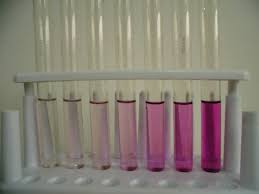
Let us start by doing Baeyer's test. Baeyer’s test is nothing but the test to find whether the given hydrocarbon $({C_x}{H_y})$ sample is a saturated (single-bonded throughout) or unsaturated (double $(C = C)$ or triple $(C \equiv C)$ bonded). When we mix Baeyer’s reagent, that is, Potassium Permanganate $KMn{O_4}$ with the hydrocarbon and decolorizing of $KMn{O_4}$ takes place then the given hydrocarbon is unsaturated. Methane and ethane are saturated hydrocarbons and hence they will not decolorize the $KMn{O_4}$ solution. Hence they cannot be the correct answers.
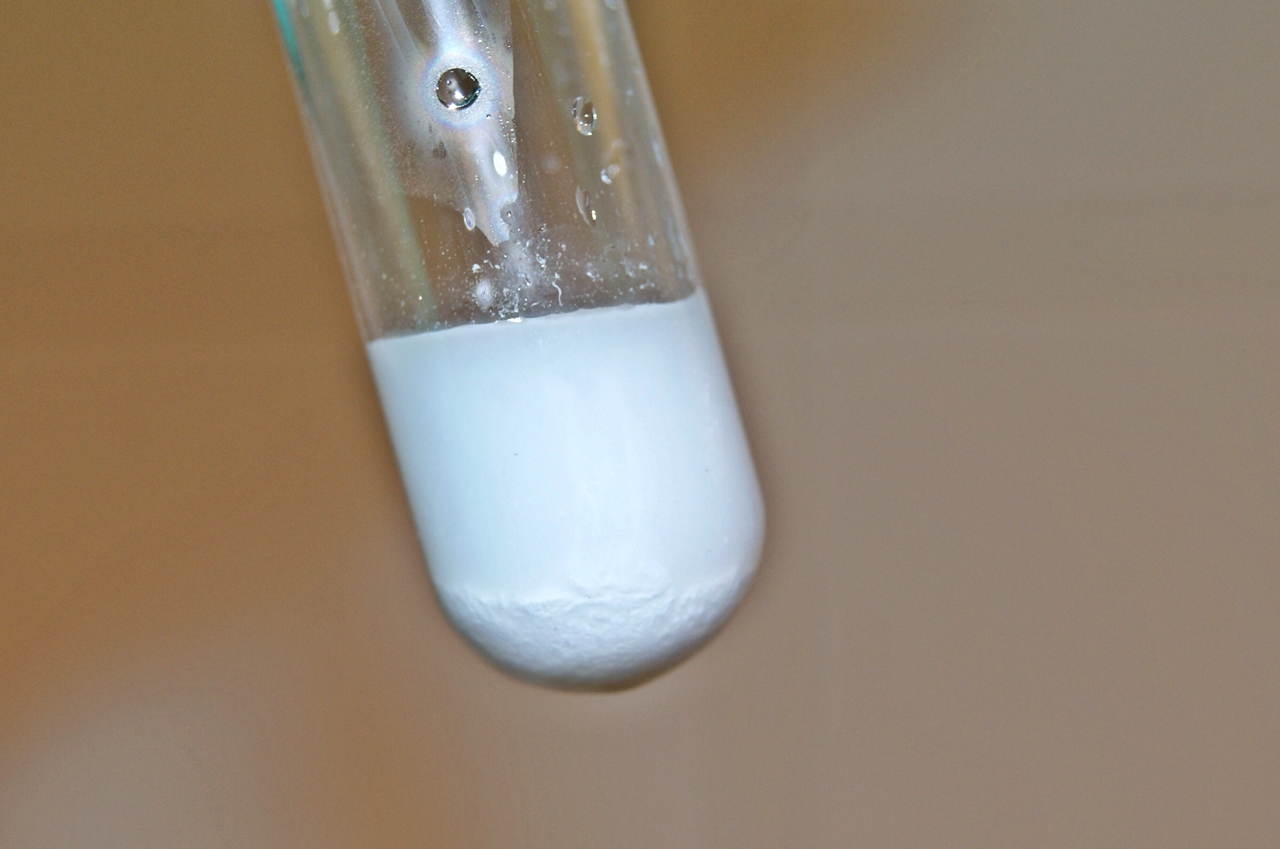
To differentiate between alkenes (double bonded hydrocarbons) and linear alkynes (triple bonded linear hydrocarbons) the $AgN{O_3}$ test is conducted. Alkynes reacting with $AgN{O_3}$ will give rise to a white precipitate but alkenes don’t. Since the question asks the gas that does not precipitate with$AgN{O_3}$, the answer should be an alkene.
Since the only alkene in the options is Ethylene, the solution for the given question is Option A: Ethylene.
Note:
The $AgN{O_3}$ test cannot be passed by any alkynes which are non-terminal alkynes. That is they must have a triple bond at the terminal point or the last carbon. Acetylene has a triple bond at by terminal carbon (It has only two carbons so either of them are terminal). Other than that, but-1-yne will react with $AgN{O_3}$ to form precipitate. Questions can be changed in their format too. So look out for the questions and apply the test results.
Complete step by step answer:
Let us start by doing Baeyer's test. Baeyer’s test is nothing but the test to find whether the given hydrocarbon $({C_x}{H_y})$ sample is a saturated (single-bonded throughout) or unsaturated (double $(C = C)$ or triple $(C \equiv C)$ bonded). When we mix Baeyer’s reagent, that is, Potassium Permanganate $KMn{O_4}$ with the hydrocarbon and decolorizing of $KMn{O_4}$ takes place then the given hydrocarbon is unsaturated. Methane and ethane are saturated hydrocarbons and hence they will not decolorize the $KMn{O_4}$ solution. Hence they cannot be the correct answers.
To differentiate between alkenes (double bonded hydrocarbons) and linear alkynes (triple bonded linear hydrocarbons) the $AgN{O_3}$ test is conducted. Alkynes reacting with $AgN{O_3}$ will give rise to a white precipitate but alkenes don’t. Since the question asks the gas that does not precipitate with$AgN{O_3}$, the answer should be an alkene.
Since the only alkene in the options is Ethylene, the solution for the given question is Option A: Ethylene.
Note:
The $AgN{O_3}$ test cannot be passed by any alkynes which are non-terminal alkynes. That is they must have a triple bond at the terminal point or the last carbon. Acetylene has a triple bond at by terminal carbon (It has only two carbons so either of them are terminal). Other than that, but-1-yne will react with $AgN{O_3}$ to form precipitate. Questions can be changed in their format too. So look out for the questions and apply the test results.
Recently Updated Pages
Master Class 12 Economics: Engaging Questions & Answers for Success

Master Class 12 Physics: Engaging Questions & Answers for Success
Master Class 12 English: Engaging Questions & Answers for Success
Master Class 12 Social Science: Engaging Questions & Answers for Success
Master Class 12 Maths: Engaging Questions & Answers for Success
Master Class 12 Business Studies: Engaging Questions & Answers for Success
Trending doubts
Which are the Top 10 Largest Countries of the World?
What are the major means of transport Explain each class 12 social science CBSE
Draw a labelled sketch of the human eye class 12 physics CBSE
Why cannot DNA pass through cell membranes class 12 biology CBSE
Differentiate between insitu conservation and exsitu class 12 biology CBSE
Draw a neat and well labeled diagram of TS of ovary class 12 biology CBSE