




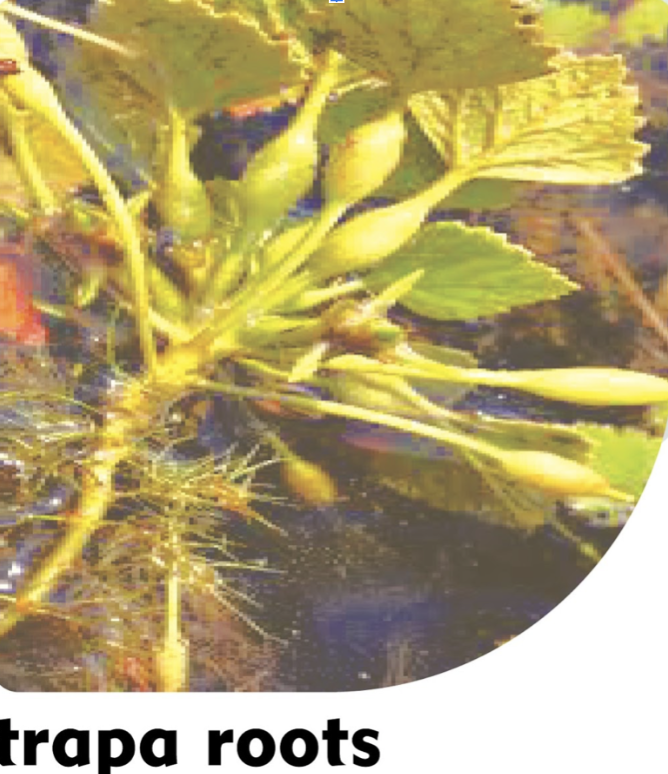
A condition found in roots of a plant having assimilatory submerged roots and spongy petioles
(a) Tetrarch
(b) Triarch
(c) Monarch
(d) Diarch
Answer
 Verified
651.6k+ views
Hint: Based on the number of xylem strands present in the stele, it can be of different types. Among this, roots of a plant having assimilatory submerged roots and spongy petioles are found in a type with a single strand of xylem in the stele.
Complete step by step answer:
Monarch is a condition found in the roots of a plant having assimilatory submerged roots and spongy petioles. They have stele with 1 xylem strand. example: Trapa.
Tetrarch stele - the stele with 4 xylem strands. For example Gossypium.
Triarch stele - the stele with 3 xylem strands. An example of it is Pisum.
Diarch stele - stele with two xylem strands - eg: Nicotiana.
According to the older botanists, the vascular tissue is that the fundamental unit within the system of pteridophytes and better plants. Van Tieghem and Douliot (1886) interpreted the plant body of a vascular plant in a different way.
According to them, the elemental parts of a shoot are the cortex and a central cylinder is understood as stele. Thus the stele is defined as a central vascular cylinder, with or without the presence of pith and delimited the cortex by endodermis.
So, the correct answer is, ‘Monarch.’
Note: In a vascular plant, the stele is the central portion of the root or stem containing the tissues derived from the procambium. These include plant tissue, in some cases ground tissue (pith) , and a pericycle, which, if present, defines the outermost boundary of the stele. In other words, vascular tissue or the stele consists of three tissues: the pericycle, the xylem, and also the phloem.
Complete step by step answer:
Monarch is a condition found in the roots of a plant having assimilatory submerged roots and spongy petioles. They have stele with 1 xylem strand. example: Trapa.
Tetrarch stele - the stele with 4 xylem strands. For example Gossypium.
Triarch stele - the stele with 3 xylem strands. An example of it is Pisum.
Diarch stele - stele with two xylem strands - eg: Nicotiana.
According to the older botanists, the vascular tissue is that the fundamental unit within the system of pteridophytes and better plants. Van Tieghem and Douliot (1886) interpreted the plant body of a vascular plant in a different way.
According to them, the elemental parts of a shoot are the cortex and a central cylinder is understood as stele. Thus the stele is defined as a central vascular cylinder, with or without the presence of pith and delimited the cortex by endodermis.
So, the correct answer is, ‘Monarch.’
Note: In a vascular plant, the stele is the central portion of the root or stem containing the tissues derived from the procambium. These include plant tissue, in some cases ground tissue (pith) , and a pericycle, which, if present, defines the outermost boundary of the stele. In other words, vascular tissue or the stele consists of three tissues: the pericycle, the xylem, and also the phloem.
Recently Updated Pages
If x a + bt + ct2 where x is in meters and t is in class 11 physics CBSE

A car covers the first half distance between two places class 11 physics CBSE
The resultant of two vectors overrightarrow P and overrightarrow class 11 physics CBSE
Find the value of cos 135 class 11 maths CBSE
A mass M is held in place by an applied force F and class 11 physics CBSE
A solution of glucose in water is labelled as 10 dfracwv class 11 chemistry CBSE
Trending doubts
One Metric ton is equal to kg A 10000 B 1000 C 100 class 11 physics CBSE
Find the value of the expression given below sin 30circ class 11 maths CBSE
What do you mean by retardation What is its SI uni class 11 physics CBSE
Draw a diagram of nephron and explain its structur class 11 biology CBSE
10 examples of friction in our daily life
Difference between physical and chemical change class 11 chemistry CBSE