






Number patterns worksheet with answers and step by step solutions
A number pattern is a pattern or sequence of numbers. In general, this pattern provides a similar link between all integers. For example: 0, 5, 10, 15, 20, 25, … In this case, we get the numbers in the pattern by counting by 5.
Questions:
1. Fill in the blanks.
2,_,6,_8,10,_,14,_
3,_,_,15,18
4,8,_,16
2. 3, 9, 15, 21, 27, __. What number goes in the blank?
3. Observe the next number in the given series 1, 3, 6, …
4. Observe the next number in the given series 1, 2, 3, 4, 5, …
5. Find the number and also observe the pattern rule.
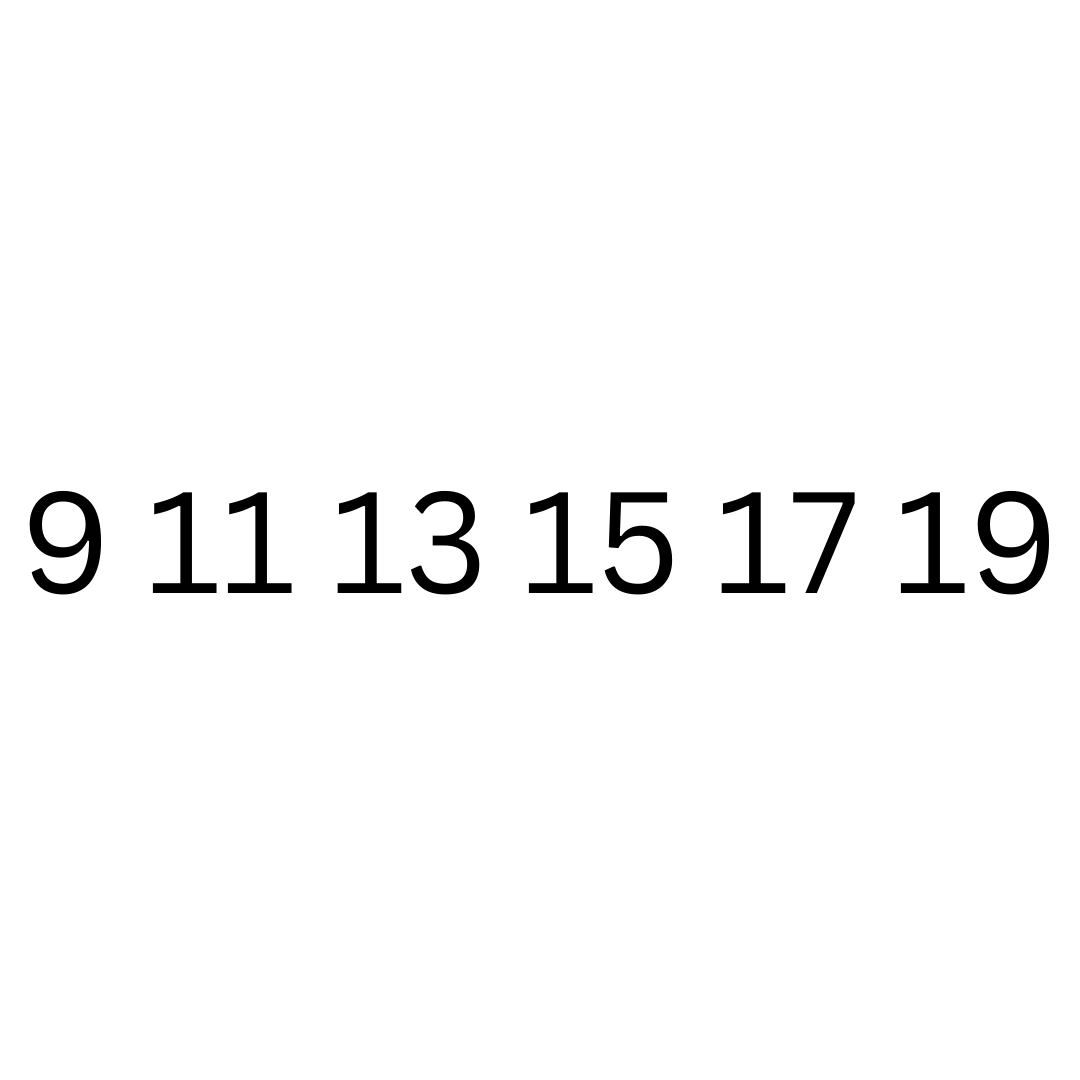
The Number Pattern
6. Observe the pattern and write the answer.

Pattern Shown through Image
7. Find the value of x in the given series 1, 2, 4, 8, x, 32, 64, …
8. Find the next term.
50, 45, 40, 35, 30,?
9. Calculate the value of S in the given series 5, 7, 9, 11, S, 15.
10.3, 6, 12, 24, __. What number goes in the blank?
11. What is the next number in the series?
10,12,15,1924
12. Find the next number and the pattern followed by the image.
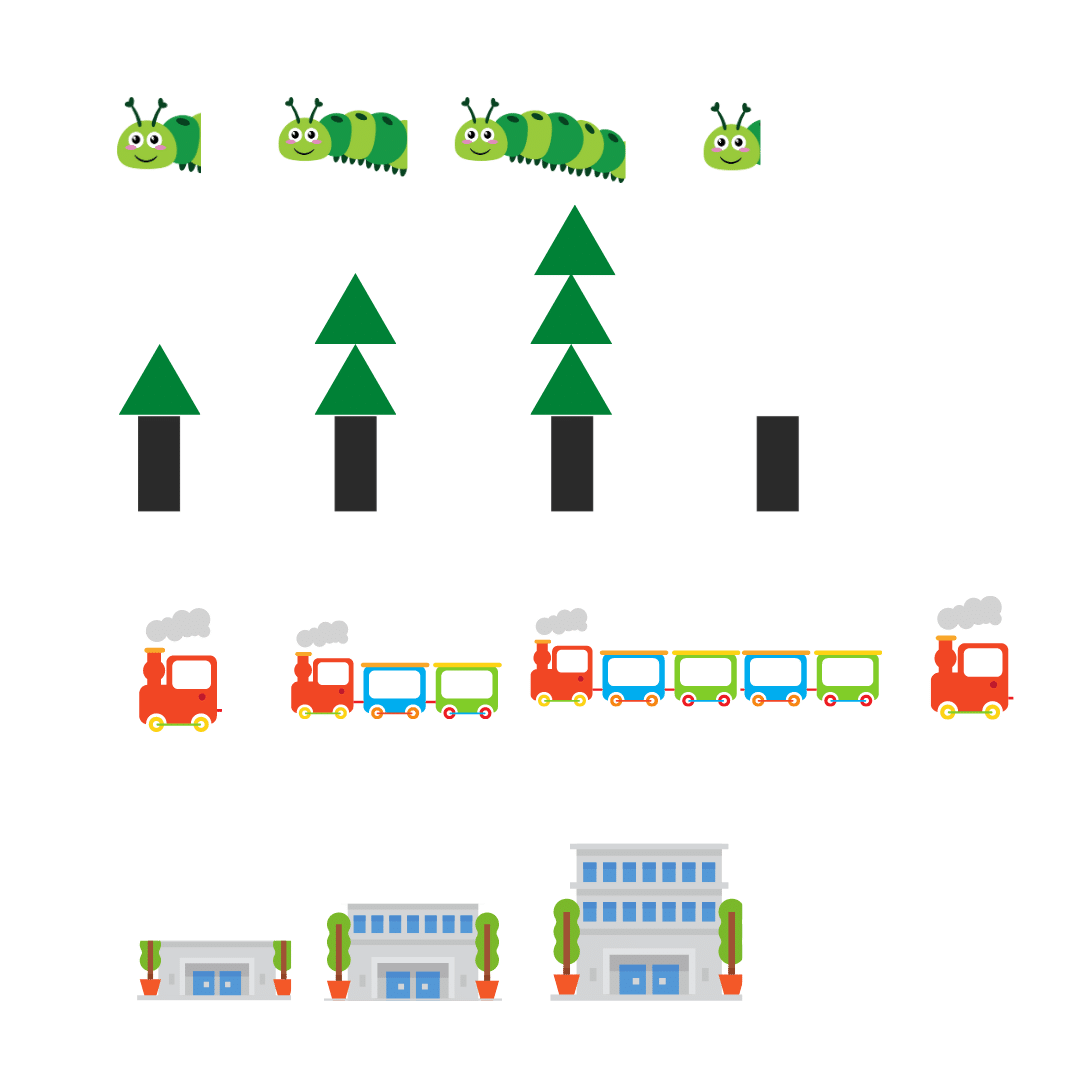
Pattern Shown through Image
13. 19, 22, 25, 28, __. What number goes in the blank?
14. Calculate the value of P in the given series 11, 17, 23, 29, P, 47, 53.
15. Fill the missing term- 5,10,15,_,25,30,_,_.
Answers:
1.
2,4,6,_8,10,12,14,16
3,6,9,15,18
4,8,12,16
2. 3, 9, 15, 21, 27, 33.
3. The next number in the given series 1, 3, 6,9,12,15……………
4. The next number in the given series is 1, 2, 3, 4, 5,6,7,8,3……..
5. The next number will be: 21, the pattern followed is +2
The Number Pattern
6.
Pattern Shown through Image
Next will be 5 balls.
The red star will come next.
3 yellow stars will come next.
Ball with 3 small circles will come next.
7. The value of x in the given series is:16
1, 2, 4, 8, 16, 32, 64, …
8.
50, 45, 40, 35, 30,25
9. The value of S in the given series is:13
5, 7, 9, 11, 13, 15.
10.3, 6, 12, 24, 48.
11. The next number in the series is:
10,12,15,19,24,29
12.
Pattern Shown through Image
The series is followed by +2 pattern. Hence, the next caterpillar will have a heaving body consisting of 7 circles.
The pattern followed is +1, the next tree will have 4 triangles.
The pattern followed is multiplied by 2, next train will have 8 boxes.
The pattern followed is +1, the next building will have 4 flats.
13. 19, 22, 25, 28, 31.
14. The value of P in the given series is 11, 17, 23, 29,35, 47, 53.
15. The missing term is - 5,10,15,20,25,30,35,40.
What are Number Patterns?
Apart from the conventional series of numbers students study at the basic level, they will also learn how to find numbers in a manipulated series. This type of set of numbers follows a pattern. Recognising this pattern will be the main motive of the questions framed. So, the numbers following a particular format are called number patterns. Let us consider an example here.
2, 4, 6, 8, 10
If we look closely, the numbers written here follow a particular pattern. All these numbers till 10 are even. The odd ones are missing. So, the pattern of this set of numbers is even.
Importance of Number Patterns Worksheets
Based on this principle, students will need a set of questions to practice and check their preparation level. For this, the worksheets designed by the Maths experts of Vedantu will be the best bet. The questions included in these worksheets will be ideal for solving to set the concepts of number patterns perfectly in their minds.
The questions are set so that students can easily comprehend the instructions given and solve them easily. They will also find the solution to all these questions. these solutions will act as the perfect guide to follow and find out how to solve such questions without hassle.
Benefits of Solving Complete the Pattern in Maths Worksheets
These worksheets are scientifically compiled to serve the prime purpose of developing concepts related to number patterns. Solving the questions will enable kids to think critically and perfectly recognise number patterns.
Resolving doubts related to these questions will not be a problem when you have the solutions in your hands. You will witness progress in your preparation level when you start resolving doubts.
Find out the answering patterns for solving these questions from the solutions given. Imbibe the same skills to score more in the maths exams.
Download Types of Patterns in Math Worksheet PDF
Get the free PDF version of these worksheets and learn to find the Types of Patterns in Math. Focus on how the questions and answers have been compiled to grab hold of the concepts well. Develop analytical and problem-solving skills using these worksheets as the perfect practice material.
FAQs on Number Patterns Worksheets for Practice and Mastery
1. What is a number pattern in Maths?
A number pattern is a sequence of numbers that follow a specific rule or formula. In a number patterns worksheet, students identify how numbers increase, decrease, or change.
- The pattern follows a fixed rule (e.g., add 3 each time).
- Numbers are called terms in the sequence.
- Example: 2, 4, 6, 8 → rule is +2.
2. How do you find the rule of a number pattern?
To find the rule of a number pattern, look at how each term changes from one number to the next.
- Step 1: Subtract consecutive terms.
- Step 2: Check if the difference is constant.
- Step 3: If constant, it is an arithmetic pattern.
3. What is the formula for an arithmetic number pattern?
The formula for an arithmetic number pattern is an = a + (n − 1)d.
- a = first term
- d = common difference
- n = term number
4. What is the difference between arithmetic and geometric patterns?
The difference is that an arithmetic pattern adds or subtracts a constant number, while a geometric pattern multiplies or divides by a constant number.
- Arithmetic example: 4, 7, 10, 13 → +3
- Geometric example: 3, 6, 12, 24 → ×2
5. How do you find the next term in a number pattern?
To find the next term in a number sequence, apply the same rule used between earlier terms.
- Identify the pattern rule.
- Apply the rule to the last given number.
6. Can you give an example of a growing and shrinking number pattern?
A growing pattern increases in value, while a shrinking pattern decreases in value.
- Growing example: 1, 4, 7, 10 → +3
- Shrinking example: 20, 15, 10, 5 → −5
7. How do you find the missing number in a number pattern?
To find a missing number in a pattern, first determine the rule and then apply it to fill the gap.
- Example: 6, __, 14, 18
- Difference between 14 and 18 is 4.
- So the rule is +4.
- Missing number is 6 + 4 = 10.
8. What is a recursive rule in number patterns?
A recursive rule defines each term using the previous term in the sequence.
- It tells how to get the next term.
- Example: Start at 2, add 5 each time.
- Recursive form: an = an−1 + 5
9. Why are number patterns important in Maths?
Number patterns are important because they build the foundation for algebra, sequences, and problem-solving skills.
- Help students recognize relationships between numbers.
- Develop logical and analytical thinking.
- Prepare learners for formulas and functions.
10. What are common mistakes when solving number patterns?
Common mistakes in number pattern problems include misidentifying the rule or ignoring negative differences.
- Assuming the pattern is addition when it is multiplication.
- Not checking all terms for consistency.
- Forgetting that patterns can decrease.
