



Printable Number 13 Tracing Counting and Writing Practice Sheets
Thirteen is the sixth prime number. It has a twin prime of 11 and a cousin prime of 17. It is the second Wilson prime (the other two being 5 and 563) and the lowest emirp in decimal. A pleasant and fortunate number. A prime number is a whole number larger than one with just two factors: itself and one.
A prime number cannot be divided by any other positive integer without a remainder, decimal, or fraction being left. 13 is an example of a prime number. It has just two divisors: 1 and 13. Is the number 13 a composite number? No, because 13 contains just two variables, 1 and 13. In other words, 13 is not a composite number because it has just two elements. What numbers add up to 13? 6 and 7 are the numbers.
Questions:
1. Count the number of items below and trace the number.
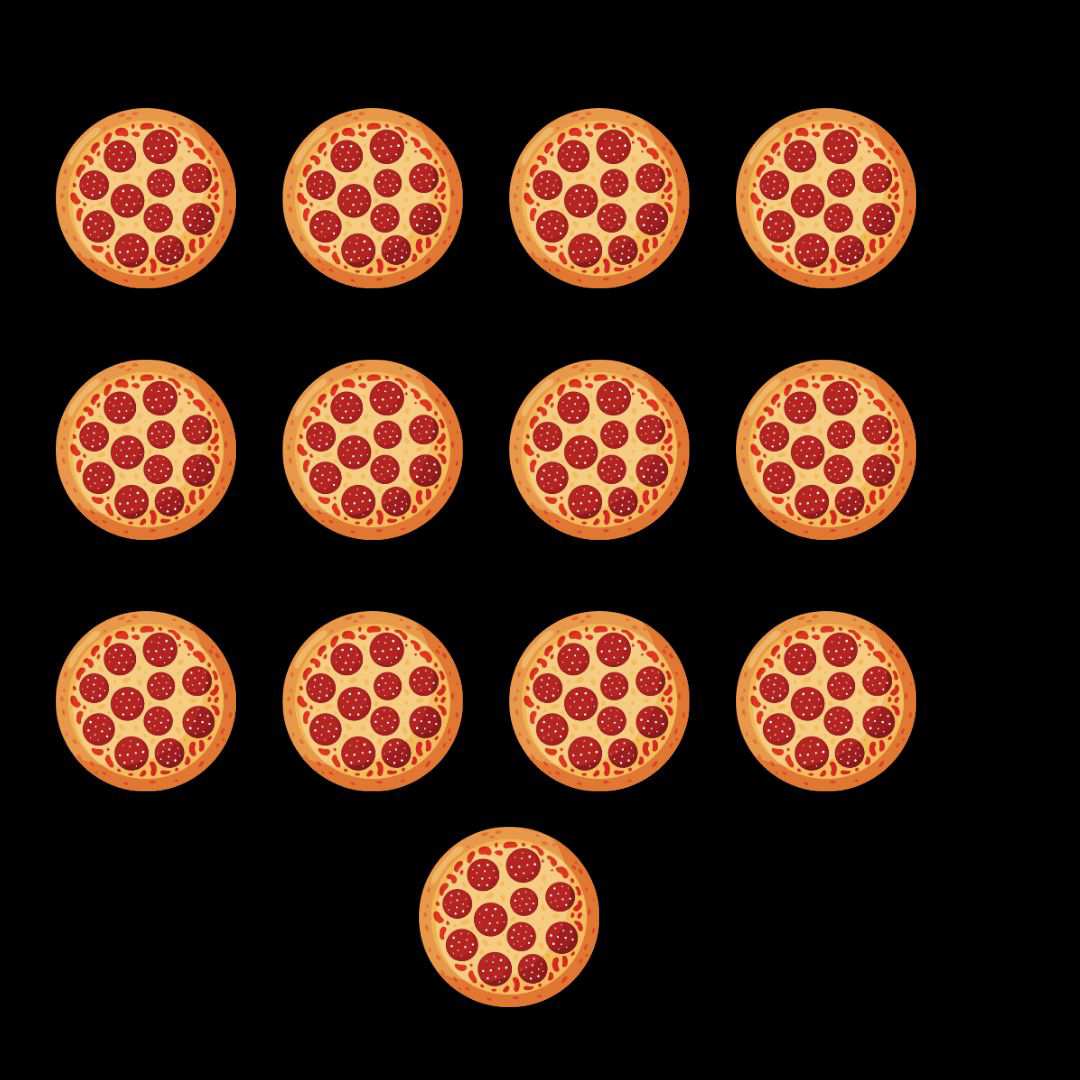
a number a pizzas
2. As shown, write the number which will come in the blank space given.
8,9,10,11,12,__________,14,15,16
3. Observe the pattern and write the number.
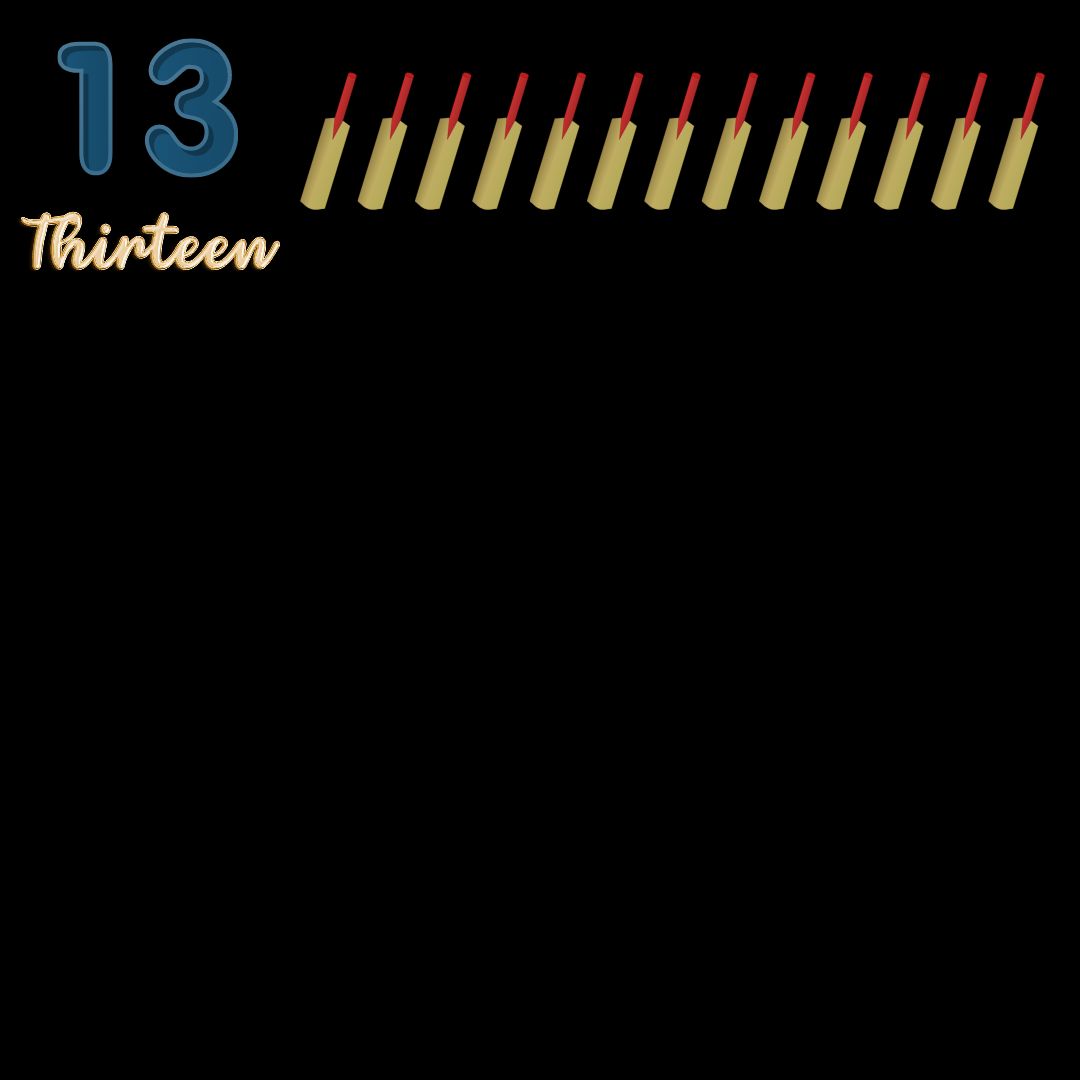
number 13
4. Which number will come next?
3,5,___,9,11,___,15,17
5. Which number comes after number 12?
6. Which odd number comes before the number 14?
7. Count the number of guitars in the image.
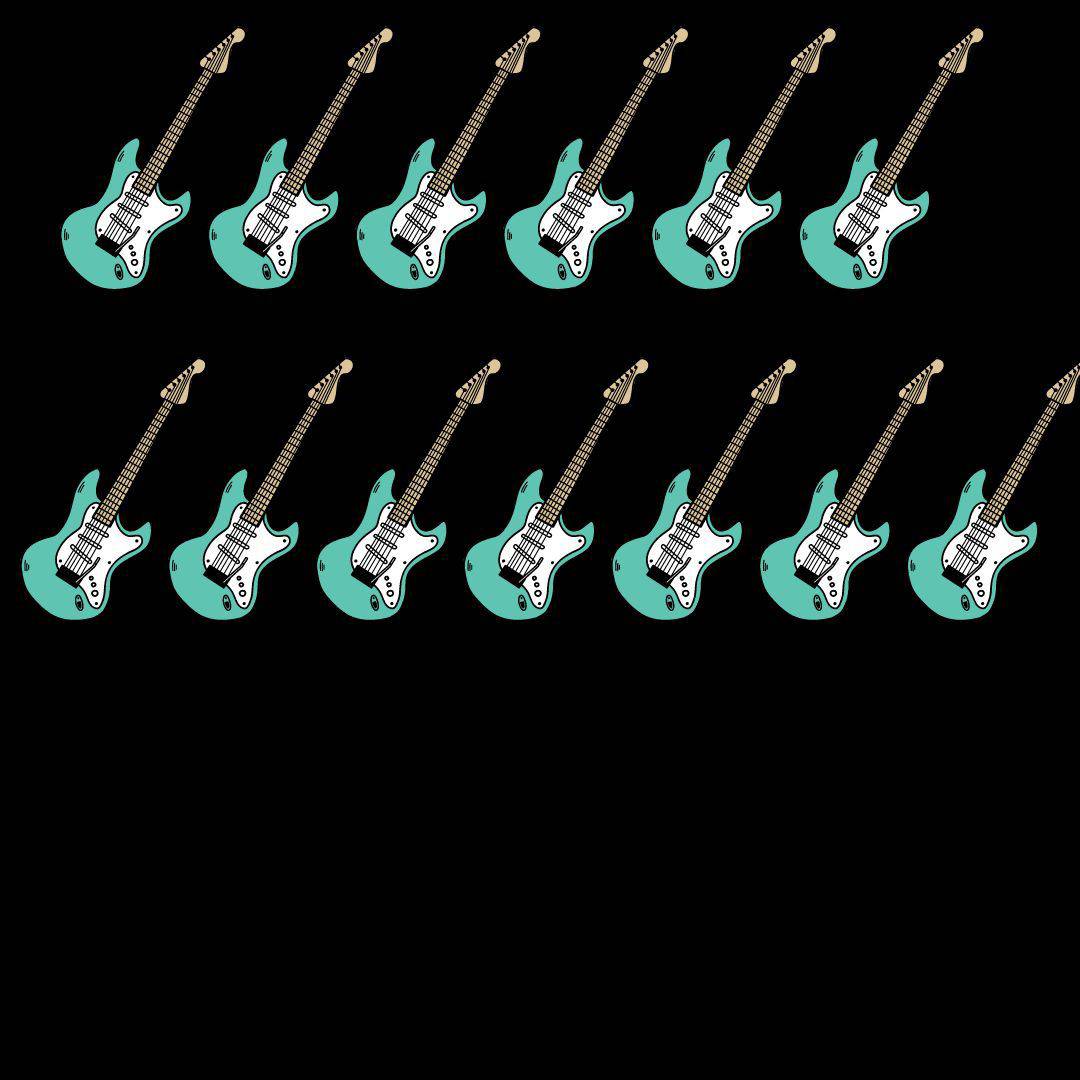
guitars
8. Which number will come next in the series?
1,2,3,4,5,6,7,8,9,10,11,12…………
9. Write the number 13 in word form.
10. Add the numbers 13+13=
11. Add the numbers and answer which number will come.
2+3+5+2+1=
12. Trace and write the number.

number 13
13. Divide the number and write the result.
Twenty-six divided by thirteen will give?
14. What will come if we add 10+15 and subtract 12?
15. Count the number of scissors and write the answer.
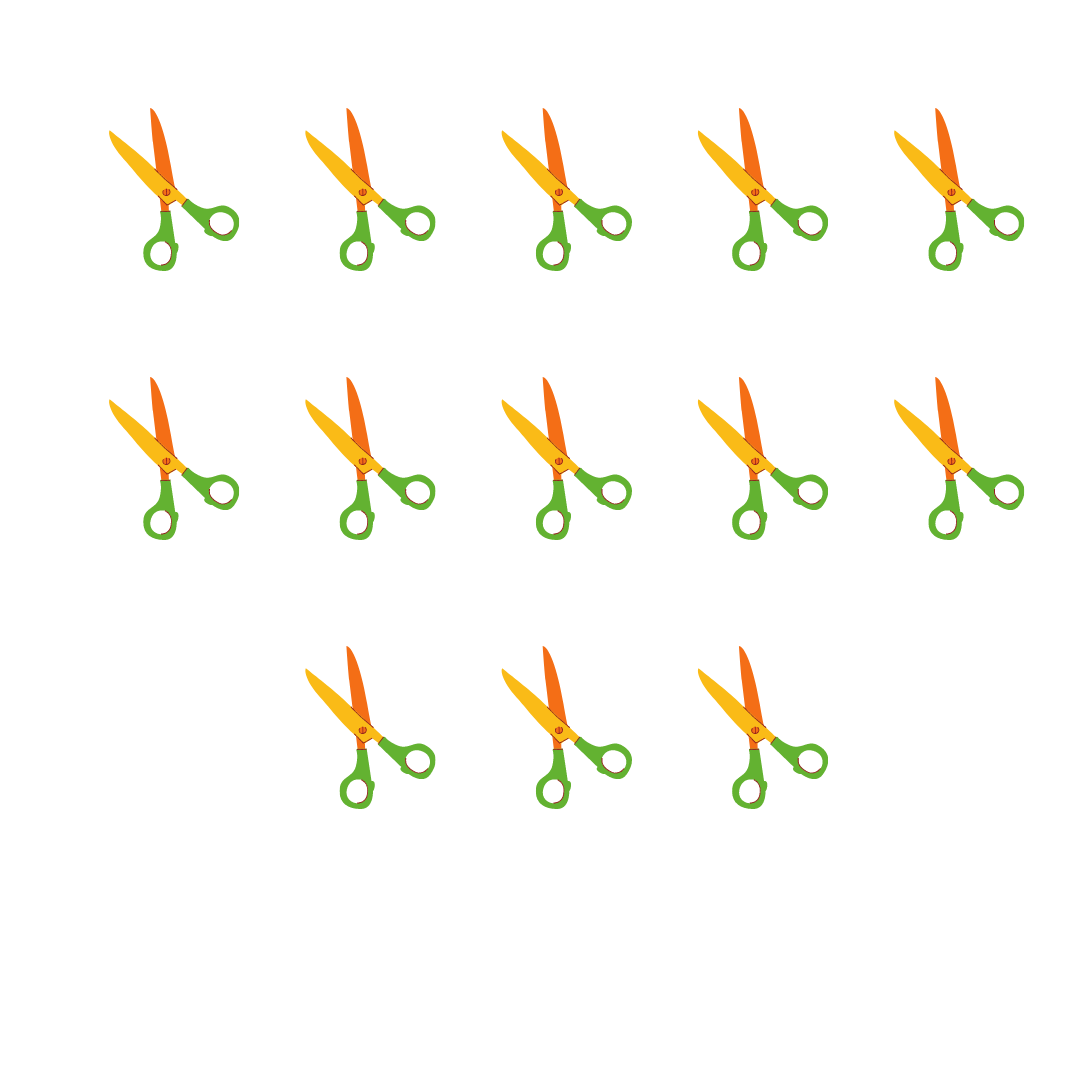
scissors
Answer
1. There are a total of 13 pizza’s as shown in the image.
It is written as 13.
a number of pizzas
2.
8,9,10,11,12,13,14,15,16
3.
The number is written as 13
number 13
4.
The number that will come next is:
3,5,7,9,11,13,15,17
5. The number that comes after number 12 is number 13.
6. The odd number that comes before the number 14 is number 13.
7. There are a total of thirteen guitars as shown in the image.
guitars
8.
The number that will come next in the series is:
1,2,3,4,5,6,7,8,9,10,11,12,13,14,15………..
9. The number 13 in word form is written as THIRTEEN.
10. The numbers that come after adding 13+13=26.
11. 2+3+5+2+1=13
12. The number is written as 13.
number 13
13.
Twenty-six divided by thirteen will give?
The answer is number 13
14. If we add 10+15 and subtract 12 then, the number 13 will come.
15. The number of scissors in the image is 13(thirteen).
scissors
Importance of Numbers 13 Worksheet
Kids learn to recognise the number 13 in a series. They learn to write it down by using the digits 1 and 3 respectively. When they are done practising writing this number, they will need a proper ground to assess their preparation. This is where the worksheets designed by the experts can be used perfectly.
This worksheet contains the ideal questions designed within an interesting mode to engage children to learn this number properly. The questions will ask the children to write down the number by following the instructions properly. They can also ask them to find the number 13 from a list of numbers given. The prime aim of these questions is to check whether the kids can recognise the number easily and master writing it properly.
Benefits of Solving Number 13 Worksheets
Solving these worksheets will increase the idea of using this number in a proper way. Kids will be able to recognise this number easily from a list and will learn to write it down precisely.
The interactive questions that ask children to Colour the Hidden Number 13 in a worksheet will also make the learning sessions more fun. Kids will love to colour and learn how to identify this number by solving questions that are composed in the form of puzzles.
Solving a worksheet will also enable kids to learn how to follow instructions. They will become better at using their analytical skills and answering these questions precisely.
Download Numbers 13 Worksheets PDF
Download this worksheet PDF and make the preparation time more productive. Focus on how the experts have formulated these questions to understand the context. Check the methods of solving these questions and master the skill. Learn the number 13 perfectly and proceed to the next level of preparing the number system.
FAQs on Number 13 Worksheets for Preschool and Kindergarten
1. What are Number 13 worksheets?
Number 13 worksheets are printable or digital maths activities designed to help children recognize, write, count, and understand the number 13. These worksheets usually include:
- Tracing and writing the numeral 13
- Counting 13 objects
- Coloring groups of 13 items
- Simple addition and subtraction within 13
2. How do you teach the number 13 to kindergarten students?
To teach the number 13, start by helping children recognize, count, and write 13 through hands-on and visual activities. Follow these simple steps:
- Count aloud from 1 to 13 using objects like blocks or beads
- Show that 13 means 10 + 3
- Practice tracing and writing the numeral 13
- Use Number 13 worksheets for reinforcement
3. How do you write the number 13 in words and numerals?
The number 13 is written as 13 in numerals and thirteen in words. It comes after 12 and before 14 in the counting sequence. When teaching number names, encourage students to:
- Say “thirteen” clearly
- Spell it as t-h-i-r-t-e-e-n
- Match the word “thirteen” with the numeral 13
4. What is the value of the digit 1 and 3 in the number 13?
In the number 13, the digit 1 has a value of 10 and the digit 3 has a value of 3. This is because 13 is made of:
- 1 ten (1 × 10 = 10)
- 3 ones (3 × 1 = 3)
5. Is 13 an odd or even number?
The number 13 is an odd number because it is not divisible evenly by 2. When you divide 13 by 2, you get 6 remainder 1. Odd numbers always end in 1, 3, 5, 7, or 9, and since 13 ends in 3, it is odd.
6. Is 13 a prime number?
Yes, 13 is a prime number because it has exactly two factors: 1 and 13. A prime number can only be divided evenly by 1 and itself. The factors of 13 are:
- 1
- 13
7. What are the factors of 13?
The only factors of 13 are 1 and 13. A factor is a number that divides another number exactly without leaving a remainder. When checking 13:
- 13 ÷ 1 = 13
- 13 ÷ 13 = 1
8. Can you give an example of addition and subtraction with 13?
Yes, simple addition and subtraction facts for 13 help build number fluency. Here are examples:
- Addition: 10 + 3 = 13
- Addition: 8 + 5 = 13
- Subtraction: 13 − 4 = 9
- Subtraction: 13 − 10 = 3
9. What does 13 look like on a number line?
On a number line, 13 is located between 12 and 14. It is 13 units to the right of 0. To find it:
- Start at 0
- Count forward 13 equal steps
- Mark the point labeled 13
10. Why is learning the number 13 important in early maths?
Learning the number 13 is important because it strengthens counting, place value, and basic arithmetic skills. Understanding 13 helps children:
- Count beyond 10 with confidence
- Recognize teen numbers as 10 + ones
- Practice addition and subtraction within 20
