



When Is World Alzheimer's Day 2026 and What Is Its Theme?
World Alzheimer's Day is an international awareness day observed every year on 21 September to spread understanding about Alzheimer’s disease and other forms of dementia. In 2026, it will be marked on 21 Sep 2026, with a focus on awareness, early diagnosis, and support for people living with dementia and their caregivers.
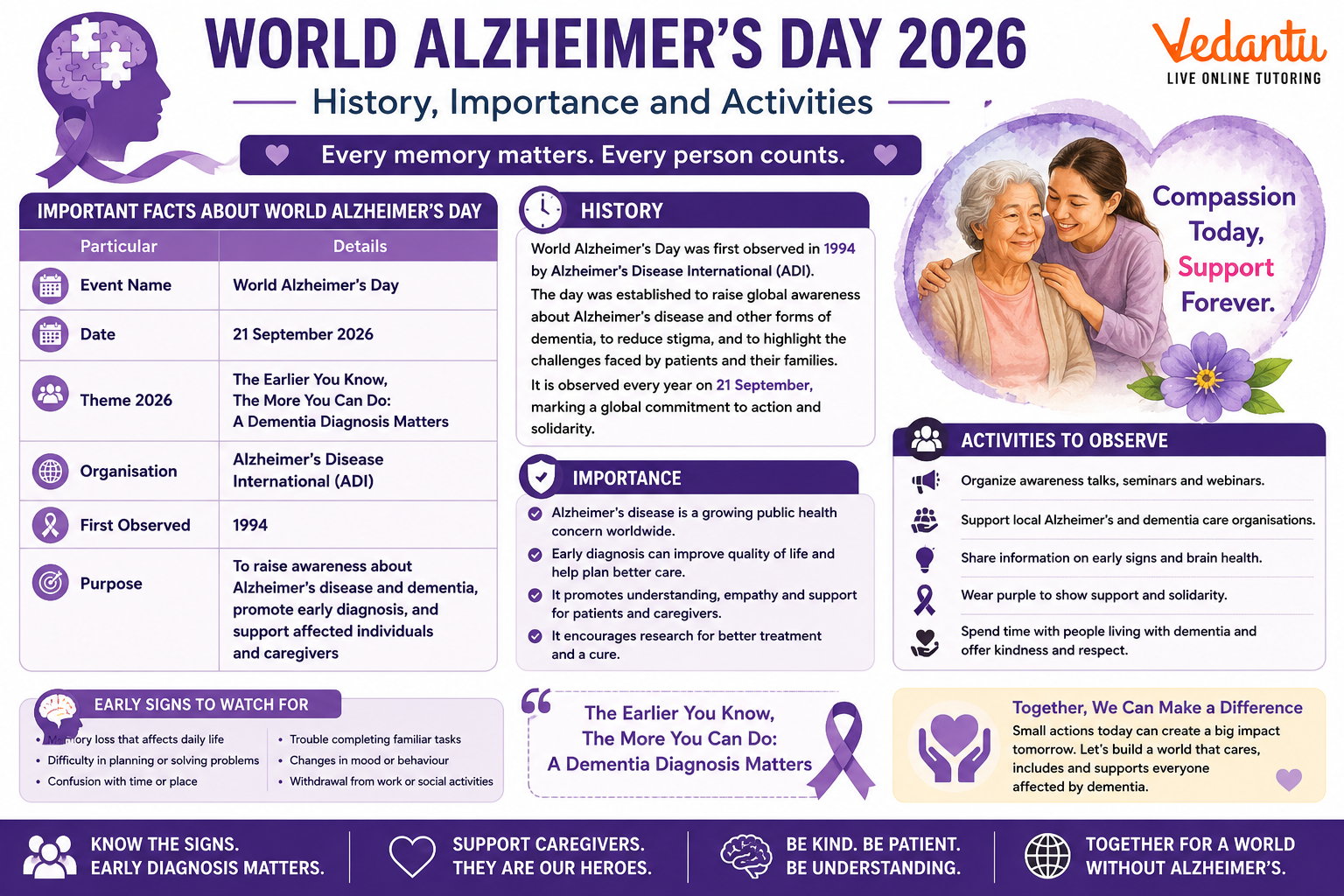
This day matters because memory loss disorders are often misunderstood, and stigma can delay help and support. Led globally by Alzheimer's Disease International (ADI), World Alzheimer's Day also encourages students, families, schools, and communities to learn more about brain health and compassionate care. You can also explore other September observances through Vedantu’s blog section and related awareness topics such as World Health Day.
Important Facts About World Alzheimer's Day
| Particular | Details |
|---|---|
| Event Name | World Alzheimer's Day |
| Date | 21 Sep 2026 |
| Theme 2026 | The Earlier You Know, The More You Can Do: A Dementia Diagnosis Matters |
| Organisation | Alzheimer's Disease International (ADI) |
| First Observed | 1994 |
| Purpose | To raise awareness about Alzheimer's disease and dementia, promote early diagnosis, and support affected individuals and caregivers |
What Is World Alzheimer's Day?
World Alzheimer's Day is a global awareness observance dedicated to Alzheimer’s disease and other forms of dementia. Its main purpose is educational: to improve public understanding, reduce stigma, and encourage people to recognize the value of timely diagnosis and long-term support.
Alzheimer’s disease is commonly discussed within the wider topic of dementia, but the day is not limited to one condition alone. It highlights the experiences of patients, families, caregivers, and support networks, while reminding society that dignity, empathy, and informed care are essential.
When Is World Alzheimer's Day Celebrated in 2026?
If you are searching for the World Alzheimer's Day date 2026, the observance will take place on 21 Sep 2026. The date is fixed every year, so World Alzheimer's Day is always observed on 21 September.
History and Origin of World Alzheimer's Day
The documented history of World Alzheimer's Day begins in 1994, when it was first observed as part of global efforts to improve awareness about dementia. Since then, the day has grown into a widely recognized international observance linked with public education and advocacy.
Alzheimer's Disease International (ADI) has played a central role in this awareness movement. Over time, campaigns connected with World Alzheimer's Day have helped bring conversations about memory loss, cognitive decline, caregiver support, and stigma reduction into schools, health spaces, and community programmes.
Simple Timeline
| Year | Milestone |
|---|---|
| 1994 | World Alzheimer's Day was first observed |
| Every year | Observed on 21 September as an international awareness day |
| 2026 | Theme focuses on the importance of early dementia diagnosis |
World Alzheimer's Day Theme 2026
The official World Alzheimer's Day 2026 theme is “The Earlier You Know, The More You Can Do: A Dementia Diagnosis Matters.” This confirmed theme emphasizes the value of recognizing dementia early so that individuals and families can better understand the condition, plan support, and access care with more confidence.
The message is clear and practical. Early knowledge can help reduce confusion, encourage informed decision-making, and open the door to support systems sooner rather than later. For an educational audience, this theme also teaches the importance of awareness without fear or stigma.
Why World Alzheimer's Day Is Significant
World Alzheimer's Day significance can be understood through these key points.
- It spreads awareness about Alzheimer’s disease and other forms of dementia.
- It helps reduce stigma and misinformation around memory-related conditions.
- It promotes the importance of early diagnosis and informed support.
- It reminds communities to support caregivers as well as people living with dementia.
- It encourages respectful conversations about ageing, brain health, and care.
The day is especially important because dementia does not affect only one person. Its impact can extend to families, friendships, schools, workplaces, and communities. Awareness can improve empathy and help people respond more thoughtfully to those experiencing memory and cognitive changes.
This observance also connects with wider public health and elder care discussions. Students interested in related topics may also read about World Mental Health Day and other awareness-based educational articles on Vedantu.
How World Alzheimer's Day Is Observed
Across the world, communities mark this day through awareness-focused activities such as:
- Educational talks and seminars on dementia awareness
- Public campaigns that share basic facts and support resources
- Community events that encourage empathy and inclusion
- Social media posts using awareness messages and campaign themes
- School discussions on ageing, brain health, and care
- Sharing information for families and caregivers
World Alzheimer's Day Activities for Students and Schools
Schools can observe world alzheimer's day in simple, meaningful, and low-cost ways. The goal should be awareness and compassion, not fear. Activities should be educational, age-appropriate, and respectful toward people living with dementia.
Here are practical activity ideas for students:
- Poster-making: Create a world alzheimer's day poster with awareness messages about support, dignity, and early diagnosis.
- Speech writing: Prepare a short world alzheimer's day speech in English on why awareness matters.
- Class discussion: Talk about stigma, ageing, and why respectful language is important.
- Essay activity: Write about the importance of care, empathy, and support for families.
- Awareness pledge: Students can take a pledge to be patient and respectful toward older people.
- Notice-board display: Build a fact corner with the date, theme, organiser, and purpose of the day.
- Reflection writing: Encourage students to write how communities can support caregivers better.
If students need help planning classroom presentations or awareness displays, they can explore learning-focused content such as how e-learning has revolutionized the world for ideas on educational engagement and communication.
Poster, Slogan, and Awareness Message Ideas
Students often look for short lines for a world alzheimer's day poster or school display. Since awareness materials should stay respectful, the best slogans are simple, compassionate, and fact-based.
You may use lines such as:
- Awareness brings understanding.
- Early knowledge can make a difference.
- Support dignity, care, and compassion.
- Stand with people living with dementia and their caregivers.
- Reduce stigma, spread understanding.
The purple forget-me-not is a recognized symbol linked with Alzheimer’s awareness. It is often used in awareness materials as a visual reminder of memory, care, and solidarity.
Educational Takeaways for Students
World Alzheimer's Day teaches more than event facts. It helps students understand how awareness days work, why public education matters, and how health-related stigma can affect people’s lives. It also encourages values such as patience, empathy, listening, and community support.
For general knowledge preparation, this topic is useful because it combines date-based awareness, international organisations, social importance, and student participation. It also fits well with school projects on health awareness, important days in September, and global observances.
Conclusion
World Alzheimer's Day is observed on 21 September each year to raise awareness about Alzheimer’s disease and other forms of dementia. In 2026, the official theme highlights the importance of early diagnosis and informed support. For students and communities, this day is a reminder that knowledge, empathy, and respect can help reduce stigma and strengthen care for people living with dementia and for those who support them every day.
FAQs on World Alzheimer's Day 2026: History, Importance and Activities
1. Why is World Alzheimer's Day celebrated?
World Alzheimer's Day is celebrated to raise awareness about Alzheimer’s disease and other forms of dementia. The observance aims to reduce stigma, encourage timely diagnosis, promote compassionate care, and recognise the needs of people living with dementia and their caregivers.
2. What are the 7 signs of Alzheimer's?
Common warning signs of Alzheimer’s disease involve persistent changes in memory, thinking, and everyday functioning.
- Memory loss that disrupts daily life
- Difficulty planning or solving familiar problems
- Confusion about time or place
- Trouble completing routine tasks
- Difficulty finding words or following conversations
- Misplacing objects and being unable to retrace steps
- Changes in judgement, mood, or personality
These signs can have different causes and do not confirm Alzheimer’s on their own. A qualified healthcare professional should assess persistent or worsening symptoms.
3. What is the theme for World Alzheimer's Day in 2026?
The World Alzheimer's Day 2026 theme is “The Earlier You Know, The More You Can Do: A Dementia Diagnosis Matters.” It highlights how timely recognition and diagnosis can help individuals and families understand the condition, seek appropriate support, plan future care, and make informed decisions.
4. What flower represents Alzheimer's?
The forget-me-not flower, often shown in purple or blue, is widely associated with Alzheimer’s and dementia awareness. It represents memory, remembrance, dignity, care, and solidarity with people living with dementia and their caregivers.
5. When is World Alzheimer's Day?
World Alzheimer's Day is observed every year on 21 September. In 2026, it falls on Monday, 21 September 2026. The date remains the same each year and forms part of the wider dementia-awareness activities held during World Alzheimer’s Month.
6. What is World Alzheimer's Day?
World Alzheimer's Day is an international awareness observance dedicated to Alzheimer’s disease and other forms of dementia. It educates the public about symptoms and support, challenges misinformation, promotes the value of early diagnosis, and encourages respectful treatment of affected individuals and families.
7. How to celebrate World Alzheimer's Day?
World Alzheimer's Day can be observed through respectful activities that improve dementia awareness and community support.
- Organise an educational talk or classroom discussion.
- Create posters explaining the date, theme, and warning signs.
- Share verified information and stigma-free awareness messages.
- Recognise and support family members and caregivers.
- Use the forget-me-not symbol in an awareness display.
- Encourage patience, inclusion, and respectful language.
8. When was World Alzheimer's Day first observed?
World Alzheimer's Day was first observed on 21 September 1994. It was introduced by Alzheimer's Disease International (ADI) to mark the organisation’s tenth anniversary and strengthen global education and advocacy concerning Alzheimer’s disease and dementia.
9. Who organises World Alzheimer's Day?
Alzheimer's Disease International (ADI) leads the global World Alzheimer's Day awareness campaign. National Alzheimer’s and dementia associations, healthcare organisations, schools, families, caregivers, and local communities support it through educational programmes and public-awareness activities.
10. What is the difference between Alzheimer's disease and dementia?
Dementia is a general term for symptoms that significantly affect memory, thinking, communication, and daily life, while Alzheimer’s disease is a specific brain disorder and the most common cause of dementia. Other conditions can also cause dementia, so the terms should not always be used interchangeably.



