



What is Education?
Education is the structured process of acquiring knowledge, skills, values, ethics, and personal development. It plays a vital role in shaping individuals, societies, and the world at large. Education can be categorized into three main types: formal, non-formal, and informal. Each type serves a unique purpose in nurturing individuals and contributing to the collective development of societies. The main goal of education is to enhance cognitive abilities, instill values, and prepare individuals for the future. It helps individuals acquire skills such as critical thinking, problem-solving, and effective communication, which are essential for personal and professional success.
History of Education
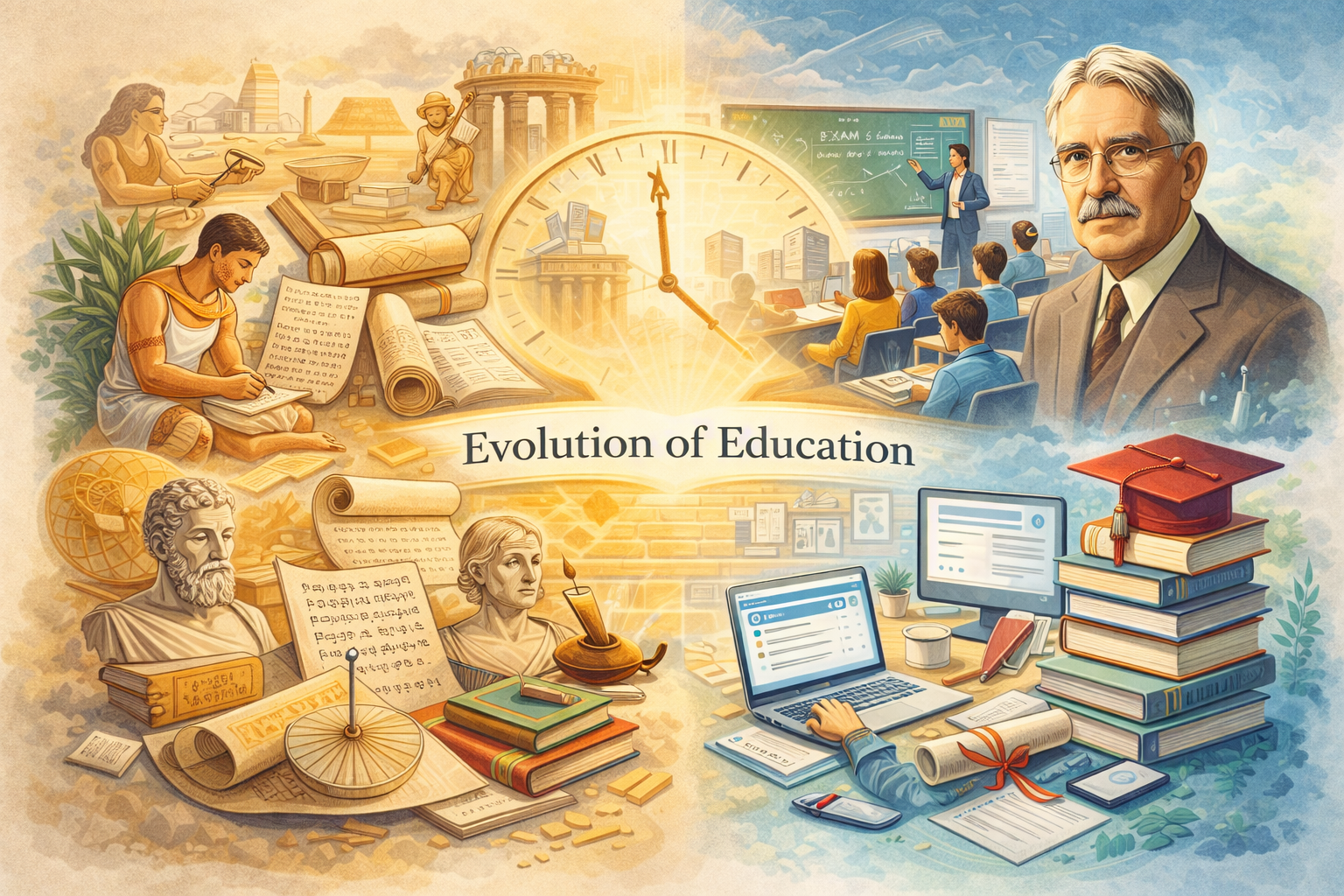
Education has a rich and diverse history that spans several millennia. The first systems of formal education were established in ancient civilizations such as in Egypt, Greece, and China. One of the earliest forms of education in China was the Imperial Civil Service Exams, which was introduced around 607 CE during the Sui Dynasty. Education systems were further developed in ancient India, with the Vedic system offering knowledge of ethics, philosophy, and mathematics. In medieval times, educational institutions like universities in Europe, such as the University of Paris, began to emerge. The modern education system, including mass schooling and universities, was influenced heavily by the colonial powers in the 19th century. As time progressed, education evolved, with significant contributions by philosophers like John Dewey, who stressed experiential learning, and educational reforms that sought to make education accessible to all.
Types of Education
Education can be categorized into three main types: formal, non-formal, and informal.
Formal Education: Formal education occurs in structured environments like schools, colleges, and universities. It follows a set curriculum designed to provide a systematic and comprehensive understanding of various subjects. The education system includes stages such as pre-primary, primary, secondary, and tertiary education. It also incorporates assessment methods like exams and certifications, which help measure learning outcomes.
Non-formal Education: Non-formal education includes learning experiences outside traditional school systems. These include adult education, community learning programs, vocational training, and online courses. Non-formal education offers flexible learning opportunities and often focuses on skill development, life skills, and personal growth.
Informal Education: Informal education occurs through day-to-day interactions, experiences, and social settings. It is not structured or regulated and is often self-directed. This form of education can happen through interactions with family members, friends, mentors, or even through media consumption. Informal education plays an important role in the development of skills like communication, leadership, and emotional intelligence.
Stages of Education
The Indian education system follows a structured approach, with education being divided into five stages:
Pre-primary Education: Pre-primary education, typically for children aged 3 to 6 years, lays the foundation for learning through play, creativity, and early cognitive development. It includes activities such as storytelling, basic math, and early language development.
Primary Education: Primary education caters to children aged 6 to 11 years. It focuses on core subjects like mathematics, languages, science, and social studies. The primary goal is to develop basic literacy and numeracy skills.
Secondary Education: Secondary education is for students aged 12 to 15 years. This stage builds on foundational knowledge and starts to focus on specialized subjects. Students often choose electives or focus areas during this stage to prepare for higher education.
Higher Secondary Education: Also known as senior secondary education, this stage typically includes classes 11 and 12, catering to students aged 16 to 18 years. Students select specific streams (Science, Commerce, Arts) based on their interests and career aspirations. This stage prepares them for university entrance exams and future professional opportunities.
Higher Education: Higher education includes undergraduate, postgraduate, and doctoral studies. Students can choose fields like engineering, medicine, law, business, and arts. Higher education institutions like universities and colleges offer a wide range of programs to develop specialized knowledge and skills.
Challenges in the Indian Education System
Despite many positive aspects, the Indian education system faces several challenges that hinder its full potential:
Outdated Curriculum: The current curriculum often fails to address the needs of the modern job market. It tends to emphasize rote learning and theoretical knowledge rather than practical application and skill development.
Improper Student-Teacher Ratio: Overcrowded classrooms make it difficult for teachers to provide individual attention to students, impacting their learning experiences. The student-teacher ratio in India is often high, leading to ineffective teaching and learning.
Lack of Infrastructure: Many schools in India suffer from poor infrastructure, including inadequate classroom space, outdated learning materials, and lack of technology. This lack of resources affects the quality of education students receive.
Old Teaching Methods: The traditional lecture-based teaching approach limits student engagement. The focus on memorization instead of understanding concepts results in students being passive learners.
Lack of Practical Learning: The education system heavily focuses on theoretical learning, leaving little room for hands-on experiences or skill-based education, which is essential for real-world application.
Solutions for Education Challenges
Addressing the challenges faced by the Indian education system requires a multi-faceted approach:
Curriculum Reforms: Updating the curriculum to incorporate modern skills like coding, critical thinking, and problem-solving will help students meet the demands of the contemporary job market.
Improving Teacher Training: Teachers need to be trained in modern pedagogical methods and given the resources to engage students effectively. Smaller class sizes and better student-teacher ratios will help achieve this.
Investing in Infrastructure: Schools need proper funding to improve infrastructure. This includes building more schools, providing modern learning materials, and integrating technology into classrooms.
Adopting Interactive Learning Methods: Moving away from rote learning and adopting interactive methods such as project-based learning, case studies, and debates will encourage critical thinking and student engagement.
Encouraging Practical Education: Practical learning, through internships, workshops, and hands-on projects, should be integrated into the curriculum. This will help students develop real-world skills and enhance their employability.
Importance of Education
Education is critical for the personal development of individuals and the prosperity of societies. It empowers individuals with the knowledge and skills needed to participate in economic activities and make informed decisions. Education also fosters social mobility, reduces inequality, and strengthens democracies. A strong education system ensures that individuals contribute positively to society and drive economic growth.
Who Invented Study and Studies?
The concept of study and studies, as we understand them today, evolved over centuries. While no one "invented" study, the formalization of learning and examination can be traced back to ancient civilizations like Egypt, China, and Greece. The growth of educational systems during the Middle Ages further shaped the process, with influential figures such as John Dewey in the 20th century refining modern education. The need to assess knowledge and skills led to the development of structured learning and evaluation methods, from ancient written exams to today’s schooling and university systems. In essence, study and studies are the result of centuries of evolution, aimed at ensuring knowledge acquisition and personal development, continuing to serve both individual and societal growth.
Conclusion
Education has always been the cornerstone of personal and societal development. Whether through formal education, non-formal education, or informal learning, each method plays a crucial role in shaping a well-rounded individual. As we move forward, it is essential that we address the challenges faced by the education system, such as outdated curricula, lack of infrastructure, and the need for practical learning opportunities. By leveraging innovative teaching methods, incorporating technology, and adapting to evolving needs, we can ensure that education remains a tool for empowerment.
At Vedantu, we believe in the transformative power of education. Our platform combines the best of interactive learning and personalized instruction to foster academic excellence. Through our online tutoring programs, students gain the necessary knowledge, skills, and confidence to thrive in their educational journeys. Whether it’s preparing for competitive exams like JEE or NEET, or enhancing understanding in school subjects, Vedantu is dedicated to shaping future-ready students equipped to tackle the challenges of tomorrow.
Let’s continue to embrace education as a lifelong journey of learning and growth. At Vedantu, we are committed to making education accessible, engaging, and effective for all learners, helping them realize their true potential.
FAQs on What is Education? | History, Types, Stages, and Importance
1. What is Education?
Education is the process of acquiring knowledge, skills, values, ethics, and experience through structured learning environments, such as schools, universities, and informal settings. It is essential for individual growth, societal development, and economic prosperity.
2. What is the History of Education?
Education dates back to ancient civilizations such as Egypt, India, China, and Greece. The earliest forms of formal education involved training for specific roles, such as priesthoods, rulers, and warriors. Over time, educational systems evolved to include schools, universities, and systems to assess knowledge and skills.
3. What are the Types of Education?
There are three main types of education:
Formal Education: Structured learning in schools, colleges, and universities.
Non-formal Education: Learning outside traditional settings, like adult education, vocational training, and community-based education.
Informal Education: Gained through daily experiences, self-study, and life interactions, such as learning from parents, peers, and media.
4. What are the Stages of Education?
The stages of education in India (and many other countries) are:
Pre-primary Education: For young children aged 3–6 years.
Primary Education: Aimed at children aged 6–11 years, focusing on basic literacy and numeracy.
Secondary Education: For students aged 12–15 years, deepening their knowledge in various subjects.
Higher Secondary Education: For students aged 16–18 years, where they choose their specialization (Arts, Science, Commerce).
Higher Education: Post-secondary education including undergraduate, postgraduate, and doctoral studies.
5. What Challenges Does the Indian Education System Face?
Some major challenges include:
Outdated Curriculum: The curriculum often doesn’t align with current job market needs.
Improper Student-Teacher Ratio: Overcrowded classrooms lead to ineffective learning.
Lack of Infrastructure: Many schools lack modern facilities and resources.
Old Teaching Methods: Reliance on rote learning instead of creative, engaging teaching methods.
Lack of Practical Learning: The focus on theoretical knowledge over practical skills development.
6. What is the Importance of Education?
Education is essential for personal growth, societal advancement, and economic prosperity. It empowers individuals to make informed decisions, contributes to better healthcare and political participation, and ensures that individuals can access and perform in the global workforce.
7. Who Invented Study?
While no one person can be credited with inventing study, the formalization of education as a structured process began with early civilizations like the Sumerians and Egyptians, continuing through the Greeks and Romans, and evolving significantly during the Middle Ages and the Industrial Revolution.
8. What Are the Solutions for Education Challenges in India?
To tackle challenges in the Indian education system:
Curriculum Reforms: Update the curriculum to align with modern needs.
Improved Teacher Training: Train teachers in modern, student-centered pedagogies.
Better Infrastructure: Invest in modern infrastructure and technology in schools.
Adopt Interactive Teaching: Use project-based learning and technology in classrooms to engage students better.
Encourage Practical Education: Incorporate vocational training and internships in education to provide real-world skills.
9. What Are the Types of Exams in Education?
Exams come in various forms, including:
Standardized Exams: The same test for all students, such as the SAT or JEE.
Entrance Exams: For college or university admissions, such as JEE and NEET.
Classroom Exams: Periodic exams given in schools to assess student knowledge.
Certification Exams: Exams to obtain certifications, such as the GATE or IELTS.



