



What is Theme of India Republic Day 2026? & How Republic Day is Celebrated?
India Republic Day is one of the most important national occasions, observed every year on 26 January to commemorate the adoption of the Constitution of India. This historic day marks India’s transformation into a sovereign, democratic republic, placing power in the hands of its people and establishing the rule of law.
In Republic Day 2026, India celebrates its 77th Republic Day, a moment of pride, reflection, and national unity. From the grand Republic Day Parade in New Delhi to flag-hoisting ceremonies in schools and institutions across the country, India Republic Day brings together citizens from all regions and backgrounds under one Constitution.
Also Read: What is Republic Day? Check History, Importance, Meaning and Significance
What is India Republic Day?
India Republic Day commemorates 26 January 1950, the day when the Constitution of India came into force. Although India gained independence in 1947, it was on this day that the nation formally adopted its own constitutional framework, replacing the Government of India Act, 1935.
Republic Day represents:
Democratic governance
Constitutional supremacy
Equality before law
Unity in diversity
This is why India Republic Day is not just a celebration, but a reminder of citizens’ rights and responsibilities.
India Republic Day History: How It All Began
The roots of India Republic Day trace back to the freedom movement. On 26 January 1930, the Indian National Congress declared Purna Swaraj (Complete Independence). To honour this declaration, 26 January was later chosen as the date for adopting the Constitution.
Key historical milestones:
26 January 1950: Constitution of India came into force
Dr. Rajendra Prasad sworn in as the first President of India
India officially became a republic, with elected representatives and a constitutional system
India Republic Day thus symbolises the culmination of the freedom struggle and the beginning of self-governance through law.
India Republic Day 2026: Date and Time
India Republic Day 2026 Date: Monday, 26 January 2026
Republic Day Number: 77th
Republic Day Parade Time: Begins around 10:30 AM IST
Republic Day 2026 will be celebrated nationwide with official ceremonies, parades, and cultural events.
India Republic Day Theme 2026
Official Theme of Republic Day Parade 2026
The Republic Day Parade 2026 theme will commemorate 150 years of Vande Mataram—India’s iconic national song that played a vital role in the freedom movement and continues to inspire patriotism.
Cultural Highlight of the Theme
A historic series of paintings created by Tejendra Kumar Mitra in 1923
Originally published in the “Bande Mataram Album” (1923)
These artworks visually interpret the verses of Vande Mataram
Displayed as view-cutters along Kartavya Path during the parade
This theme connects art, history, and nationalism, making India Republic Day 2026 culturally distinctive and historically meaningful.
Significance of India Republic Day
The significance of India Republic Day lies in its constitutional importance. It celebrates:
India’s sovereign status
The authority of the Constitution
Democratic ideals and civil liberties
National unity across diverse cultures and languages
Republic Day also honours:
The framers of the Constitution
Freedom fighters
The Indian Armed Forces
It reminds citizens that democracy thrives only when constitutional values are respected in daily life.
India Republic Day Parade: A Symbol of National Pride
The India Republic Day Parade is held at Kartavya Path, New Delhi and is the centrepiece of the celebrations.
Key Highlights of the Parade
Military displays by the Indian Army, Navy, and Air Force
State and Union Territory tableaux showcasing cultural diversity
Folk dances and cultural performances
Flypast by the Indian Air Force
Military bands and disciplined marching contingents
The parade reflects India’s defence strength, cultural heritage, and developmental progress.
Beating Retreat Ceremony
The Republic Day celebrations officially conclude with the Beating Retreat Ceremony on 29 January, held at Vijay Chowk. This solemn event features military bands performing patriotic tunes, symbolising discipline, honour, and tradition.
How India Republic Day Is Celebrated Across the Country
Beyond the national parade, India Republic Day is celebrated in diverse ways:
Common Celebrations
Flag hoisting in schools, colleges, and offices
Singing the National Anthem
Patriotic speeches and cultural programs
Distribution of awards and certificates
Regional Expressions
Schools perform folk dances and skits
Communities organise parades and cultural events
Educational institutions conduct debates and essay competitions
Despite regional variations, the spirit of India Republic Day remains the same—respect for the Constitution.
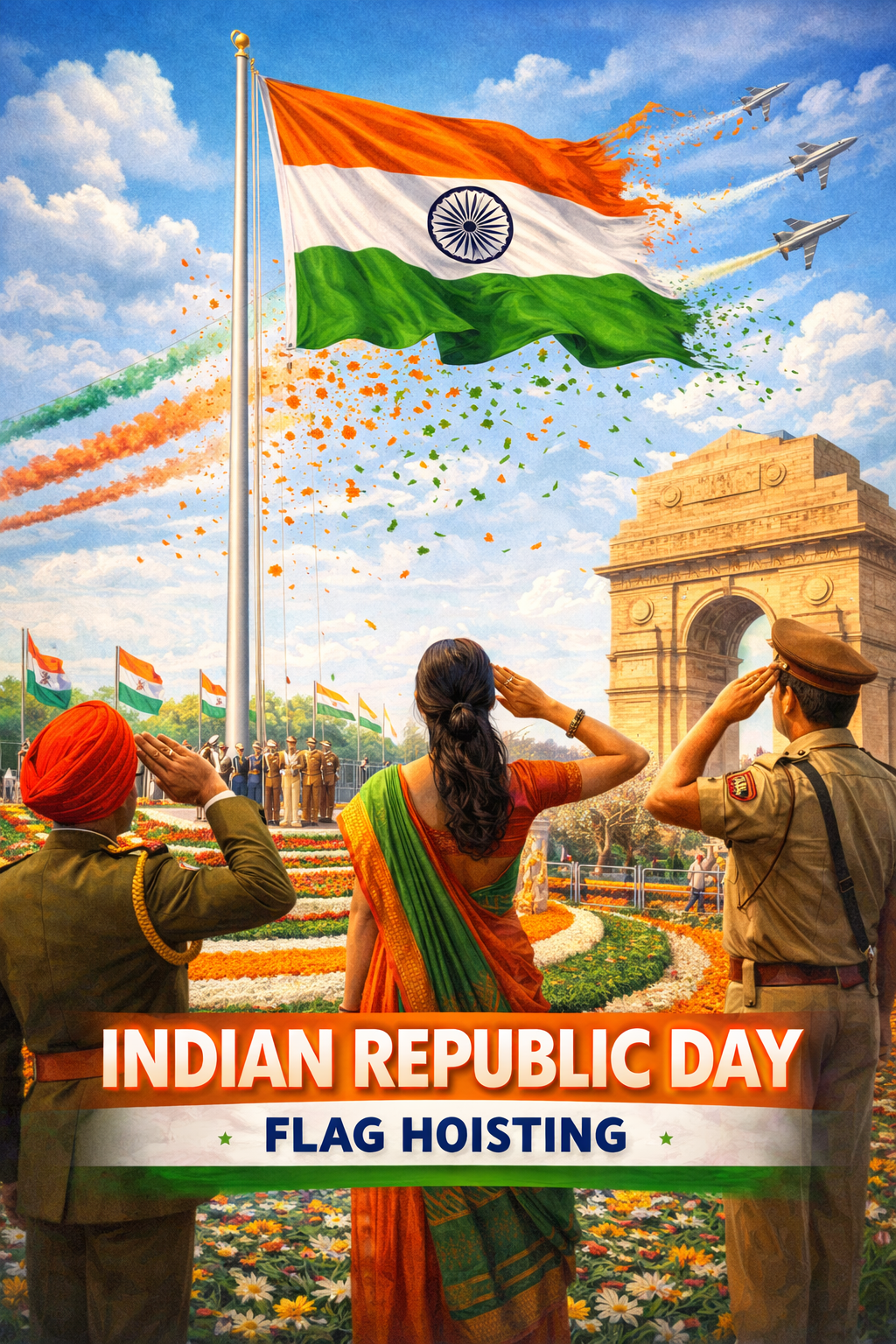
India Republic Day and Students: Educational Importance
India Republic Day plays a vital role in civic education. For students, it is an opportunity to:
Learn about constitutional values
Understand democratic rights and duties
Develop national pride and social responsibility
Schools encourage student participation through:
Cultural performances
Republic Day speeches
Poster and essay competitions
How Students Can Participate in India Republic Day 2026
Students can actively engage by:
Volunteering in flag-hoisting ceremonies
Participating in cultural programs
Writing essays or delivering speeches on democracy
Creating posters or digital presentations
Watching the live parade and discussing its themes
Such activities make India Republic Day meaningful beyond textbooks.
Tips for a Responsible and Inclusive Republic Day Celebration
To celebrate India Republic Day thoughtfully:
Use eco-friendly decorations
Respect the National Flag and Anthem
Avoid loud or disruptive activities
Encourage inclusive participation
Balance celebration with discipline and dignity
India Republic Day is about unity, not spectacle alone.
Why India Republic Day Matters Today
In today’s world, India Republic Day is more relevant than ever. It reminds citizens that:
Rights come with responsibilities
Democracy requires active participation
Unity strengthens the nation
Republic Day is not just about remembering history—it is about shaping the future.
Conclusion: The True Spirit of India Republic Day
India Republic Day 2026 stands as a powerful reminder of the nation’s democratic journey. Rooted in constitutional values and celebrated with pride, this day unites millions of Indians across regions, languages, and cultures.
As India marks its 77th Republic Day, it is a time to reflect on the past, celebrate the present, and commit to building a just, inclusive, and progressive future—guided always by the Constitution of India.
FAQs on India Republic Day 2026: History, Celebrations, Significance & Parade Highlights
1. What happened on 26 January 1950 in India?
On 26 January 1950, India’s Constitution came into effect, making India a sovereign, democratic republic.
• Dr. Rajendra Prasad became the first President of India.
• The day symbolizes Purna Swaraj (complete independence) and self-governance.
• From this date, fundamental rights and duties of Indian citizens, as outlined in the Constitution, were established.
2. Why is Republic Day celebrated in India?
Republic Day is celebrated to honor the adoption of the Constitution of India on 26 January 1950.
• It marks India's transition from British rule to an independent republic.
• The day highlights the country’s democratic values, equality, and justice.
• It reminds citizens of their rights and responsibilities within a sovereign nation.
3. What is the difference between Independence Day and Republic Day?
Independence Day and Republic Day commemorate two distinct milestones in Indian history:
• Independence Day (15 August): Celebrates India’s freedom from British rule in 1947.
• Republic Day (26 January): Marks the adoption of the Constitution in 1950, establishing India as a republic.
• One marks the end of colonial rule, while the other highlights the beginning of constitutional governance.
4. What is the difference between 15 August and 26 January?
15 August and 26 January are celebrated for different historical events in India:
• 15 August: India gained independence from British rule in 1947.
• 26 January: India’s Constitution was enacted in 1950, making the country a republic.
• Both dates are national holidays with unique significance and celebrations.
5. Why is 26 January chosen for Republic Day?
26 January was chosen for Republic Day to honor the Purna Swaraj declaration of 1930.
• On 26 January 1930, Congress officially declared complete independence from British rule as its goal.
• The date symbolizes India’s commitment to self-rule and national pride.
• It connects India's republic to the legacy of the independence movement.
6. How is Republic Day celebrated in India?
Republic Day is celebrated nationwide with patriotic events and cultural showcases.
• Grand parade at Rajpath in New Delhi, including military displays and cultural floats.
• Flag-hoisting ceremonies in schools, communities, and government offices.
• Speeches, patriotic songs, dances, and competitions are organized.
• Awards, such as bravery medals, are presented, especially to children.
• Beating Retreat ceremony on 29 January formally ends the festivities.
7. What is the significance of Republic Day for students?
Republic Day inspires students to appreciate democratic values and civic responsibilities.
• Schools host flag-hoisting, debates, and essay writing on constitutional themes.
• Students participate in patriotic performances and social service activities.
• The day helps develop respect for national symbols, unity, and the Constitution.
8. What are some customs and rituals of Republic Day celebrations?
Republic Day is marked by several important customs and rituals:
• Flag hoisting and singing the national anthem.
• Parades showcasing India’s culture and military strength.
• Cultural dances, music performances, and prize distributions at schools and communities.
• Beating Retreat on 29 January as the ceremonial conclusion.
9. How do different regions in India celebrate Republic Day?
Republic Day is celebrated across India with region-specific traditions:
• West Bengal: Cultural floats and folk dances.
• Tamil Nadu: Carnatic music and Bharatanatyam.
• Punjab & Haryana: Bhangra, Giddha, and military parades.
• Northeast: Folk songs in traditional attire.
• Maharashtra: Lezim dances and historical tableaux.
In some areas, Republic Day is also called “Ganatantra Diwas.”
10. What are some tips for celebrating Republic Day safely and responsibly?
For a safe and inclusive Republic Day celebration:
• Use eco-friendly decorations and avoid plastics.
• Respect noise-sensitive areas and the national anthem.
• Avoid firecrackers; prioritize safe indoor or virtual events if necessary.
• Balance study time with celebrations.
• Ensure all community members feel included in the festivities.
11. How can students participate actively in Republic Day 2026?
Students can make Republic Day meaningful by:
• Joining flag-hoisting and cultural programs at school.
• Competing in essay, speech, or art contests on national themes.
• Watching and discussing the live parade with family.
• Creating digital posters to spread awareness.
• Involving everyone in inclusive, respectful activities.
12. What is the Beating Retreat ceremony, and when is it held?
The Beating Retreat ceremony marks the official end of Republic Day celebrations.
• Held on 29 January at Vijay Chowk, New Delhi.
• Features performances by military bands and a ceremonial lowering of the national flag.
• Emphasizes national unity, discipline, and respect for tradition.



