




Write two functions of the cerebrospinal fluid.
Answer
 Verified
520.8k+ views
Hint: Cerebrospinal fluid (CSF) is a clear and colorless body fluid, which is found in the brain and the spinal cord. It performs various functions that help in maintaining the structure and function of the brain.
Complete answer:
Specialized ependymal cells produce cerebrospinal fluid(CSF) in the choroid plexuses which is the part of the vertical brain and then these cells are absorbed in the arachnoid granulation. One of the functions of the cerebrospinal fluid is that it provides buoyancy and thus allows the brain to float without pressure and the second one is that it supplies nutrients to the tissues of our nervous system and also removes waste products i.e toxins and metabolic by-products from cerebral metabolism.
Additional Information:
Following are the two primary functions of the cerebrospinal fluids:
1) It provides buoyancy and thus allows the brain to float without pressure. This acts as a cushion or buffer for the brain and thus provides basic mechanical and immunological protection to the brain from external forces, and makes it bounce away from the skull when the head is hit. Thus it protects the brain and spinal cord from trauma.
2) It supplies nutrients to the tissues of our nervous system and also removes waste products i.e toxins and metabolic by-products from cerebral metabolism. The nutrients needed by the brain are transported from the blood, through the choroid plexus (CP), into the CSF, and then diffused for transportation to their sites of action within the brain. The CSF also helps in the removal of waste products of brain metabolism, such as products of peroxidation, glycosylated proteins, excess neurotransmitters, debris from the liner of the ventricles, bacteria, viruses, and other unnecessary molecules. Accumulation of such unnecessary molecules, seen in aging and a few neurodegenerative diseases, interferes with neuronal functioning of the brain.
Note:
-Cerebral Metabolism means metabolism done by the brain to produce energy. Since it does not store excess energy and has to derive for almost all its functions from the aerobic oxidation of glucose.
-At any time a day about 125 mL of cerebrospinal fluid, and about 500 mL are generated every day.
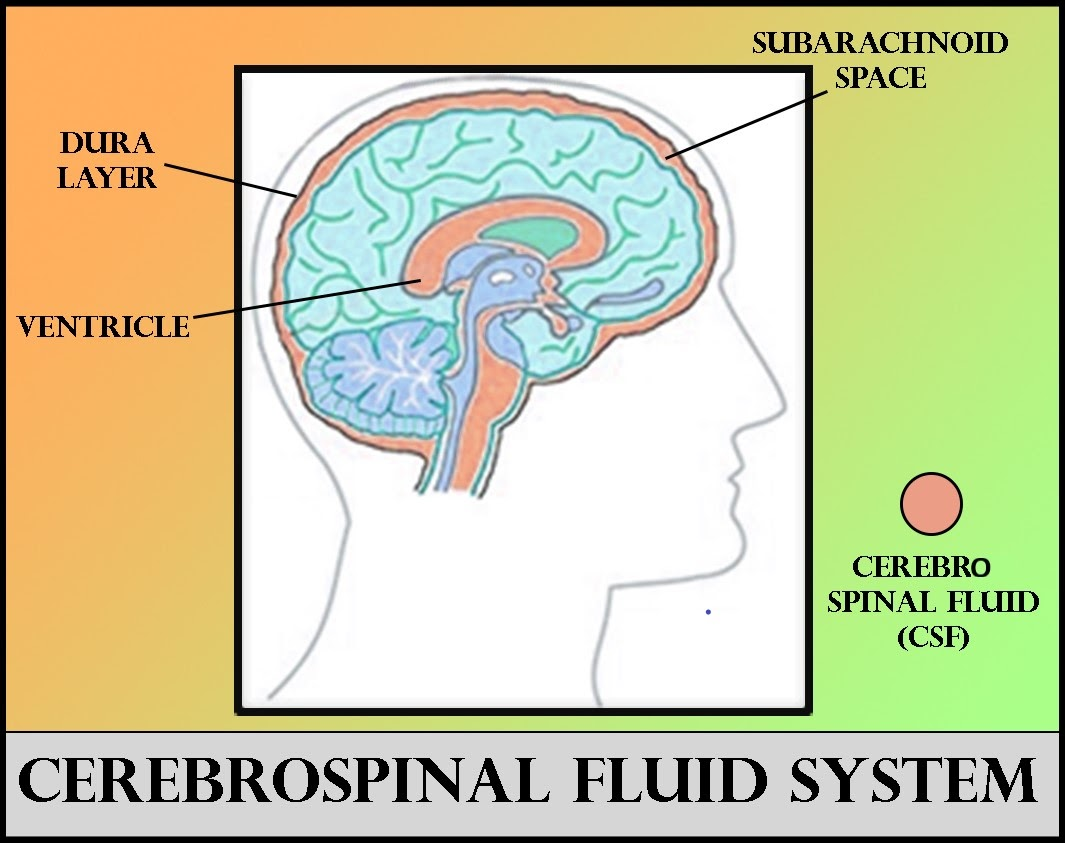
-It inhabits the subarachnoid space and the ventricular system which is situated around and inside the brain and spinal cord.
-The ventricles of the brain, sulci, and cisterns, as well as the central canal of the spinal cord are filled by cerebrospinal fluid.
-Subarachnoid space: It is the space between the arachnoid mater and the pia mater.
Complete answer:
Specialized ependymal cells produce cerebrospinal fluid(CSF) in the choroid plexuses which is the part of the vertical brain and then these cells are absorbed in the arachnoid granulation. One of the functions of the cerebrospinal fluid is that it provides buoyancy and thus allows the brain to float without pressure and the second one is that it supplies nutrients to the tissues of our nervous system and also removes waste products i.e toxins and metabolic by-products from cerebral metabolism.
Additional Information:
Following are the two primary functions of the cerebrospinal fluids:
1) It provides buoyancy and thus allows the brain to float without pressure. This acts as a cushion or buffer for the brain and thus provides basic mechanical and immunological protection to the brain from external forces, and makes it bounce away from the skull when the head is hit. Thus it protects the brain and spinal cord from trauma.
2) It supplies nutrients to the tissues of our nervous system and also removes waste products i.e toxins and metabolic by-products from cerebral metabolism. The nutrients needed by the brain are transported from the blood, through the choroid plexus (CP), into the CSF, and then diffused for transportation to their sites of action within the brain. The CSF also helps in the removal of waste products of brain metabolism, such as products of peroxidation, glycosylated proteins, excess neurotransmitters, debris from the liner of the ventricles, bacteria, viruses, and other unnecessary molecules. Accumulation of such unnecessary molecules, seen in aging and a few neurodegenerative diseases, interferes with neuronal functioning of the brain.
Note:
-Cerebral Metabolism means metabolism done by the brain to produce energy. Since it does not store excess energy and has to derive for almost all its functions from the aerobic oxidation of glucose.
-At any time a day about 125 mL of cerebrospinal fluid, and about 500 mL are generated every day.
-It inhabits the subarachnoid space and the ventricular system which is situated around and inside the brain and spinal cord.
-The ventricles of the brain, sulci, and cisterns, as well as the central canal of the spinal cord are filled by cerebrospinal fluid.
-Subarachnoid space: It is the space between the arachnoid mater and the pia mater.
Recently Updated Pages
Basicity of sulphurous acid and sulphuric acid are

Master Class 11 Business Studies: Engaging Questions & Answers for Success
Master Class 11 Computer Science: Engaging Questions & Answers for Success
Master Class 11 Economics: Engaging Questions & Answers for Success
Master Class 11 Social Science: Engaging Questions & Answers for Success
Master Class 11 English: Engaging Questions & Answers for Success
Trending doubts
One Metric ton is equal to kg A 10000 B 1000 C 100 class 11 physics CBSE
The largest wind power cluster is located in the state class 11 social science CBSE
Explain zero factorial class 11 maths CBSE
State and prove Bernoullis theorem class 11 physics CBSE
Which among the following are examples of coming together class 11 social science CBSE
Can anyone list 10 advantages and disadvantages of friction