




Write the postulates of Dalton’s Atomic theory.
Answer
 Verified
625.5k+ views
Hint: Dalton’s atomic theory was the first complete attempt to describe all matter in terms of atoms and their properties. It provides conservation law.
Complete step by step solution:
Postulates:
1. The matter is made up of invisible particles known as atoms.
2. Atoms of the same element are similar in shape and mass, but differ from the atom of other elements.
3. Atoms cannot be created or destroyed.
4. Atoms of different elements may combine with each other in a fixed, simple, whole number ratio to form compound atoms.
5. Atoms of the same element can combine in more than one ratio to form two or more compounds.
6. The atom is the smallest unit of matter that can take part in a chemical reaction.
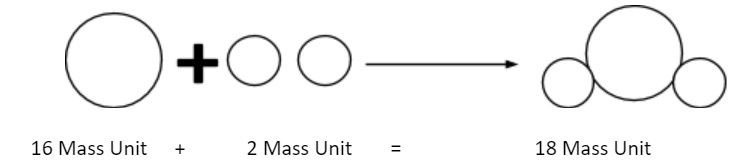
Note: However this theory is not entirely free of limitations, as an atom can be subdivided into electrons, protons and neutrons. Atoms of two different elements differ in mass, size and many other chemical or physical properties. However, this is not correct for all situations. Some postulates of this theory remain valid even in today’s modern chemical thoughts. It forms the base for modern atomic theories.
Complete step by step solution:
Postulates:
1. The matter is made up of invisible particles known as atoms.
2. Atoms of the same element are similar in shape and mass, but differ from the atom of other elements.
3. Atoms cannot be created or destroyed.
4. Atoms of different elements may combine with each other in a fixed, simple, whole number ratio to form compound atoms.
5. Atoms of the same element can combine in more than one ratio to form two or more compounds.
6. The atom is the smallest unit of matter that can take part in a chemical reaction.
Note: However this theory is not entirely free of limitations, as an atom can be subdivided into electrons, protons and neutrons. Atoms of two different elements differ in mass, size and many other chemical or physical properties. However, this is not correct for all situations. Some postulates of this theory remain valid even in today’s modern chemical thoughts. It forms the base for modern atomic theories.
Recently Updated Pages
Master Class 11 English: Engaging Questions & Answers for Success

Master Class 11 Social Science: Engaging Questions & Answers for Success
Master Class 11 Maths: Engaging Questions & Answers for Success
Master Class 11 Biology: Engaging Questions & Answers for Success
Master Class 11 Physics: Engaging Questions & Answers for Success
Master Class 11 Chemistry: Engaging Questions & Answers for Success
Trending doubts
Find the value of the expression given below sin 30circ class 11 maths CBSE
Draw a diagram of a plant cell and label at least eight class 11 biology CBSE
Agaragar is obtained from A Chlorella B Spirogyra C class 11 biology CBSE
Agaragar is derived from a A fungi b An algae c Both class 11 biology CBSE
How do I convert ms to kmh Give an example class 11 physics CBSE
In which country Lascaux cave is located A India B class 11 social science CBSE