




Write short notes on any two of the following.
a. Ecological pyramid
b. Food web and Food chain
c. Biological or biochemical oxygen demand ( BOD)
Answer
 Verified
651.3k+ views
Hint:
Complete answer:
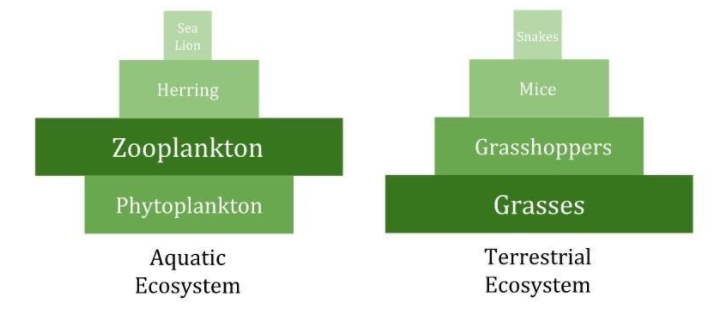
a. Ecological pyramid:- They are graphical representations of various ecological parameters at the successive trophic levels of food chains with producers at the base, top carnivores at the apex, and intermediate levels in between. The common parameters used in preparing ecological pyramids are number of individuals, biomass, and energy at different trophic levels.
• PYRAMID OF NUMBERS:-
Upright:- in most ecosystems , the number of producers are maximum . So the pyramid is upright . For example:- grassland ecosystem.
Inverted:- In some cases, at each successive trophic level, the number of organisms is higher than in preceding one and size gradually decreases.
For example:- a large size tree may support and provide nourishment to several frugivorous birds.
PYRAMID OF BIOMASS:-
Upright:- pyramid of biomass in terrestrial ecosystems is usually upright (b) Inverted:- In aquatic ecosystems pyramids of biomass may be inverted.
PYRAMID OF ENERGY:- pyramid of energy is always upright because energy flow is unidirectional.
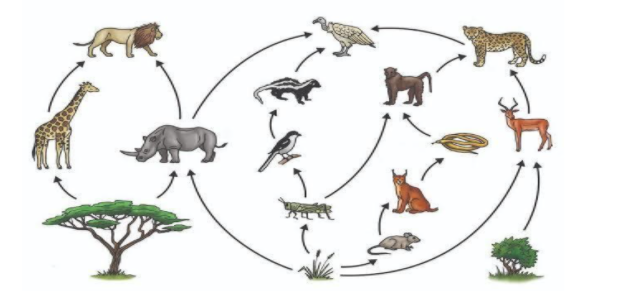
b. FOOD WEB:- The network of interconnected food chains at different trophic levels in a biotic community is termed as food web.
Occurrence of food webs provides stability to the ecosystem. Food webs operate because taste preference for particular food and unavailability of food. One animal may feed upon organisms of even different trophic levels like snakes may feed upon mice and frogs.
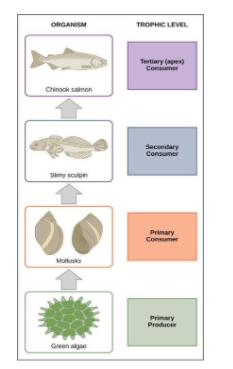
FOOD CHAIN:- It is a sequence of living organisms which involves transfer of food energy from producers, through a series of organisms with repeated eating and being eaten is called a food chain. Each level or step in a food chain where transfer of energy takes place is called trophic level
Types of food chain
Grazing food chain
Detritus food chain
Parasitic food chain.
Note: c. BIOCHEMICAL OXYGEN DEMAND:- Biochemical oxygen demand is the amount of dissolved oxygen needed by aerobic biological organisms to break down organic material present in a given water sample at certain temperature over a specific time period.
Complete answer:
a. Ecological pyramid:- They are graphical representations of various ecological parameters at the successive trophic levels of food chains with producers at the base, top carnivores at the apex, and intermediate levels in between. The common parameters used in preparing ecological pyramids are number of individuals, biomass, and energy at different trophic levels.
• PYRAMID OF NUMBERS:-
Upright:- in most ecosystems , the number of producers are maximum . So the pyramid is upright . For example:- grassland ecosystem.
Inverted:- In some cases, at each successive trophic level, the number of organisms is higher than in preceding one and size gradually decreases.
For example:- a large size tree may support and provide nourishment to several frugivorous birds.
PYRAMID OF BIOMASS:-
Upright:- pyramid of biomass in terrestrial ecosystems is usually upright (b) Inverted:- In aquatic ecosystems pyramids of biomass may be inverted.
PYRAMID OF ENERGY:- pyramid of energy is always upright because energy flow is unidirectional.
b. FOOD WEB:- The network of interconnected food chains at different trophic levels in a biotic community is termed as food web.
Occurrence of food webs provides stability to the ecosystem. Food webs operate because taste preference for particular food and unavailability of food. One animal may feed upon organisms of even different trophic levels like snakes may feed upon mice and frogs.
FOOD CHAIN:- It is a sequence of living organisms which involves transfer of food energy from producers, through a series of organisms with repeated eating and being eaten is called a food chain. Each level or step in a food chain where transfer of energy takes place is called trophic level
Types of food chain
Grazing food chain
Detritus food chain
Parasitic food chain.
Note: c. BIOCHEMICAL OXYGEN DEMAND:- Biochemical oxygen demand is the amount of dissolved oxygen needed by aerobic biological organisms to break down organic material present in a given water sample at certain temperature over a specific time period.
Recently Updated Pages
Class 10 Question and Answer - Your Ultimate Solutions Guide

Master Class 10 Computer Science: Engaging Questions & Answers for Success
Master Class 10 General Knowledge: Engaging Questions & Answers for Success
Master Class 12 Economics: Engaging Questions & Answers for Success
Master Class 12 Social Science: Engaging Questions & Answers for Success
Master Class 12 English: Engaging Questions & Answers for Success
Trending doubts
Explain the Treaty of Vienna of 1815 class 10 social science CBSE
The slogan Jai Hind was given by A Lal Bahadur Shastri class 10 social science CBSE
10 examples of evaporation in daily life with explanations
What is the full form of POSCO class 10 social science CBSE
Identify the feminine form of noun nephew a shenephew class 10 english CBSE
CSIR full form?