




Write about Apocrine sweat glands?
Answer
 Verified
531k+ views
Hint: Glands are referred to as an organ which produces one or more substances like hormones, sweat, saliva, digestive enzymes, etc. There are two types of glands in our body: endocrine and exocrine glands. Endocrine glands release their substance directly in the blood while exocrine glands release their substance in a duct.
Sweat glands are also known as sudorific glands which are small tube-like structures of skin which produce the sweat.
Complete answer:
Sweat glands are exocrine in nature which means they release their substances in a duct which later opens either outside of the body or to the bloodstream. Sweat glands secrete their substance to the epithelial surface of the skin. There are mainly two types of sweat glands on the basis of structure, function and secretory product:
1. Eccrine sweat glands: They are present everywhere in our body except lips, ear, clitoris, labia minora. They do not extend deeply to the dermis and excrete the sweat directly to the skin. With the increase in age the proportion of eccrine glands decreases. Sweat is mainly water with some electrolytes present in it. Amount of secretion from glands depends on neural and hormonal mechanisms.
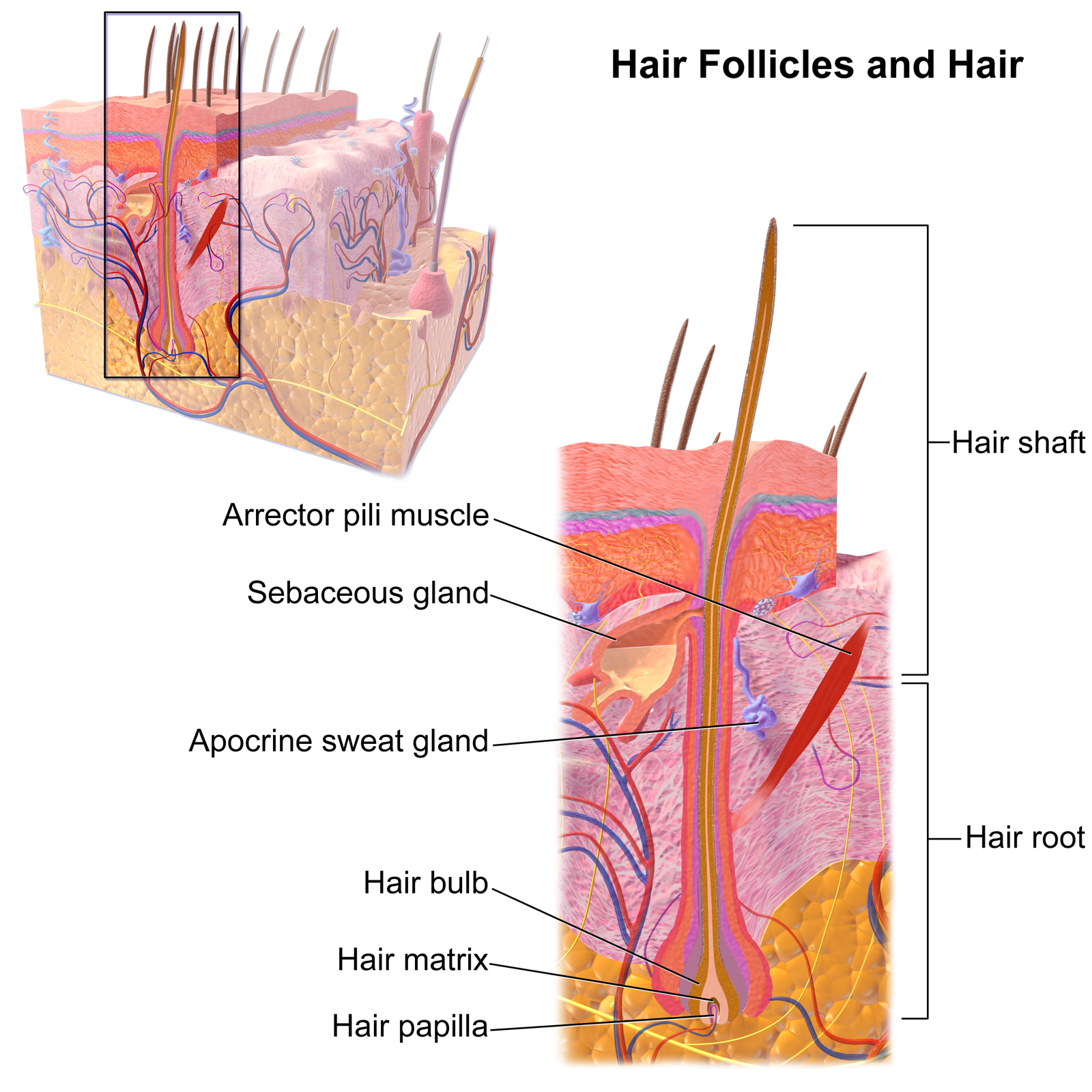
2. Apocrine sweat glands: They are present in armpits, areola, perineum, eyelids and ear. The amount of secretion of sweat is larger as compared to eccrine glands. These glands secrete the sweat to the pinery canal of hair follicles. These glands are inactive before puberty, and after puberty because of hormonal changes these glands start functioning. These are most active during sex and sexual excitement.
In mammals, including humans, sweat contains some pheromone-like compounds which attract other organisms of the same species.
Note:
Apocrine sweat glands are present in armpits, areola, perineum, eyelids and ear. The amount of secretion of sweat is larger as compared to eccrine glands. These glands secrete the sweat to the canal of hair follicles.
Sweat glands are also known as sudorific glands which are small tube-like structures of skin which produce the sweat.
Complete answer:
Sweat glands are exocrine in nature which means they release their substances in a duct which later opens either outside of the body or to the bloodstream. Sweat glands secrete their substance to the epithelial surface of the skin. There are mainly two types of sweat glands on the basis of structure, function and secretory product:
1. Eccrine sweat glands: They are present everywhere in our body except lips, ear, clitoris, labia minora. They do not extend deeply to the dermis and excrete the sweat directly to the skin. With the increase in age the proportion of eccrine glands decreases. Sweat is mainly water with some electrolytes present in it. Amount of secretion from glands depends on neural and hormonal mechanisms.
2. Apocrine sweat glands: They are present in armpits, areola, perineum, eyelids and ear. The amount of secretion of sweat is larger as compared to eccrine glands. These glands secrete the sweat to the pinery canal of hair follicles. These glands are inactive before puberty, and after puberty because of hormonal changes these glands start functioning. These are most active during sex and sexual excitement.
In mammals, including humans, sweat contains some pheromone-like compounds which attract other organisms of the same species.
Note:
Apocrine sweat glands are present in armpits, areola, perineum, eyelids and ear. The amount of secretion of sweat is larger as compared to eccrine glands. These glands secrete the sweat to the canal of hair follicles.
Recently Updated Pages
Master Class 11 English: Engaging Questions & Answers for Success

Master Class 11 Social Science: Engaging Questions & Answers for Success
Master Class 11 Maths: Engaging Questions & Answers for Success
Master Class 11 Biology: Engaging Questions & Answers for Success
Master Class 11 Physics: Engaging Questions & Answers for Success
Master Class 11 Chemistry: Engaging Questions & Answers for Success
Trending doubts
One Metric ton is equal to kg A 10000 B 1000 C 100 class 11 physics CBSE
Difference Between Prokaryotic Cells and Eukaryotic Cells
Find the value of the expression given below sin 30circ class 11 maths CBSE
Difference between physical and chemical change class 11 chemistry CBSE
Two of the body parts which do not appear in MRI are class 11 biology CBSE
Draw a diagram of a plant cell and label at least eight class 11 biology CBSE