




Why is nucleic acid a polymer?
Answer
 Verified
507.6k+ views
Hint: Nucleic acid is an important macromolecule found in all cells and DNA. The information is encoded by DNA to make the proteins. Ribonucleic acid comes in different forms that participate in protein synthesis.
Complete answer:
A polymer is a large molecule that is built up from multiple smaller building blocks in a repetitive manner.
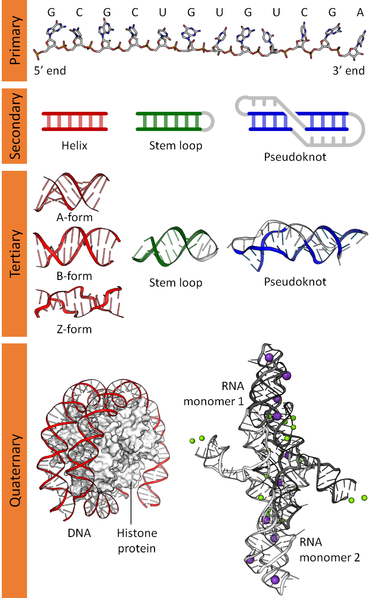
Polymer is mainly a large molecule that is built up from small building blocks in a repetitive manner. The main building block of nucleic acid is DNA and RNA. The nucleotides have a phosphate group, a sugar group and a nitrogenous base.
Consequently a nucleic acid is a segment of nucleic acid that specifically recognises and binds to its target nucleic acid. The interaction is based on the formation of stable hydrogen bonds between the two nucleic acids.
The nucleic acids are of two types: natural and synthetic nucleic acids. The natural nucleic acids are DNA and RNA. The pentose sugar in RNa is ribose while DNA has deoxyribose. The nitrogenous bases adenine, guanine and cytosine are found in both DNA and RNA , thymine is found only in DNA while uracil is found in RNA.
Note:
Nucleic acids are molecules that transfer genetic information from one generation to another generation. These macromolecules store the genetic information that determines the traits and make protein synthesis.
Complete answer:
A polymer is a large molecule that is built up from multiple smaller building blocks in a repetitive manner.
Polymer is mainly a large molecule that is built up from small building blocks in a repetitive manner. The main building block of nucleic acid is DNA and RNA. The nucleotides have a phosphate group, a sugar group and a nitrogenous base.
Consequently a nucleic acid is a segment of nucleic acid that specifically recognises and binds to its target nucleic acid. The interaction is based on the formation of stable hydrogen bonds between the two nucleic acids.
The nucleic acids are of two types: natural and synthetic nucleic acids. The natural nucleic acids are DNA and RNA. The pentose sugar in RNa is ribose while DNA has deoxyribose. The nitrogenous bases adenine, guanine and cytosine are found in both DNA and RNA , thymine is found only in DNA while uracil is found in RNA.
Note:
Nucleic acids are molecules that transfer genetic information from one generation to another generation. These macromolecules store the genetic information that determines the traits and make protein synthesis.
Recently Updated Pages
Master Class 11 Social Science: Engaging Questions & Answers for Success

Master Class 11 English: Engaging Questions & Answers for Success
Master Class 11 Maths: Engaging Questions & Answers for Success
Master Class 11 Chemistry: Engaging Questions & Answers for Success
Master Class 11 Biology: Engaging Questions & Answers for Success
Master Class 11 Physics: Engaging Questions & Answers for Success
Trending doubts
One Metric ton is equal to kg A 10000 B 1000 C 100 class 11 physics CBSE
Difference Between Prokaryotic Cells and Eukaryotic Cells
How many of the following diseases can be studied with class 11 biology CBSE
Draw a diagram of a plant cell and label at least eight class 11 biology CBSE
Two of the body parts which do not appear in MRI are class 11 biology CBSE
10 examples of friction in our daily life