



Which type of alcohol can exhibit chain isomerism?
(A) The alcohol has one carbon atom in the structure.
(B) The alcohol has two carbon atoms in the structure.
(C) The alcohol having three carbon atoms is structured.
(D) The alcohol having four or more than four carbon atoms in structure.
Answer
 Verified
593.7k+ views
Hint: Chain isomers are compounds which have the same molecular formula but differ in this structure.
They have different numbers of carbon atoms in the main chain.
Alcohols are organic compounds having common formula $R - OH.$Where $R$ is alkyl group.
Step by step answer: Let us first discuss different types of isomerism present in alcohol.
There are three types of structural isomerism in alcohol.
Therefore, chain isomerism, position isomerism and functional group isomerism.
Let us discuss one by one example:
(I) One carbon: One carbon does not form a chain.
Example: $C{H_3}OH$methyl alcohol.
(II) Two carbon: Two carbon form chains but there is only one way to form chains.
Ethyl alcohol.
$C{H_3}C{H_2}OH$
(III) Three carbon: Three carbon atoms from chain but only one way type shows position isomerism not chain isomerism.
$C{H_3} - C{H_2} - C{H_2} - OH$
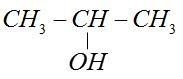
(IV) Four carbon: Alcohol with four carbon atoms can show chain isomerism. Its molecular formula $C{F_4}{H_{10}}O.$
We can represent this as:
$C{H_3} - C{H_2} - C{H_2} - C{H_2} - OH$
N-butyl alcohol
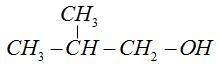
Isobutyl alcohol
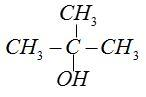
T-butyl alcohol
Therefore, from the above explanation the correct option is (D) The alcohol having four or more than four carbon atoms in structure.
Note: For formation of chain at least four carbon atoms are present in the molecule. Molecules having one two or three carbon atoms just for straight chain and not branches
They have different numbers of carbon atoms in the main chain.
Alcohols are organic compounds having common formula $R - OH.$Where $R$ is alkyl group.
Step by step answer: Let us first discuss different types of isomerism present in alcohol.
There are three types of structural isomerism in alcohol.
Therefore, chain isomerism, position isomerism and functional group isomerism.
Let us discuss one by one example:
(I) One carbon: One carbon does not form a chain.
Example: $C{H_3}OH$methyl alcohol.
(II) Two carbon: Two carbon form chains but there is only one way to form chains.
Ethyl alcohol.
$C{H_3}C{H_2}OH$
(III) Three carbon: Three carbon atoms from chain but only one way type shows position isomerism not chain isomerism.
$C{H_3} - C{H_2} - C{H_2} - OH$
(IV) Four carbon: Alcohol with four carbon atoms can show chain isomerism. Its molecular formula $C{F_4}{H_{10}}O.$
We can represent this as:
$C{H_3} - C{H_2} - C{H_2} - C{H_2} - OH$
N-butyl alcohol
Isobutyl alcohol
T-butyl alcohol
Therefore, from the above explanation the correct option is (D) The alcohol having four or more than four carbon atoms in structure.
Note: For formation of chain at least four carbon atoms are present in the molecule. Molecules having one two or three carbon atoms just for straight chain and not branches
Recently Updated Pages
Master Class 11 Social Science: Engaging Questions & Answers for Success

Master Class 11 Physics: Engaging Questions & Answers for Success
Master Class 11 Maths: Engaging Questions & Answers for Success
Master Class 11 Economics: Engaging Questions & Answers for Success
Master Class 11 Computer Science: Engaging Questions & Answers for Success
Master Class 11 Chemistry: Engaging Questions & Answers for Success
Trending doubts
One Metric ton is equal to kg A 10000 B 1000 C 100 class 11 physics CBSE
There are 720 permutations of the digits 1 2 3 4 5 class 11 maths CBSE
1 Quintal is equal to a 110 kg b 10 kg c 100kg d 1000 class 11 physics CBSE
State and prove Bernoullis theorem class 11 physics CBSE
Difference Between Prokaryotic Cells and Eukaryotic Cells
Which among the following are examples of coming together class 11 social science CBSE