




Which one of the following possesses winged petiole?
A. Citrus
B. Bombax
C. Acacia
D. Asparagus
Answer
 Verified
592.2k+ views
Hint: They are the flowering trees or shrubs belonging to the family Rutaceae having fleshy fruit inside and hard layer outside. These fruits are a high source of vitamin C having a large number of fibers present inside them.
Complete answer:
The winged petiole is possessed by the flowers of the citrus plants. The petioles of these plants are dark green and flat. In this type of petiole, a small portion of tissue is attached to the complete length of the petiole.
Additional Information:
-The leaf petiole is the anchor between the lead and the stem.
-It helps the leaves in its movement and rotates it according to the sun.
-The citrus plants are also called rue plants.
-The plants may be trees or shrubs having spiny characteristic shoots with evergreen leaves.
-The evergreen leaves are present in the alternate arrangement and the margin is entire.
-The inflorescence is found to be corymb with only a single flower (solitary), having five petals and many stamens.
-The flower produces a strong scent due to the presence of the oil glands.
-The fruit has an outer fibrous layer called the pericarp, a community known as the zest of the fruit.
-The inner pulp is known as endocarp on which a white fibrous layer is present which is the mesocarp, they provide the nourishment to the inner pulp.
-The peel of the citrus fruits consists of terpenes mainly flavonoids, and limonoids which gives it a strong odour.
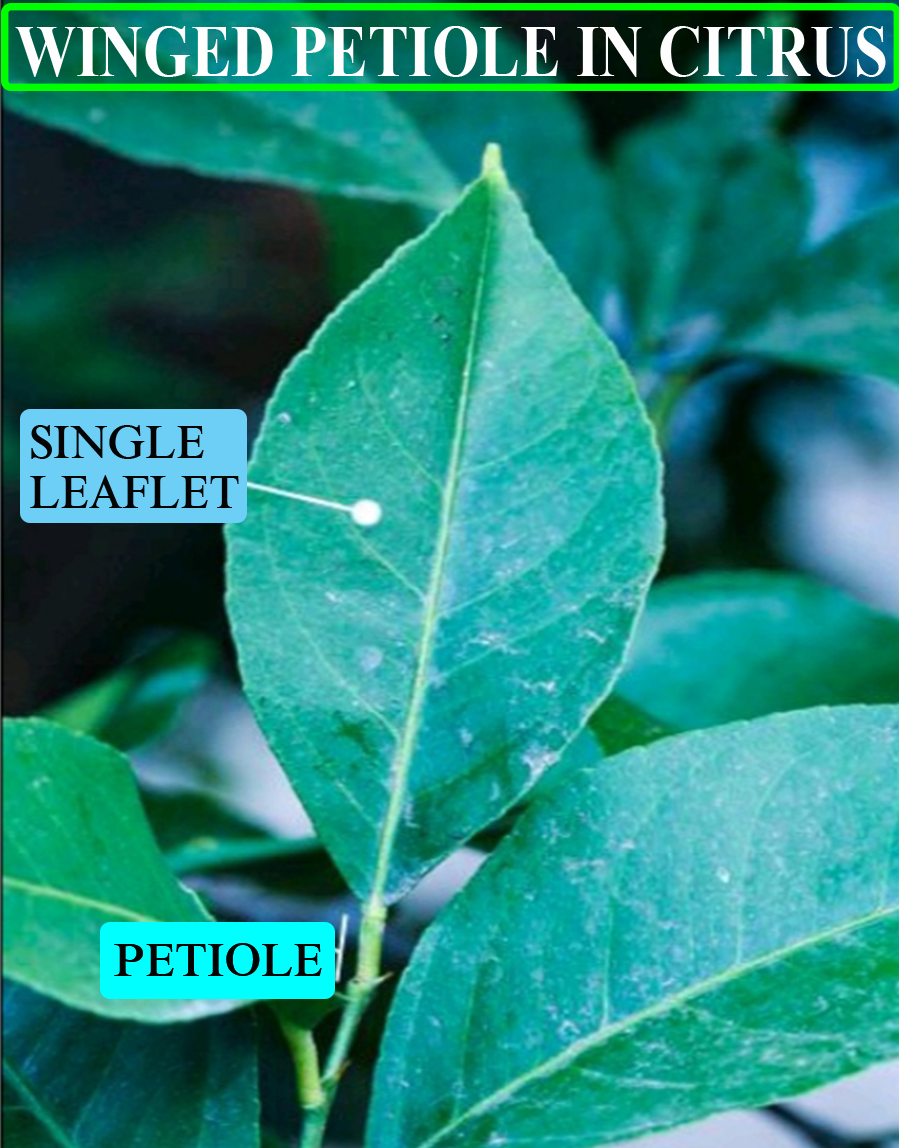
So, the correct answer is ‘Citrus’.
Note: The word petiole is derived from the Latin word Petiolus or Peciolus, meaning ‘little foot', ‘stem’. The generic name of the citrus plant originated from the Latin word and was referred to the plant which is now known as Citron or a conifer tree. The word citrus is also found to have originated from the ancient Greek word kedros, meaning ‘cedar’.
Complete answer:
The winged petiole is possessed by the flowers of the citrus plants. The petioles of these plants are dark green and flat. In this type of petiole, a small portion of tissue is attached to the complete length of the petiole.
Additional Information:
-The leaf petiole is the anchor between the lead and the stem.
-It helps the leaves in its movement and rotates it according to the sun.
-The citrus plants are also called rue plants.
-The plants may be trees or shrubs having spiny characteristic shoots with evergreen leaves.
-The evergreen leaves are present in the alternate arrangement and the margin is entire.
-The inflorescence is found to be corymb with only a single flower (solitary), having five petals and many stamens.
-The flower produces a strong scent due to the presence of the oil glands.
-The fruit has an outer fibrous layer called the pericarp, a community known as the zest of the fruit.
-The inner pulp is known as endocarp on which a white fibrous layer is present which is the mesocarp, they provide the nourishment to the inner pulp.
-The peel of the citrus fruits consists of terpenes mainly flavonoids, and limonoids which gives it a strong odour.
So, the correct answer is ‘Citrus’.
Note: The word petiole is derived from the Latin word Petiolus or Peciolus, meaning ‘little foot', ‘stem’. The generic name of the citrus plant originated from the Latin word and was referred to the plant which is now known as Citron or a conifer tree. The word citrus is also found to have originated from the ancient Greek word kedros, meaning ‘cedar’.
Recently Updated Pages
Master Class 11 Computer Science: Engaging Questions & Answers for Success

Master Class 11 Business Studies: Engaging Questions & Answers for Success
Master Class 11 Economics: Engaging Questions & Answers for Success
Master Class 11 English: Engaging Questions & Answers for Success
Master Class 11 Maths: Engaging Questions & Answers for Success
Master Class 11 Biology: Engaging Questions & Answers for Success
Trending doubts
One Metric ton is equal to kg A 10000 B 1000 C 100 class 11 physics CBSE
There are 720 permutations of the digits 1 2 3 4 5 class 11 maths CBSE
Discuss the various forms of bacteria class 11 biology CBSE
Draw a diagram of a plant cell and label at least eight class 11 biology CBSE
State the laws of reflection of light
Explain zero factorial class 11 maths CBSE