




Which one of the following molecules has the octahedral structure?
(a)- $BeC{{l}_{2}}$
(b)- $S{{F}_{6}}$
(c)- $B{{F}_{3}}$
(d)- $P{{F}_{5}}$
(e)- $C{{F}_{4}}$
Answer
 Verified
516.6k+ views
Hint: The shape of the compound is determined by the number of bonds formed by the central atom. Octahedral means there must be six bonds formed by the central atom and these must be single bonds.
Complete answer:
According to the number of elements joined to the central atom. There are many shapes of the compound like linear, trigonal planar, tetrahedral, square planar, pentagonal bipyramidal, octahedral, etc.
These are divided by the number of bonds, type of bonds, and the number of lone pairs in the molecule.
In $BeC{{l}_{2}}$, there are two bonds, and both the bonds are single bonds and there are no lone pairs in the compound. So, the structure of the compound is linear.

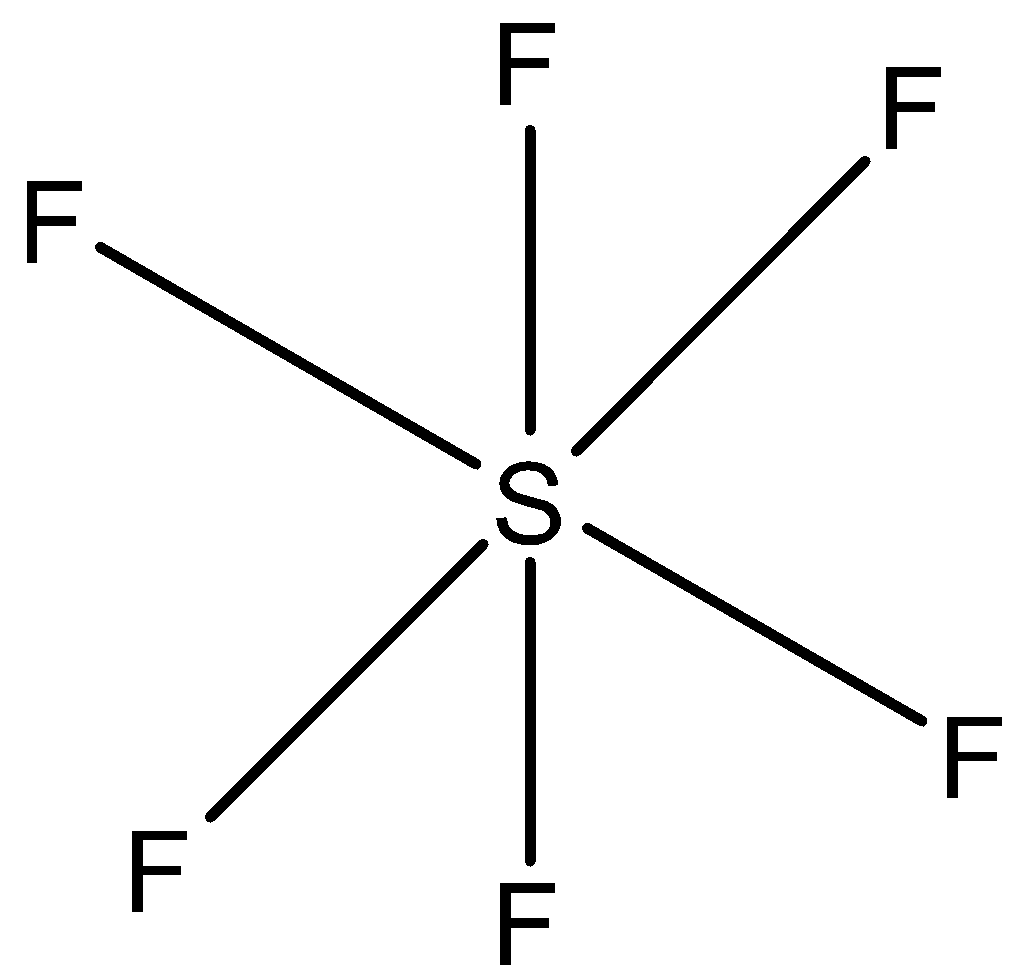
In $S{{F}_{6}}$, there are six bonds and all the bonds are single bonds and there are no lone pairs in the compound. So, the structure of the compound is octahedral.
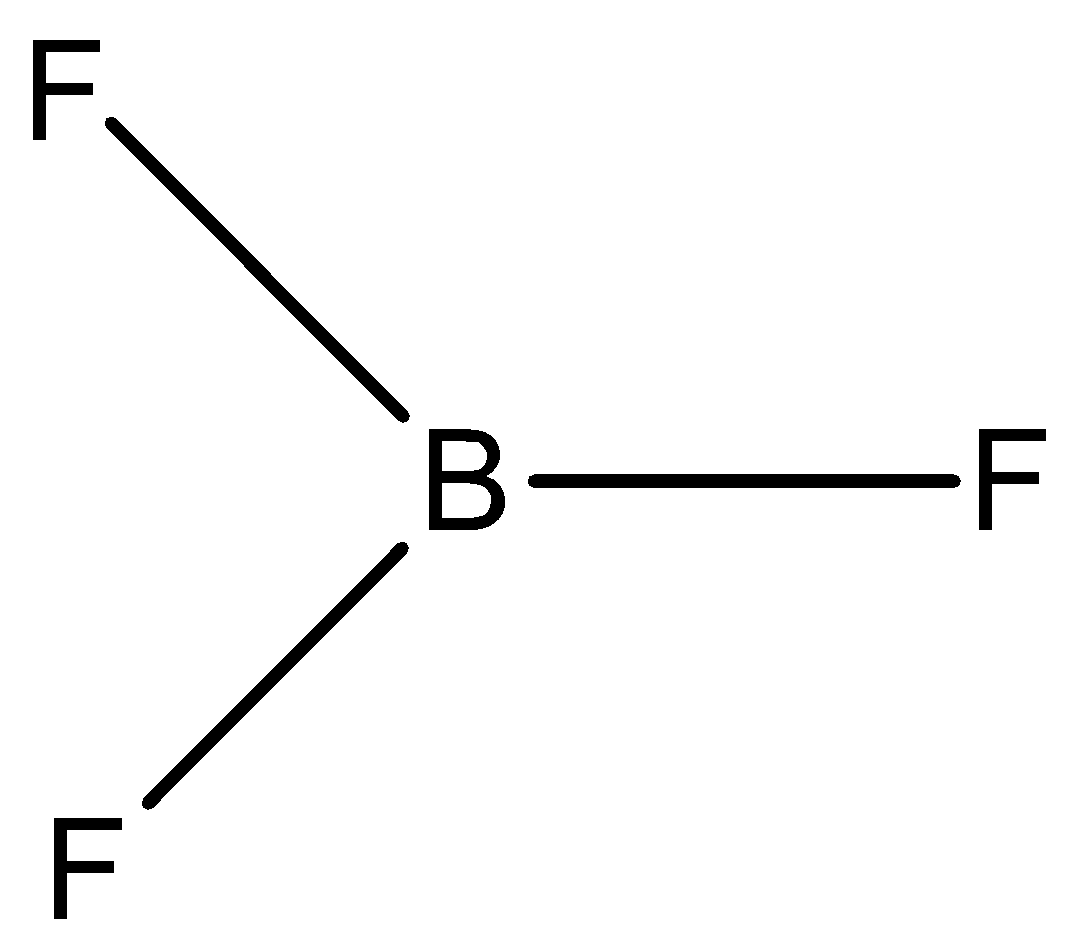
In $B{{F}_{3}}$, there are three bonds and all the bonds are single bonds and there are no lone pairs in the compound. So, the structure of the compound is trigonal planar.
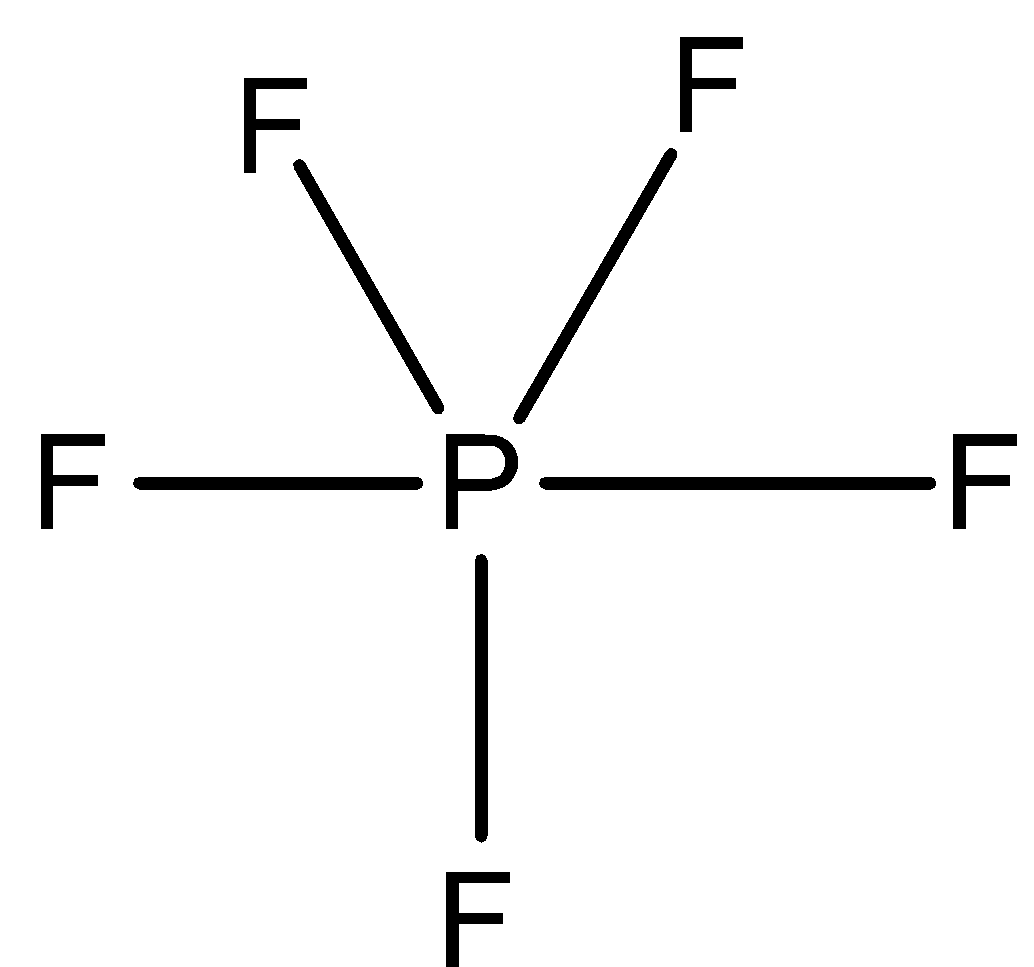
In $P{{F}_{5}}$, there are five bonds and all the bonds are single bonds and there are no lone pairs in the compound. So, the structure of the compound is trigonal bipyramidal.
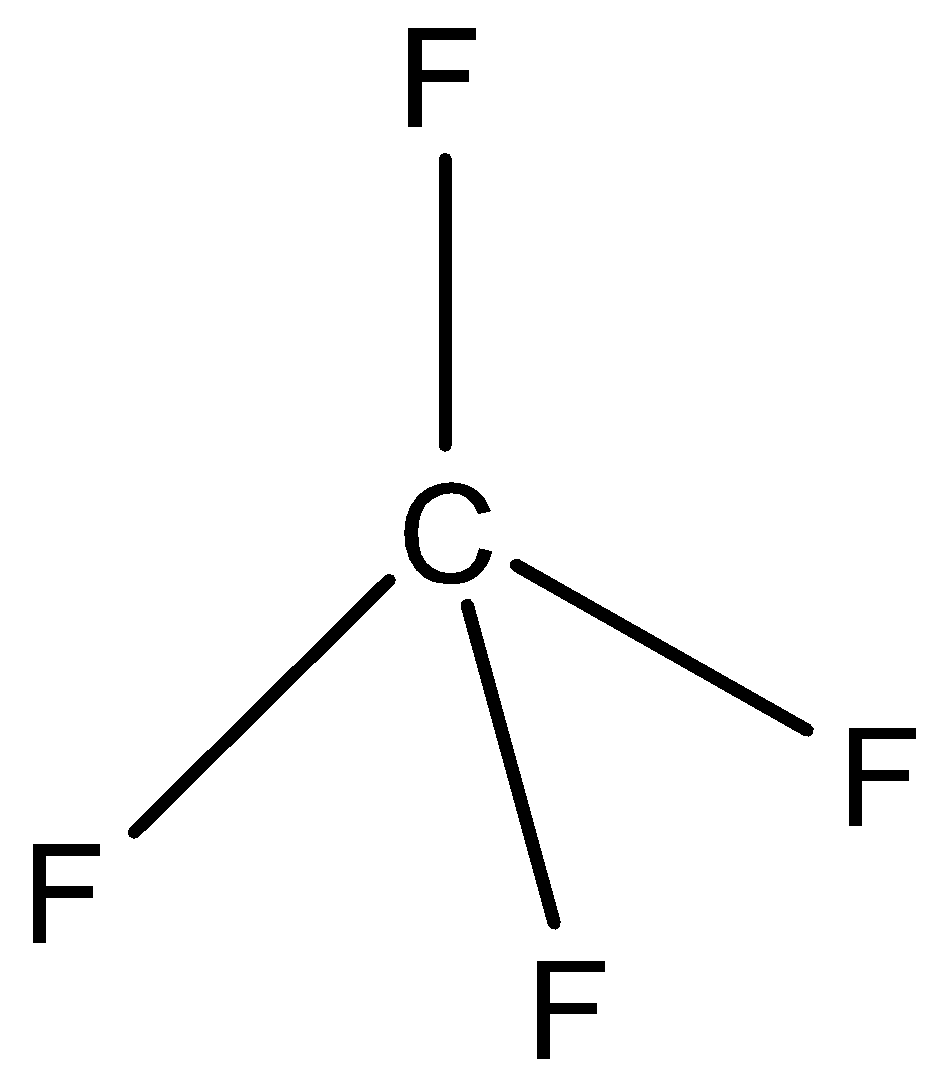
In $C{{F}_{4}}$, there are five bonds and all the bonds are single bonds and there are no lone pairs in the compound. So, the structure of the compound is tetrahedral.
Therefore, the correct answer is an option (b).
Note:
In all the compounds, there is no lone pair so, there is no repulsion between the bonds. But due to the presence of lone pairs, there will be repulsion in the bonds and the shape of the compound will be changed.
Complete answer:
According to the number of elements joined to the central atom. There are many shapes of the compound like linear, trigonal planar, tetrahedral, square planar, pentagonal bipyramidal, octahedral, etc.
These are divided by the number of bonds, type of bonds, and the number of lone pairs in the molecule.
In $BeC{{l}_{2}}$, there are two bonds, and both the bonds are single bonds and there are no lone pairs in the compound. So, the structure of the compound is linear.
In $S{{F}_{6}}$, there are six bonds and all the bonds are single bonds and there are no lone pairs in the compound. So, the structure of the compound is octahedral.
In $B{{F}_{3}}$, there are three bonds and all the bonds are single bonds and there are no lone pairs in the compound. So, the structure of the compound is trigonal planar.
In $P{{F}_{5}}$, there are five bonds and all the bonds are single bonds and there are no lone pairs in the compound. So, the structure of the compound is trigonal bipyramidal.
In $C{{F}_{4}}$, there are five bonds and all the bonds are single bonds and there are no lone pairs in the compound. So, the structure of the compound is tetrahedral.
Therefore, the correct answer is an option (b).
Note:
In all the compounds, there is no lone pair so, there is no repulsion between the bonds. But due to the presence of lone pairs, there will be repulsion in the bonds and the shape of the compound will be changed.
Recently Updated Pages
Master Class 11 Computer Science: Engaging Questions & Answers for Success

Master Class 11 Business Studies: Engaging Questions & Answers for Success
Master Class 11 Economics: Engaging Questions & Answers for Success
Master Class 11 English: Engaging Questions & Answers for Success
Master Class 11 Maths: Engaging Questions & Answers for Success
Master Class 11 Biology: Engaging Questions & Answers for Success
Trending doubts
One Metric ton is equal to kg A 10000 B 1000 C 100 class 11 physics CBSE
There are 720 permutations of the digits 1 2 3 4 5 class 11 maths CBSE
Discuss the various forms of bacteria class 11 biology CBSE
Draw a diagram of a plant cell and label at least eight class 11 biology CBSE
State the laws of reflection of light
Explain zero factorial class 11 maths CBSE