



Which one of the following compounds is not optically active?
(A) $C{{H}_{3}}C{{H}_{2}}CH(C{{H}_{3}})C{{H}_{2}}Cl$
(B) $C{{H}_{3}}C{{H}_{2}}CH{{(C{{H}_{3}})}_{2}}$
(C) $C{{H}_{3}}-CHOH-COOH$
(D) $C{{H}_{3}}-CHCl-C{{H}_{2}}Br$
Answer
 Verified
580.8k+ views
Hint: Optical activity is only shown by chiral molecules. So, to solve this question we first need to know what chiral molecules are. A molecule that has a non-superimposable mirror image at any combination of translations and rotations is known as a chiral molecule.
Complete answer:
To determine which molecule is not optically active we have to determine which molecule is not chiral.
Now, in a chiral molecule, there is a presence of chiral carbon. The carbon atom that contains four different bonded groups, including lone pairs, is known as a chiral carbon.
First, let us draw the structures of each molecule.
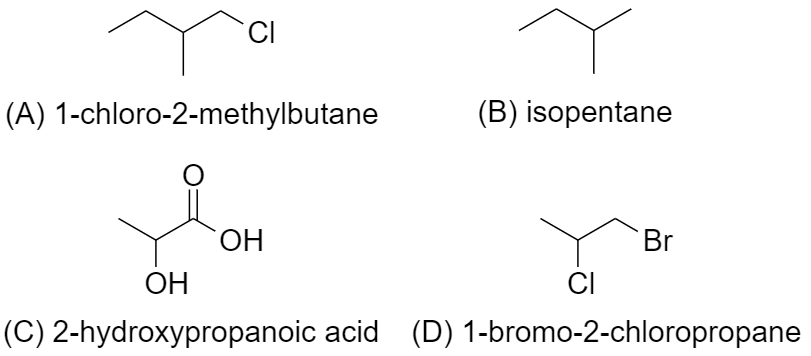
Now, let us determine the presence of chiral atoms in each of the options
(A) In 1-Chloro-2methylbutane ($C{{H}_{3}}C{{H}_{2}}CH(C{{H}_{3}})C{{H}_{2}}Cl$), there is 1 chiral carbon.
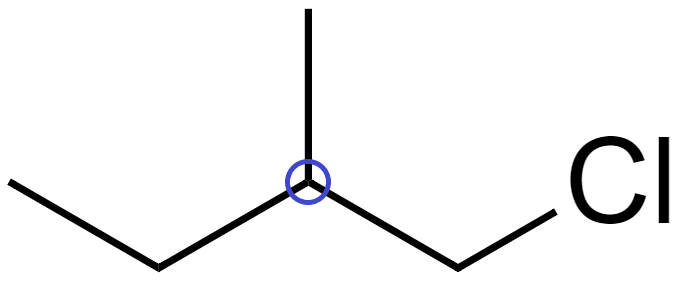
Since it has a chiral carbon, which is attached to 4 distinct bonding group, which are $-C{{H}_{2}}C{{H}_{3}}$, $-C{{H}_{3}}$, -H, and $-C{{H}_{2}}Cl$
Hence, it is optically active.
(B) In isopentane ($C{{H}_{3}}C{{H}_{2}}CH{{(C{{H}_{3}})}_{2}}$), there are no chiral carbons.
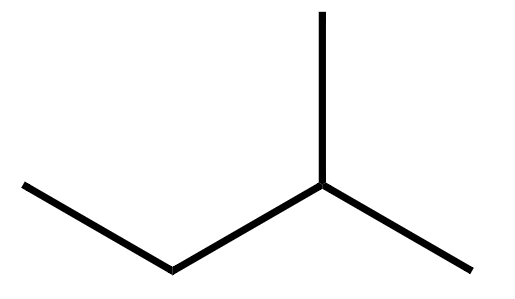
Since no atom is attached to 4 distinct bonding groups, it does not have a chiral carbon and hence is not optically active.
(C) In 2-hydroxypropanoic acid ($C{{H}_{3}}-CHOH-COOH$), there is 1 chiral carbon.
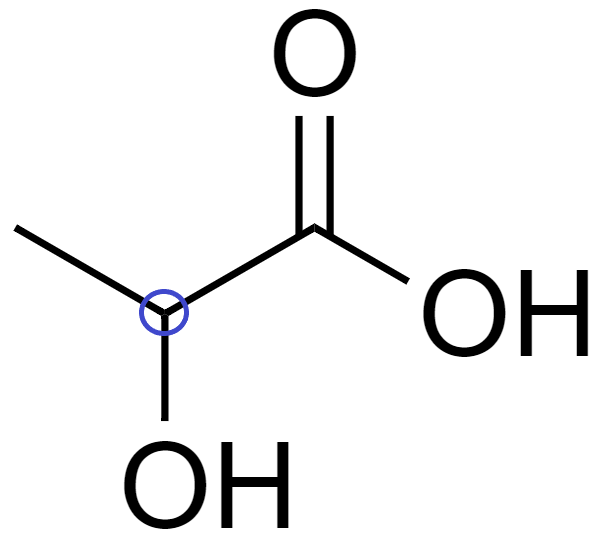
Since it has a chiral carbon, which is attached to 4 distinct bonding groups, which are $-COOH$, $-C{{H}_{3}}$, -OH, and -H.
Hence, it is optically active.
(D) In 1-Bromo-2-chloropropane ($C{{H}_{3}}-CHCl-C{{H}_{2}}Br$), there is 1 chiral carbon.
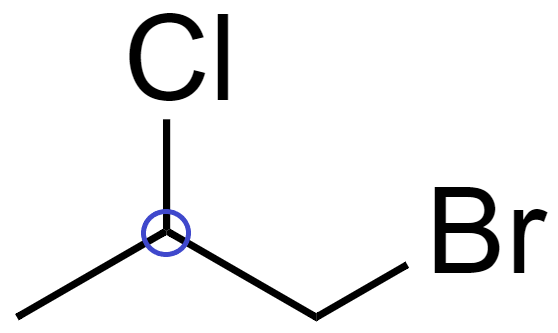
Since it has a chiral carbon, which is attached to 4 distinct bonding group which are $-C{{H}_{3}}$, -Cl, -H and $-C{{H}_{2}}Br$
Hence, it is optically active.
So, the correct option is option (B) $C{{H}_{3}}C{{H}_{2}}CH{{(C{{H}_{3}})}_{2}}$ (isopentane).
Note:
It should be noted that an atom having 2 or more than 2 identical groups attached to it is not a chiral center.
For example, the straight-chain alkyl group's carbon atoms are not chiral, as they have multiple hydrogens attached to them $(-C{{H}_{2}}\text{ or -C}{{\text{H}}_{3}})$.
A carbon atom having multiple bonding like a double bond or triple bond is not chiral as it does not have four distinct ligands.
Complete answer:
To determine which molecule is not optically active we have to determine which molecule is not chiral.
Now, in a chiral molecule, there is a presence of chiral carbon. The carbon atom that contains four different bonded groups, including lone pairs, is known as a chiral carbon.
First, let us draw the structures of each molecule.
Now, let us determine the presence of chiral atoms in each of the options
(A) In 1-Chloro-2methylbutane ($C{{H}_{3}}C{{H}_{2}}CH(C{{H}_{3}})C{{H}_{2}}Cl$), there is 1 chiral carbon.
Since it has a chiral carbon, which is attached to 4 distinct bonding group, which are $-C{{H}_{2}}C{{H}_{3}}$, $-C{{H}_{3}}$, -H, and $-C{{H}_{2}}Cl$
Hence, it is optically active.
(B) In isopentane ($C{{H}_{3}}C{{H}_{2}}CH{{(C{{H}_{3}})}_{2}}$), there are no chiral carbons.
Since no atom is attached to 4 distinct bonding groups, it does not have a chiral carbon and hence is not optically active.
(C) In 2-hydroxypropanoic acid ($C{{H}_{3}}-CHOH-COOH$), there is 1 chiral carbon.
Since it has a chiral carbon, which is attached to 4 distinct bonding groups, which are $-COOH$, $-C{{H}_{3}}$, -OH, and -H.
Hence, it is optically active.
(D) In 1-Bromo-2-chloropropane ($C{{H}_{3}}-CHCl-C{{H}_{2}}Br$), there is 1 chiral carbon.
Since it has a chiral carbon, which is attached to 4 distinct bonding group which are $-C{{H}_{3}}$, -Cl, -H and $-C{{H}_{2}}Br$
Hence, it is optically active.
So, the correct option is option (B) $C{{H}_{3}}C{{H}_{2}}CH{{(C{{H}_{3}})}_{2}}$ (isopentane).
Note:
It should be noted that an atom having 2 or more than 2 identical groups attached to it is not a chiral center.
For example, the straight-chain alkyl group's carbon atoms are not chiral, as they have multiple hydrogens attached to them $(-C{{H}_{2}}\text{ or -C}{{\text{H}}_{3}})$.
A carbon atom having multiple bonding like a double bond or triple bond is not chiral as it does not have four distinct ligands.
Recently Updated Pages
Master Class 11 English: Engaging Questions & Answers for Success

Master Class 11 Physics: Engaging Questions & Answers for Success
Master Class 11 Computer Science: Engaging Questions & Answers for Success
Master Class 11 Chemistry: Engaging Questions & Answers for Success
Master Class 11 Social Science: Engaging Questions & Answers for Success
Master Class 11 Accountancy: Engaging Questions & Answers for Success
Trending doubts
Difference Between Prokaryotic Cells and Eukaryotic Cells
Two of the body parts which do not appear in MRI are class 11 biology CBSE
One Metric ton is equal to kg A 10000 B 1000 C 100 class 11 physics CBSE
10 examples of friction in our daily life
Draw a diagram of nephron and explain its structur class 11 biology CBSE
Draw a diagram of a plant cell and label at least eight class 11 biology CBSE