




Which one of the following animals has no blood but respire?
(a) Earthworm
(b) Hydra
(c) Cockroach
(d) Octopus
Answer
 Verified
630.9k+ views
Hint: They reproduce by producing buds in the body wall, which later grow into miniature adults and break away when reached maturity.
Complete answer: There are three main types of respiratory systems in animals, respiration through the skin, respiration through the gills, or respiration through internal air structures.
Hydra is a member of the phylum Cnidaria where in the course of evolution, blood or any body fluid is not formed.
Aquatic animals use gills, which are structures composed of tissues and blood vessels that extend from the body to their respiratory needs. Most terrestrial animals use internal air structures, such as lungs or tracheae, to respire.
Additional Information:
1. Hydra is marine organisms that use seawater to draw their nutrition and to excrete their excretory products. It is discharged through their mouth.
2. Earthworms do not have lungs, they breathe through their skin by diffusion.
3. Cockroaches respire through spiracles.
4. An octopus breathes through gills that are located inside the mantle cavity and exit to the outside of the body.
So, the correct answer is ‘Hydra has no blood but respires’
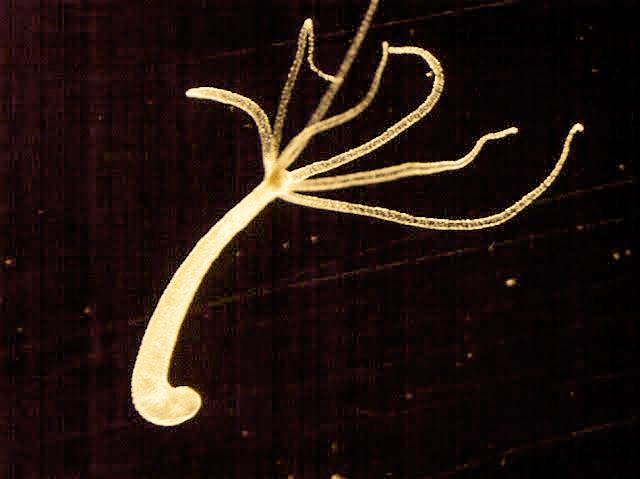
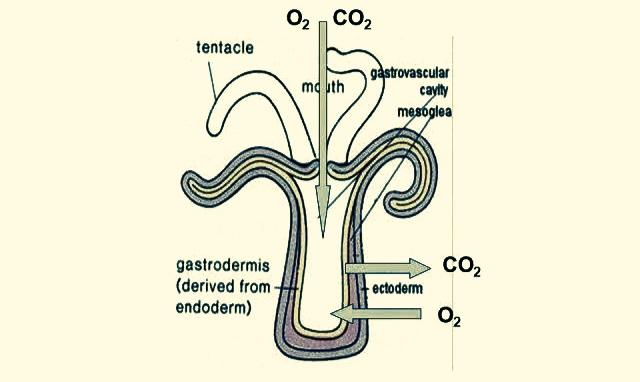
(gas exchange in hydra)
Notes:
1. Hydra belongs to the class Hydrozoa of the phylum Cnidaria is a genus of small, fresh-water organisms.
2. Hydra is carnivorous that feeds on cyclops, insect larva, aquatic oligochaete, and fish-eggs.
3. Their native place is the temperate and tropical regions.
4. Hydra does not age at all. It is diploblastic, which means it has two main layers.
5. In hydra, the undigested food is removed in the form of nitrogenous wastes through the mouth.
Complete answer: There are three main types of respiratory systems in animals, respiration through the skin, respiration through the gills, or respiration through internal air structures.
Hydra is a member of the phylum Cnidaria where in the course of evolution, blood or any body fluid is not formed.
Aquatic animals use gills, which are structures composed of tissues and blood vessels that extend from the body to their respiratory needs. Most terrestrial animals use internal air structures, such as lungs or tracheae, to respire.
Additional Information:
1. Hydra is marine organisms that use seawater to draw their nutrition and to excrete their excretory products. It is discharged through their mouth.
2. Earthworms do not have lungs, they breathe through their skin by diffusion.
3. Cockroaches respire through spiracles.
4. An octopus breathes through gills that are located inside the mantle cavity and exit to the outside of the body.
So, the correct answer is ‘Hydra has no blood but respires’
(gas exchange in hydra)
Notes:
1. Hydra belongs to the class Hydrozoa of the phylum Cnidaria is a genus of small, fresh-water organisms.
2. Hydra is carnivorous that feeds on cyclops, insect larva, aquatic oligochaete, and fish-eggs.
3. Their native place is the temperate and tropical regions.
4. Hydra does not age at all. It is diploblastic, which means it has two main layers.
5. In hydra, the undigested food is removed in the form of nitrogenous wastes through the mouth.
Recently Updated Pages
Master Class 12 Economics: Engaging Questions & Answers for Success

Master Class 12 English: Engaging Questions & Answers for Success
Master Class 12 Social Science: Engaging Questions & Answers for Success
Master Class 12 Maths: Engaging Questions & Answers for Success
Master Class 12 Physics: Engaging Questions & Answers for Success
Master Class 9 General Knowledge: Engaging Questions & Answers for Success
Trending doubts
Find the sum of series 1 + 2 + 3 + 4 + 5 + + 100 class 9 maths CBSE
Difference Between Plant Cell and Animal Cell
Fill the blanks with the suitable prepositions 1 The class 9 english CBSE
What is pollution? How many types of pollution? Define it
Name 10 Living and Non living things class 9 biology CBSE
What is the full form of pH?