




Which one among the following belongs to Anthozoa?
(a) Dugesia
(b) Fungia
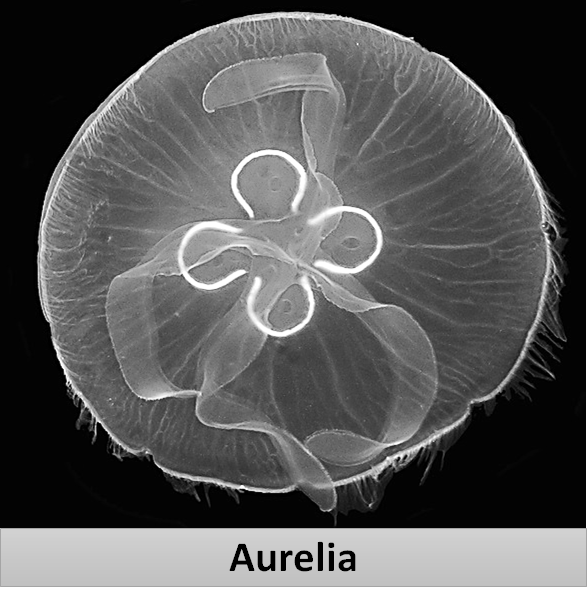
(c) Aurelia
(d) Sterularia
Answer
 Verified
628.5k+ views
Hint: Phylum Coelenterata is a radially symmetrical, diploblastic, and multicellular organism with a tissue grade of organization. It is divided into three classes based on their body forms including Anthozoa. The one belonging to this class is also known as mushroom coral.
Complete answer:
Coelenterates are aquatic with habitats ranging from freshwater to marine. They may exist in solitary forms or among its kinds and forming colonies. They may be free-swimming or sedentary. Two types of body forms exist in coelenterates-polyps or polyploid and medusae or medusoid. Polyps are sessile forms of these animals who can reproduce sexually as well as asexually while medusae are free-living and can only reproduce sexually. The three classes are Hydrozoa, Scyphozoa, and Anthozoa.
The class Anthozoa exhibits only polypoid body form. Medusa form is absent. E.g. Fungia or mushroom coral.
- Aurelia belongs to the class Scyphozoa. They exhibit only Medusoid forms.
- Dugesia is also known as Planaria. It is a member of the class Turbellaria of Phylum Platyhelminthes. They are mostly free-living flatworms. And found in slow- moving streams or freshwater ponds. They have a great regeneration power to recover its lost part or to reproduce.
-sertularia belongs to the class of Hydrozoa. This class is represented by members who can exhibit both the polyp and medusa forms. E.g Obelia.
So, the correct answer is ‘Fungia.’
Note:
- The body of coelenterates has a mouth at the oral end which leads into a spacious gastrovascular cavity referred to as coelenteron.
- Long hollow structures 'tentacles are also present at its oral end which helps the organism to locomote as well as catch food.
- Their peculiar feature is the presence of stinging organs, commonly known as cnidoblasts or nematoblasts. They are located abundantly near or on the tentacles and aid in offense or defense.
Complete answer:
Coelenterates are aquatic with habitats ranging from freshwater to marine. They may exist in solitary forms or among its kinds and forming colonies. They may be free-swimming or sedentary. Two types of body forms exist in coelenterates-polyps or polyploid and medusae or medusoid. Polyps are sessile forms of these animals who can reproduce sexually as well as asexually while medusae are free-living and can only reproduce sexually. The three classes are Hydrozoa, Scyphozoa, and Anthozoa.
The class Anthozoa exhibits only polypoid body form. Medusa form is absent. E.g. Fungia or mushroom coral.
- Aurelia belongs to the class Scyphozoa. They exhibit only Medusoid forms.
- Dugesia is also known as Planaria. It is a member of the class Turbellaria of Phylum Platyhelminthes. They are mostly free-living flatworms. And found in slow- moving streams or freshwater ponds. They have a great regeneration power to recover its lost part or to reproduce.
-sertularia belongs to the class of Hydrozoa. This class is represented by members who can exhibit both the polyp and medusa forms. E.g Obelia.
So, the correct answer is ‘Fungia.’
Note:
- The body of coelenterates has a mouth at the oral end which leads into a spacious gastrovascular cavity referred to as coelenteron.
- Long hollow structures 'tentacles are also present at its oral end which helps the organism to locomote as well as catch food.
- Their peculiar feature is the presence of stinging organs, commonly known as cnidoblasts or nematoblasts. They are located abundantly near or on the tentacles and aid in offense or defense.
Recently Updated Pages
Master Class 11 English: Engaging Questions & Answers for Success

Master Class 11 Social Science: Engaging Questions & Answers for Success
Master Class 11 Maths: Engaging Questions & Answers for Success
Master Class 11 Biology: Engaging Questions & Answers for Success
Master Class 11 Physics: Engaging Questions & Answers for Success
Master Class 11 Chemistry: Engaging Questions & Answers for Success
Trending doubts
One Metric ton is equal to kg A 10000 B 1000 C 100 class 11 physics CBSE
Difference Between Prokaryotic Cells and Eukaryotic Cells
Find the value of the expression given below sin 30circ class 11 maths CBSE
Difference between physical and chemical change class 11 chemistry CBSE
Two of the body parts which do not appear in MRI are class 11 biology CBSE
Draw a diagram of a plant cell and label at least eight class 11 biology CBSE