




Which of the given pyramids represents the variation in biomass at different trophic levels in the pond ecosystem?
A
A.
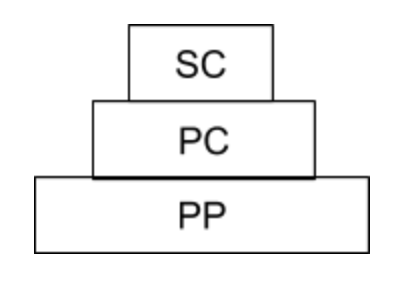
B.
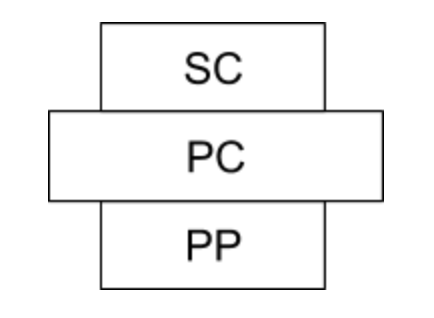
C.
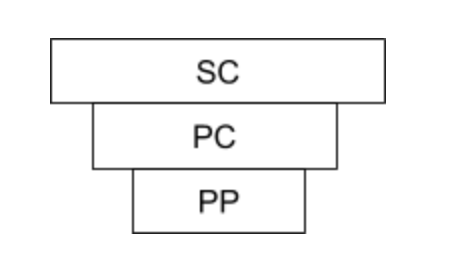
D.

Answer
 Verified
617.4k+ views
Hint: Biomass is calculated as the mass of living organisms present at each of the trophic levels in a given sample size at the time. It can also be represented as dry weight in grams or calories per unit area. To measure biomass a bomb calorimeter is used.
Complete answer:
A biomass pyramid is the diagrammatic representation of the total living biomass or the organic matter present at the different trophic levels in an ecosystem.
Trophic levels are the particular place that a living organism occupies in a food chain.
In a biomass pyramid, producers (also known as first trophic level) are kept at the base, then followed by herbivores (also known as primary consumers) and then the carnivores (which can be both secondary and tertiary consumers) are kept at the top.
The pyramid of biomass also represents the flow of energy from the producers to the consumers. As we know, only Ten per cent of the energy is transferred to the next trophic level while the rest of energy is either utilised for metabolic processes or excreted out.
In a pond ecosystem, the standing crop of phytoplankton are the primary producers and the major producers, at any given point will be lower than the mass of the heterotrophs i.e. secondary or primary consumers, such as fish and insects. Hence the pyramid of biomass becomes inverted in the pond ecosystem'.
Hence, the correct answer is option (C).
Note: Biomass pyramids represents how much biomass (i.e. the amount of living or organic matter present in an organism) is present in the organisms at each of the trophic level, while productivity pyramids represents the procreation or turnover in biomass.
Complete answer:
A biomass pyramid is the diagrammatic representation of the total living biomass or the organic matter present at the different trophic levels in an ecosystem.
Trophic levels are the particular place that a living organism occupies in a food chain.
In a biomass pyramid, producers (also known as first trophic level) are kept at the base, then followed by herbivores (also known as primary consumers) and then the carnivores (which can be both secondary and tertiary consumers) are kept at the top.
The pyramid of biomass also represents the flow of energy from the producers to the consumers. As we know, only Ten per cent of the energy is transferred to the next trophic level while the rest of energy is either utilised for metabolic processes or excreted out.
In a pond ecosystem, the standing crop of phytoplankton are the primary producers and the major producers, at any given point will be lower than the mass of the heterotrophs i.e. secondary or primary consumers, such as fish and insects. Hence the pyramid of biomass becomes inverted in the pond ecosystem'.
Hence, the correct answer is option (C).
Note: Biomass pyramids represents how much biomass (i.e. the amount of living or organic matter present in an organism) is present in the organisms at each of the trophic level, while productivity pyramids represents the procreation or turnover in biomass.
Recently Updated Pages
Basicity of sulphurous acid and sulphuric acid are

Master Class 12 Economics: Engaging Questions & Answers for Success
Master Class 12 Biology: Engaging Questions & Answers for Success
Master Class 11 English: Engaging Questions & Answers for Success
Master Class 11 Physics: Engaging Questions & Answers for Success
Master Class 11 Computer Science: Engaging Questions & Answers for Success
Trending doubts
Draw a labelled sketch of the human eye class 12 physics CBSE
The chemical formula of tear gas is A CO Cl 2 B C 10 class 12 chemistry CBSE
Draw ray diagrams each showing i myopic eye and ii class 12 physics CBSE
Which are the Top 10 Largest Countries of the World?
Differentiate between homogeneous and heterogeneous class 12 chemistry CBSE
Which is the correct genotypic ratio of mendel dihybrid class 12 biology CBSE