




Which of the following statements is/are wrong?
(A) Acetic acid is the systematic name of vinegar
(B)
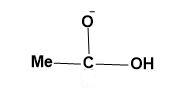 is an unsaturated compound
(C) Prefixes like n-, iso, sec-, tert, neo-, etc., are used in IUPAC system
(D) The systematic names of acids are formed by dropping -e of the name of parent alkane and adding -oic acid.
Answer
 Verified
569.1k+ views
Hint: This question can have multiple correct answers. We need to cross check each and every option to get the correct solution of the given illustration.
Complete Solution :
Let us study each option carefully;
1. Systematic name-
It is a standardised name given in a systematic manner. It is usually a part of nomenclature and are based on the set of rules drawn by IUPAC. Mostly, all the compounds in nature have systematic names. They also can have trivial or common names.
Here, acetic acid is the common name of vinegar. Hence, the statement given is wrong.
2. Saturated compounds-
These are the organic compounds in which all the carbon atoms are connected by the single bonds to other atoms. The presence of double or single bonds in the compounds show the unsaturation of the same.
Here, the given compound has all the single bonds i.e. it is a saturated compound. Hence, the statement given is wrong.
3. Common naming system-
Prefixes used in the common system of nomenclature are iso-, sec-, tert-, and neo-. And the prefix used in the IUPAC system is n- (at times).
Hence, the given statement is wrong.
4. The systematic names (IUPAC names) of acids are formed by dropping -e of the name of parent alkane and adding -oic acid.
Hence, the statement given is correct.
So, the correct answer is “Option A, B and C”.
Note: Do note that some may get confused in option (C) as one of the prefixes (i.e. n-) is used in IUPAC nomenclature but we should consider the whole statement while answering the given illustration. As, others are not the part of the IUPAC nomenclature thus, the statement is wrong.
Complete Solution :
Let us study each option carefully;
1. Systematic name-
It is a standardised name given in a systematic manner. It is usually a part of nomenclature and are based on the set of rules drawn by IUPAC. Mostly, all the compounds in nature have systematic names. They also can have trivial or common names.
Here, acetic acid is the common name of vinegar. Hence, the statement given is wrong.
2. Saturated compounds-
These are the organic compounds in which all the carbon atoms are connected by the single bonds to other atoms. The presence of double or single bonds in the compounds show the unsaturation of the same.
Here, the given compound has all the single bonds i.e. it is a saturated compound. Hence, the statement given is wrong.
3. Common naming system-
Prefixes used in the common system of nomenclature are iso-, sec-, tert-, and neo-. And the prefix used in the IUPAC system is n- (at times).
Hence, the given statement is wrong.
4. The systematic names (IUPAC names) of acids are formed by dropping -e of the name of parent alkane and adding -oic acid.
Hence, the statement given is correct.
So, the correct answer is “Option A, B and C”.
Note: Do note that some may get confused in option (C) as one of the prefixes (i.e. n-) is used in IUPAC nomenclature but we should consider the whole statement while answering the given illustration. As, others are not the part of the IUPAC nomenclature thus, the statement is wrong.
Recently Updated Pages
Master Class 11 Computer Science: Engaging Questions & Answers for Success

Master Class 11 Business Studies: Engaging Questions & Answers for Success
Master Class 11 Economics: Engaging Questions & Answers for Success
Master Class 11 English: Engaging Questions & Answers for Success
Master Class 11 Maths: Engaging Questions & Answers for Success
Master Class 11 Biology: Engaging Questions & Answers for Success
Trending doubts
One Metric ton is equal to kg A 10000 B 1000 C 100 class 11 physics CBSE
There are 720 permutations of the digits 1 2 3 4 5 class 11 maths CBSE
Discuss the various forms of bacteria class 11 biology CBSE
Draw a diagram of a plant cell and label at least eight class 11 biology CBSE
State the laws of reflection of light
Explain zero factorial class 11 maths CBSE