




Which of the following molecules is planar?
(A) $N{F_3}$
(B) $NC{l_3}$
(C) $P{H_3}$
(D) $B{F_3}$
Answer
 Verified
578.4k+ views
Hint: Geometry of molecules depends on hybridization. Hybridization is a process of mixing and reacting of atomic orbitals of the same energy and form the same number of hybrid orbitals of the same energy.
Complete step by step answer:
Let us discuss hybridization in the following molecules $N{F_3},NC{l_3},P{H_3},B{F_3}$one by one.
Hybridization in $NC{l_3}$-
Central atom of these molecules is Nitrogen.
Electronic configuration of $N = 1{s^2}2{s^2}2p_x^12p_y^12p_2^1$
At ground state
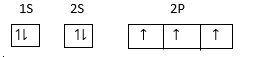
Electronic configuration of N in excited state =
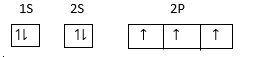
Electrons from 2s orbitals jump to 2p orbitals excitation takes place at the same energy level.
Now one 2s and two 2p orbitals hybridize and form Four $s{p^3}$hybrid orbitals. Therefore, hybridization is tetrahedral with one lone pair of electrons.
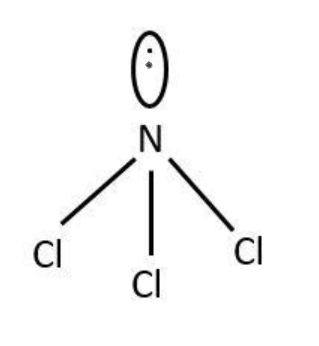
Electronic Configuration of Cl is: $1{s^2}2{s^2}2{p^6}3{s^2}3p_x^13p_y^13p_2^1$
Thus, three unpaired electrons of hybrid orbitals of N form a covalent bond with unpaired electrons of $3{p_2}$ orbital.
Due to the presence of unpaired electrons, the geometry is distorted tetrahedral and not planes.
Hybridization in $N{F_3}:$
Following the same steps in $N{F_3}$ as $NC{l_3}.$
We will give electronic configuration of ‘F’ in place of ‘Cl’.
Again hybridization is distorted tetrahedral due to the presence of lone pairs of electrons.
Hybridization in $P{H_3}:$ Central atom is P.
Electronic configuration of P is $ = 1{s^2}2{s^2}2{p^6}3{s^2}3p_x^13p_y^13p_2^1$
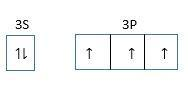
One s and three p orbitals hybridize and form Four $s{p^3}$ hybrid orbitals of which one orbital has lone pair and three have unpaired electrons.
Three hydrogen atoms form three covalent bonds with unpaired electrons of hybrid orbital. Hybridization is $s{p^3}.$
The geometry is distorted tetrahedral due to the presence of lone pairs of electrons.
Hybridization in $B{F_3}:$ Central atom is B.
Electronic configuration is $ = 1{s^2}2{s^2}2{p^1}$
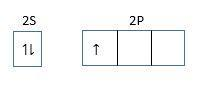
Electronic configuration in an excited state.
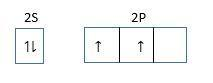
One 2s and two 2p orbital hybridize and form three $s{p^2}$ hybridized orbitals. There are no lone pairs of electrons in hybrid orbital so geometry is planar and it is trigonal planar.
Fluorine has Electronic configuration, $1{s^2}2{s^2}2p_x^22p_y^22p_2^1$
$2{p_2}$ electron forms covalent bond with unpaired electron of B.
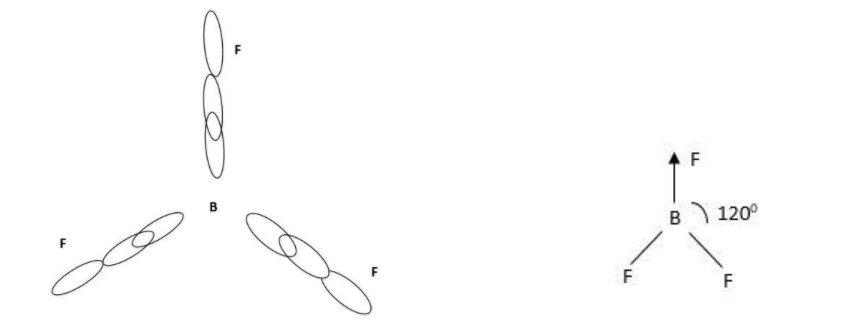
Geometry is trigonal planar and angle between them is ${120^0}$.
So, the correct answer is “Option D”.
Note:
The repulsion between lone pair and bond pair of electrons is more. Therefore, distortion takes place. But there is no repulsion between bond pair and bond pair of electrons.
Therefore geometry in $B{F_3}$ is planer.
Complete step by step answer:
Let us discuss hybridization in the following molecules $N{F_3},NC{l_3},P{H_3},B{F_3}$one by one.
Hybridization in $NC{l_3}$-
Central atom of these molecules is Nitrogen.
Electronic configuration of $N = 1{s^2}2{s^2}2p_x^12p_y^12p_2^1$
At ground state
Electronic configuration of N in excited state =
Electrons from 2s orbitals jump to 2p orbitals excitation takes place at the same energy level.
Now one 2s and two 2p orbitals hybridize and form Four $s{p^3}$hybrid orbitals. Therefore, hybridization is tetrahedral with one lone pair of electrons.
Electronic Configuration of Cl is: $1{s^2}2{s^2}2{p^6}3{s^2}3p_x^13p_y^13p_2^1$
Thus, three unpaired electrons of hybrid orbitals of N form a covalent bond with unpaired electrons of $3{p_2}$ orbital.
Due to the presence of unpaired electrons, the geometry is distorted tetrahedral and not planes.
Hybridization in $N{F_3}:$
Following the same steps in $N{F_3}$ as $NC{l_3}.$
We will give electronic configuration of ‘F’ in place of ‘Cl’.
Again hybridization is distorted tetrahedral due to the presence of lone pairs of electrons.
Hybridization in $P{H_3}:$ Central atom is P.
Electronic configuration of P is $ = 1{s^2}2{s^2}2{p^6}3{s^2}3p_x^13p_y^13p_2^1$
One s and three p orbitals hybridize and form Four $s{p^3}$ hybrid orbitals of which one orbital has lone pair and three have unpaired electrons.
Three hydrogen atoms form three covalent bonds with unpaired electrons of hybrid orbital. Hybridization is $s{p^3}.$
The geometry is distorted tetrahedral due to the presence of lone pairs of electrons.
Hybridization in $B{F_3}:$ Central atom is B.
Electronic configuration is $ = 1{s^2}2{s^2}2{p^1}$
Electronic configuration in an excited state.
One 2s and two 2p orbital hybridize and form three $s{p^2}$ hybridized orbitals. There are no lone pairs of electrons in hybrid orbital so geometry is planar and it is trigonal planar.
Fluorine has Electronic configuration, $1{s^2}2{s^2}2p_x^22p_y^22p_2^1$
$2{p_2}$ electron forms covalent bond with unpaired electron of B.
Geometry is trigonal planar and angle between them is ${120^0}$.
So, the correct answer is “Option D”.
Note:
The repulsion between lone pair and bond pair of electrons is more. Therefore, distortion takes place. But there is no repulsion between bond pair and bond pair of electrons.
Therefore geometry in $B{F_3}$ is planer.
Recently Updated Pages
Master Class 11 Computer Science: Engaging Questions & Answers for Success

Master Class 11 Business Studies: Engaging Questions & Answers for Success
Master Class 11 Economics: Engaging Questions & Answers for Success
Master Class 11 English: Engaging Questions & Answers for Success
Master Class 11 Maths: Engaging Questions & Answers for Success
Master Class 11 Biology: Engaging Questions & Answers for Success
Trending doubts
One Metric ton is equal to kg A 10000 B 1000 C 100 class 11 physics CBSE
There are 720 permutations of the digits 1 2 3 4 5 class 11 maths CBSE
Discuss the various forms of bacteria class 11 biology CBSE
Draw a diagram of a plant cell and label at least eight class 11 biology CBSE
State the laws of reflection of light
Explain zero factorial class 11 maths CBSE