




Which of the following is an immovable joint?
a)The joint in the arm
b)Joint between teeth
c)Joint between vertebrae
d)All of the above
Answer
 Verified
637.5k+ views
Hint: An immovable joint also referred to as synarthrotic. This is the joints or articulation present between bones that are immovable, that is no movement occurs between these bones. They hold them together firmly.
Complete answer:
Immovable joints connect two bones at their ends through fibrous tissue or cartilage. Immovable joints are found between teeth and mandible, skull sutures, joints found between the first pair of ribs and the sternum, and skull sutures. Joints between the teeth are immovable joints.
Additional information
Depending upon the location immovable joints are of four types
Sutures: found between the skull bones connected by connective tissues, where the two bones are next to each other in an interlocking fashion.
Gomphosis: found between the roots of a tooth where one bone fits into the other and the edges bound together by connective tissues.
Syndesmosis: found between long bones of the body, where the two bones are close together and are connected or joined by hyaline cartilage.
Sockets: found in the mandible or maxilla, where the two bones fit like ball and socket.
Movable joints, on the other hand, are the joints formed from ligaments and can easily be moved, without any restriction for movement. Example hinge joint like a knee joint.
The joint of arm is an example of movable joints and the joint between the vertebrae are slightly movable joint.
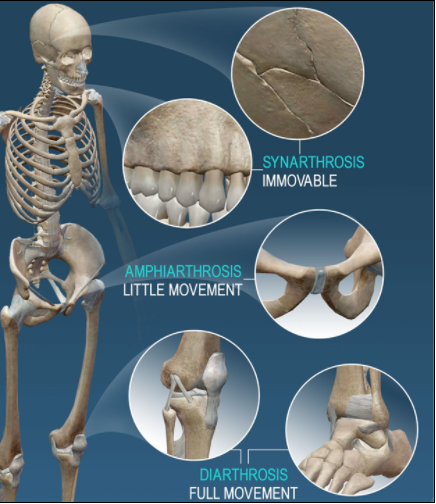
Figure 1: Joints and their movement type
So, the correct answer is ‘ joints between the teeth’.
Note: Immovable joints are the fixed joints that provide stability to the body parts, as they hold two body parts together and do not allow their movement. These immovable joints hold the body parts together strongly due to the presence of dense collagen. Ossification makes the immovable joints more stable.
Complete answer:
Immovable joints connect two bones at their ends through fibrous tissue or cartilage. Immovable joints are found between teeth and mandible, skull sutures, joints found between the first pair of ribs and the sternum, and skull sutures. Joints between the teeth are immovable joints.
Additional information
Depending upon the location immovable joints are of four types
Sutures: found between the skull bones connected by connective tissues, where the two bones are next to each other in an interlocking fashion.
Gomphosis: found between the roots of a tooth where one bone fits into the other and the edges bound together by connective tissues.
Syndesmosis: found between long bones of the body, where the two bones are close together and are connected or joined by hyaline cartilage.
Sockets: found in the mandible or maxilla, where the two bones fit like ball and socket.
Movable joints, on the other hand, are the joints formed from ligaments and can easily be moved, without any restriction for movement. Example hinge joint like a knee joint.
The joint of arm is an example of movable joints and the joint between the vertebrae are slightly movable joint.
Figure 1: Joints and their movement type
So, the correct answer is ‘ joints between the teeth’.
Note: Immovable joints are the fixed joints that provide stability to the body parts, as they hold two body parts together and do not allow their movement. These immovable joints hold the body parts together strongly due to the presence of dense collagen. Ossification makes the immovable joints more stable.
Recently Updated Pages
Master Class 11 English: Engaging Questions & Answers for Success

Master Class 11 Social Science: Engaging Questions & Answers for Success
Master Class 11 Maths: Engaging Questions & Answers for Success
Master Class 11 Biology: Engaging Questions & Answers for Success
Master Class 11 Physics: Engaging Questions & Answers for Success
Master Class 11 Chemistry: Engaging Questions & Answers for Success
Trending doubts
One Metric ton is equal to kg A 10000 B 1000 C 100 class 11 physics CBSE
Difference Between Prokaryotic Cells and Eukaryotic Cells
Find the value of the expression given below sin 30circ class 11 maths CBSE
Difference between physical and chemical change class 11 chemistry CBSE
Two of the body parts which do not appear in MRI are class 11 biology CBSE
Draw a diagram of a plant cell and label at least eight class 11 biology CBSE