



Which of the following is a polymorphic coelenterate?
A.Physalia
B.Planaria
C.Hydra
D.All of the above
Answer
 Verified
631.8k+ views
Hint: Coelenterata is a species of aquatic invertebrates that include species such as jellyfishes, sea anemones, etc. polymorphism is the phenomenon where there occurs more than one structural and functional difference within individuals of the same species. Physalia physalis is a type of jellyfish known as hydrozoans that possess modified polyp.
Complete step by step answer: Coelenterate is a term used to denote the animals within the phylum of cnidaria. These organisms have a simple tissue organization and are radially symmetrical. Some examples include jellyfish, sea anemones, and other corals.
Polymorphism is the phenomenon where individuals within the same species exhibit different structural metabolic functions. There these differences are caused by slight modifications within the DNA of the organism.
Polymorphism in Coelenterata refers to structurally distinct features. Polymorphic individuals within the phylum of coelenterate are called zooids, and there are only two basic types of zooids which are polyp and medusa.
Polyps have tube-like structures having tentacles on one end and are mainly concerned with feeding and protection. Medusa has a curved bowl-like structure with peripheral tentacles and a centrally located mouth, mainly concerned with reproduction.
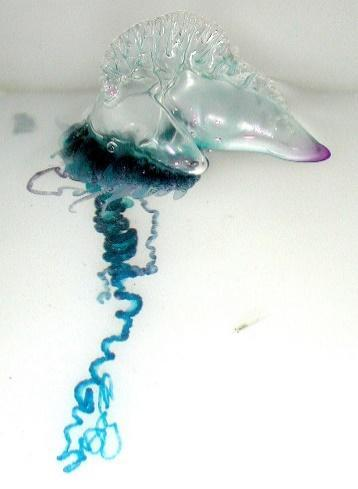
All other polymorphic variations are considered modifications of either the polyp or medusa.
Physalia physalis is a species of cnidaria which are hydrozoids, which possess modified polyps such as gastrozooids, dactylozooids, and gonophores.
Thus, the correct option is A, Physalia.
Note: Coelenterate are aquatic invertebrates that show a wide range of polymorphism.
Polymorphism is the phenomenon where individuals within the species exhibit various functional and structural differences.
Physalia physalis is a Coelenterata which shows polymorphism as there are individuals sighting of it possessing modified polyp like structures.
Hydra is also a coelenterate but fails to exhibit polymorphism, this is not the correct answer.
Planaria is Platyhelminthes and is not considered as Coelenterata and these are not an answer.
Complete step by step answer: Coelenterate is a term used to denote the animals within the phylum of cnidaria. These organisms have a simple tissue organization and are radially symmetrical. Some examples include jellyfish, sea anemones, and other corals.
Polymorphism is the phenomenon where individuals within the same species exhibit different structural metabolic functions. There these differences are caused by slight modifications within the DNA of the organism.
Polymorphism in Coelenterata refers to structurally distinct features. Polymorphic individuals within the phylum of coelenterate are called zooids, and there are only two basic types of zooids which are polyp and medusa.
Polyps have tube-like structures having tentacles on one end and are mainly concerned with feeding and protection. Medusa has a curved bowl-like structure with peripheral tentacles and a centrally located mouth, mainly concerned with reproduction.
All other polymorphic variations are considered modifications of either the polyp or medusa.
Physalia physalis is a species of cnidaria which are hydrozoids, which possess modified polyps such as gastrozooids, dactylozooids, and gonophores.
Thus, the correct option is A, Physalia.
Note: Coelenterate are aquatic invertebrates that show a wide range of polymorphism.
Polymorphism is the phenomenon where individuals within the species exhibit various functional and structural differences.
Physalia physalis is a Coelenterata which shows polymorphism as there are individuals sighting of it possessing modified polyp like structures.
Hydra is also a coelenterate but fails to exhibit polymorphism, this is not the correct answer.
Planaria is Platyhelminthes and is not considered as Coelenterata and these are not an answer.
Recently Updated Pages
Master Class 11 English: Engaging Questions & Answers for Success

Master Class 11 Biology: Engaging Questions & Answers for Success
Master Class 11 Social Science: Engaging Questions & Answers for Success
Master Class 11 Maths: Engaging Questions & Answers for Success
Master Class 11 Physics: Engaging Questions & Answers for Success
Master Class 11 Accountancy: Engaging Questions & Answers for Success
Trending doubts
Find the value of the expression given below sin 30circ class 11 maths CBSE
One Metric ton is equal to kg A 10000 B 1000 C 100 class 11 physics CBSE
10 examples of friction in our daily life
Draw a diagram of nephron and explain its structur class 11 biology CBSE
The teeth used for biting and cutting food are called class 11 biology CBSE
Proton was discovered by A Thomson B Rutherford C Chadwick class 11 chemistry CBSE