




Which of the following generations is dominant in vascular plants?
A) Gametophytic generation
B) Diploid sporophytic generation
C) Haploid sporophytic generation
D) None of the above
Answer
 Verified
513.3k+ views
Hint: Vascular plants are the plants which have true leaf, stem and root. They have vascular tissue that is xylem and phloem which helps in transport of water and minerals and food to all the parts of the plant. The vascular plants include ferns, horsetails, gymnosperms, angiosperms.
Complete answer:
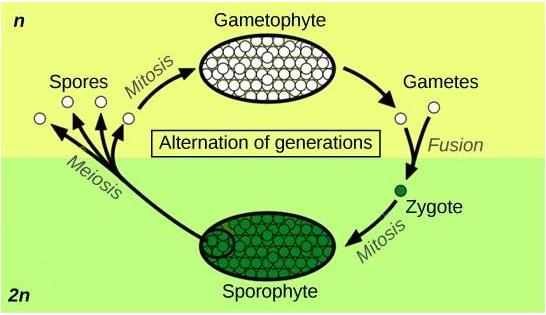
The vascular plants include ferns, clubmosses, gymnosperms and angiosperms. They reproduce sexually by the formation of spores or seeds which are genetically similar to sporophytes. The multicellular alga and vascular plants have sporophyte as their reproductive stage in the life cycle. The sporophyte is the diploid multicellular stage in the life cycle. It is produced from the zygote when the haploid sperm fertilises with the haploid egg. Thus, the sporophyte has 2 sets of chromosomes in which one set is from each parent.
Gametophytic generation: The gametophytic phase produces gametes that are sperms and egg. The gametes are haploid as the division has taken place through meiosis. The spore gives rise to a gametophyte after subsequent mitotic division. The first stage of reproduction in vascular plants is a gametophyte.
Additional information: In case of vascular plants asexual reproduction takes place by the help of leaf, stem, roots. This is also known as vegetative reproduction.
Therefore the correct answer is option ‘B’.
Note: In case of non -vascular plants the reproduction is different from that of the vascular plants. They do not produce seeds, rather have spores. These spores germinate to become gametophyte. The gametes require a wet environment for fertilisation. Examples of non-vascular plants are bryophytes.
Complete answer:
The vascular plants include ferns, clubmosses, gymnosperms and angiosperms. They reproduce sexually by the formation of spores or seeds which are genetically similar to sporophytes. The multicellular alga and vascular plants have sporophyte as their reproductive stage in the life cycle. The sporophyte is the diploid multicellular stage in the life cycle. It is produced from the zygote when the haploid sperm fertilises with the haploid egg. Thus, the sporophyte has 2 sets of chromosomes in which one set is from each parent.
Gametophytic generation: The gametophytic phase produces gametes that are sperms and egg. The gametes are haploid as the division has taken place through meiosis. The spore gives rise to a gametophyte after subsequent mitotic division. The first stage of reproduction in vascular plants is a gametophyte.
Additional information: In case of vascular plants asexual reproduction takes place by the help of leaf, stem, roots. This is also known as vegetative reproduction.
Therefore the correct answer is option ‘B’.
Note: In case of non -vascular plants the reproduction is different from that of the vascular plants. They do not produce seeds, rather have spores. These spores germinate to become gametophyte. The gametes require a wet environment for fertilisation. Examples of non-vascular plants are bryophytes.
Recently Updated Pages
Master Class 11 Computer Science: Engaging Questions & Answers for Success

Master Class 11 Business Studies: Engaging Questions & Answers for Success
Master Class 11 Economics: Engaging Questions & Answers for Success
Master Class 11 English: Engaging Questions & Answers for Success
Master Class 11 Maths: Engaging Questions & Answers for Success
Master Class 11 Biology: Engaging Questions & Answers for Success
Trending doubts
One Metric ton is equal to kg A 10000 B 1000 C 100 class 11 physics CBSE
There are 720 permutations of the digits 1 2 3 4 5 class 11 maths CBSE
Discuss the various forms of bacteria class 11 biology CBSE
Draw a diagram of a plant cell and label at least eight class 11 biology CBSE
State the laws of reflection of light
Explain zero factorial class 11 maths CBSE