




Which of the following contains both living and dead cells conducting tissues that provide mechanical strength in plants?
(a)Meristem
(b)Phloem
(c)Xylem
(d)Both (b) & (c)
Answer
 Verified
574.8k+ views
Hint: Tissue is a group of cells which are organized to perform one or more functions. The vascular tissue in the vascular plant is composed of primary xylem and phloem.
Complete answer:
Xylem and phloem contain both living and dead cells conducting tissues that provide mechanical strength in plants. These tissues help in transporting fluid and nutrients internally. Xylem helps in transporting water and water-soluble nutrients which are stored in vascular plants. It transports water from roots to stems and leaves. The xylem contains tracheids, vessels, parenchyma, and fibers. Vessel elements are connected into long tubes called vessels and are shorter. During the primary growth of procambium, the primary xylem is formed. It consists of protoxylem and metaxylem. Meta xylem consists of wider vessels and tracheids than protoxylem. During the secondary growth of vascular cambium, the secondary xylem is formed which is a member of gymnosperm. Phloem is the living tissue that helps in transporting soluble organic compounds that are made during photosynthesis. This process is known as translocation. Phloem consists of sieve tubes, parenchyma cells fibers, and sclereids. Sieve elements help in transporting sugar throughout the plant and patron key muscles are generally and differentiated which are used for food storage. Companion cells help with the metabolic functioning of sieve tubes. Fibers provide tensile strength without limiting flexibility and sclereids reduce the flexibility to some extent and add compression strength.
Additional Information:
Meristem: Meristem consists of undifferentiated cells that are capable of cell division in plants. The cells of Meristem can develop into all other tissues and organs which occur in the plants. The cells which are differentiated generally cannot produce or divide cells of a different type. The meristematic cells help in providing new cells for the initiation of new organs and the division of cells. These new organs provide the basic structure of the plant body. The cell consists of protoplasm and no or small vacuoles. The cell wall is a very thin primary cell wall and the cells are packed closely together without any intercellular spaces. Plants can go according to a certain set of rules but Meristem can go on growing as long as they can live.
So, the correct answer is 'Both (b) &(c)'.
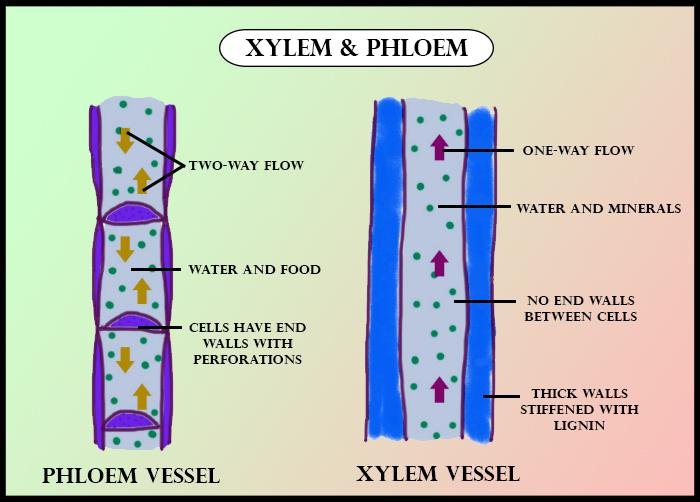
Note: In the history of terrestrial plants, xylem appeared in plants. The fossils which are present with preserved xylem are known from the Silurian. In the North East, Finland and Scandinavia use phloem as a substitute food in times of famine. Slime is used to make a hard dark bread called the bark bread which is made by drawing and milling it to the floor and mixing it with rye.
Complete answer:
Xylem and phloem contain both living and dead cells conducting tissues that provide mechanical strength in plants. These tissues help in transporting fluid and nutrients internally. Xylem helps in transporting water and water-soluble nutrients which are stored in vascular plants. It transports water from roots to stems and leaves. The xylem contains tracheids, vessels, parenchyma, and fibers. Vessel elements are connected into long tubes called vessels and are shorter. During the primary growth of procambium, the primary xylem is formed. It consists of protoxylem and metaxylem. Meta xylem consists of wider vessels and tracheids than protoxylem. During the secondary growth of vascular cambium, the secondary xylem is formed which is a member of gymnosperm. Phloem is the living tissue that helps in transporting soluble organic compounds that are made during photosynthesis. This process is known as translocation. Phloem consists of sieve tubes, parenchyma cells fibers, and sclereids. Sieve elements help in transporting sugar throughout the plant and patron key muscles are generally and differentiated which are used for food storage. Companion cells help with the metabolic functioning of sieve tubes. Fibers provide tensile strength without limiting flexibility and sclereids reduce the flexibility to some extent and add compression strength.
Additional Information:
Meristem: Meristem consists of undifferentiated cells that are capable of cell division in plants. The cells of Meristem can develop into all other tissues and organs which occur in the plants. The cells which are differentiated generally cannot produce or divide cells of a different type. The meristematic cells help in providing new cells for the initiation of new organs and the division of cells. These new organs provide the basic structure of the plant body. The cell consists of protoplasm and no or small vacuoles. The cell wall is a very thin primary cell wall and the cells are packed closely together without any intercellular spaces. Plants can go according to a certain set of rules but Meristem can go on growing as long as they can live.
So, the correct answer is 'Both (b) &(c)'.
Note: In the history of terrestrial plants, xylem appeared in plants. The fossils which are present with preserved xylem are known from the Silurian. In the North East, Finland and Scandinavia use phloem as a substitute food in times of famine. Slime is used to make a hard dark bread called the bark bread which is made by drawing and milling it to the floor and mixing it with rye.
Recently Updated Pages
Master Class 11 Computer Science: Engaging Questions & Answers for Success

Master Class 11 Business Studies: Engaging Questions & Answers for Success
Master Class 11 Economics: Engaging Questions & Answers for Success
Master Class 11 English: Engaging Questions & Answers for Success
Master Class 11 Maths: Engaging Questions & Answers for Success
Master Class 11 Biology: Engaging Questions & Answers for Success
Trending doubts
One Metric ton is equal to kg A 10000 B 1000 C 100 class 11 physics CBSE
There are 720 permutations of the digits 1 2 3 4 5 class 11 maths CBSE
Discuss the various forms of bacteria class 11 biology CBSE
Draw a diagram of a plant cell and label at least eight class 11 biology CBSE
State the laws of reflection of light
10 examples of friction in our daily life