




Which intermolecular force is most responsible in allowing Xenon gas to liquefy?
A.Dipole – dipole
B.Instantaneous dipole – induced dipole
C.Ion – dipole
D.ionic
Answer
 Verified
604.2k+ views
Hint: To solve this question, we need to first understand the nature of the molecule of Xenon gas. Then we must define and discuss the different types of interactions given in the options to find the correct answer.
Complete Step-by-Step Answer:
Before we move forward with the solution of the given question, let us first understand some important basic concepts.
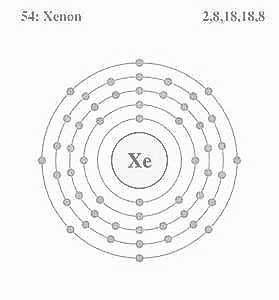
Let us understand the nature of the xenon molecule, in order to understand the forces in place. Xenon gas is non – polar in nature.
Instantaneous dipoles are formed when the concentration of electrons increases in a particular part of the molecule. This creates a temporary dipole known as instantaneous dipole. On the other hand, induced dipoles are formed when a non – polar species comes in the proximity of a dipole or a polar molecule. The electric properties of the polar molecule influence the given non – polar species to exhibit similar dipole character as long as both these molecules lie in each other’s proximity. A combination of both instantaneous dipole and induced dipole could be interdependent and is often observed in non – polar molecules.
In the xenon gas molecule also, this intermolecular force is observed.
Hence, Option B is the correct option
Note: To understand non – polarity in molecules, we must first understand polarity in molecules. When a particular molecule contains atoms that have a high difference in their electronegativity values, then there is a possibility of the shift in the electron cloud that bonds these two atoms. The more electronegative atom would attract the electron cloud towards itself, causing the formation of a dipole moment in the molecule. Hence, dipole moments are only formed in polar molecules. The molecules which are not able to form dipole moments, are known as non – polar molecules.
Complete Step-by-Step Answer:
Before we move forward with the solution of the given question, let us first understand some important basic concepts.
Let us understand the nature of the xenon molecule, in order to understand the forces in place. Xenon gas is non – polar in nature.
Instantaneous dipoles are formed when the concentration of electrons increases in a particular part of the molecule. This creates a temporary dipole known as instantaneous dipole. On the other hand, induced dipoles are formed when a non – polar species comes in the proximity of a dipole or a polar molecule. The electric properties of the polar molecule influence the given non – polar species to exhibit similar dipole character as long as both these molecules lie in each other’s proximity. A combination of both instantaneous dipole and induced dipole could be interdependent and is often observed in non – polar molecules.
In the xenon gas molecule also, this intermolecular force is observed.
Hence, Option B is the correct option
Note: To understand non – polarity in molecules, we must first understand polarity in molecules. When a particular molecule contains atoms that have a high difference in their electronegativity values, then there is a possibility of the shift in the electron cloud that bonds these two atoms. The more electronegative atom would attract the electron cloud towards itself, causing the formation of a dipole moment in the molecule. Hence, dipole moments are only formed in polar molecules. The molecules which are not able to form dipole moments, are known as non – polar molecules.
Recently Updated Pages
Master Class 11 Social Science: Engaging Questions & Answers for Success

Master Class 11 English: Engaging Questions & Answers for Success
Master Class 11 Maths: Engaging Questions & Answers for Success
Master Class 11 Chemistry: Engaging Questions & Answers for Success
Master Class 11 Biology: Engaging Questions & Answers for Success
Master Class 11 Physics: Engaging Questions & Answers for Success
Trending doubts
Differentiate between an exothermic and an endothermic class 11 chemistry CBSE
One Metric ton is equal to kg A 10000 B 1000 C 100 class 11 physics CBSE
Difference Between Prokaryotic Cells and Eukaryotic Cells
There are 720 permutations of the digits 1 2 3 4 5 class 11 maths CBSE
Two of the body parts which do not appear in MRI are class 11 biology CBSE
Which gas is abundant in air class 11 chemistry CBSE