




Which among the following is a threo isomer
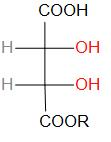
(I)
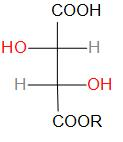
 (II)
(II)
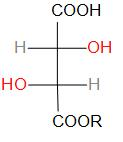
 (III)
(III)
(A) I only
(B) I, II and III
(C) III only
(D) II and III only
Answer
 Verified
575.1k+ views
Hint: Isomers are compounds with the same molecular formula but different chemical structure. This property of compounds exhibiting isomers is called isomerism. In threo isomers, the identical substances are on the opposite side.
Complete Step by step solution:
For the isomers, it is not necessary that they will share the same physical properties or chemical properties. There are two main types of isomers which are structural isomers and stereoisomers. The structural isomers are also known as constitutional isomers whereas the stereoisomers are also known as spatial isomers.
Stereoisomers are the isomers with the same molecular formula and bonds but differ in their three-dimensional arrangement.
Enantiomers: They are two stereoisomers that are non-superimposable mirror images of each other. They are also known as optical isomers. They have the same physical properties except for the direction in which they rotate the polarised light.
Diastereomers: They are a type of stereoisomers which are non-identical and they are not the mirror image of each other. Epimers are the two diastereomers that differ from each other at only one stereocenter.
Erythro Isomers: In erythro isomers, the two identical substituents are on the same side.
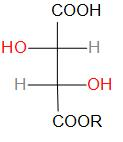
Threo isomers: In threo isomers, the two identical substituents are on the opposite sides.
Among the following structures,
(I)
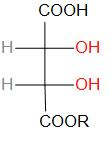 (II)
(II)
 (III)
(III)
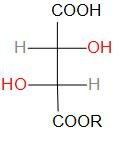
In the structure (I), the two hydroxyl groups are on the same side. Hence it is an erythro isomer. In the structures (II) and (III), the two hydroxyl groups are on the opposite sides. Hence, they both are threo isomers.
Therefore, the correct answer is option D.
Note:
Structural isomers or constitutional isomers of a molecule are other molecules which have the same number of atoms of each element but the bonds which are present are different.
Complete Step by step solution:
For the isomers, it is not necessary that they will share the same physical properties or chemical properties. There are two main types of isomers which are structural isomers and stereoisomers. The structural isomers are also known as constitutional isomers whereas the stereoisomers are also known as spatial isomers.
Stereoisomers are the isomers with the same molecular formula and bonds but differ in their three-dimensional arrangement.
Enantiomers: They are two stereoisomers that are non-superimposable mirror images of each other. They are also known as optical isomers. They have the same physical properties except for the direction in which they rotate the polarised light.
Diastereomers: They are a type of stereoisomers which are non-identical and they are not the mirror image of each other. Epimers are the two diastereomers that differ from each other at only one stereocenter.
Erythro Isomers: In erythro isomers, the two identical substituents are on the same side.
Threo isomers: In threo isomers, the two identical substituents are on the opposite sides.
Among the following structures,
(I)
In the structure (I), the two hydroxyl groups are on the same side. Hence it is an erythro isomer. In the structures (II) and (III), the two hydroxyl groups are on the opposite sides. Hence, they both are threo isomers.
Therefore, the correct answer is option D.
Note:
Structural isomers or constitutional isomers of a molecule are other molecules which have the same number of atoms of each element but the bonds which are present are different.
Recently Updated Pages
Master Class 11 Social Science: Engaging Questions & Answers for Success

Master Class 11 English: Engaging Questions & Answers for Success
Master Class 11 Maths: Engaging Questions & Answers for Success
Master Class 11 Chemistry: Engaging Questions & Answers for Success
Master Class 11 Biology: Engaging Questions & Answers for Success
Master Class 11 Physics: Engaging Questions & Answers for Success
Trending doubts
One Metric ton is equal to kg A 10000 B 1000 C 100 class 11 physics CBSE
Difference Between Prokaryotic Cells and Eukaryotic Cells
How many of the following diseases can be studied with class 11 biology CBSE
Which of the following enzymes is used for carboxylation class 11 biology CBSE
Two of the body parts which do not appear in MRI are class 11 biology CBSE
Draw a diagram of a plant cell and label at least eight class 11 biology CBSE