




Where is the tricuspid valve found?
Answer
 Verified
603k+ views
Hint: Valve is a flap-like structure that directs the one-way flow of fluid. In addition to it, the tricuspid valve is also called a right atrioventricular valve which directs the flow of deoxygenated blood from the atrium to the ventricle.
Complete answer: Heart is a hollow muscular organ that consists of four chambers. They consist of two atria and two ventricles. The upper chamber of the heart where the blood is collected is called atria and the lower chambers where the blood is poured from the atria is called ventricles. The right atrium consists of the deoxygenated blood collected by all parts of the body via superior and inferior vena cava. Oxygenated blood is conducted to the left atrium from the lungs via pulmonary veins. The flow of blood from the atria to the ventricles is guarded by a flap-like structure called a valve. Between the right atrium and right ventricle, a flap-like structure called a tricuspid valve is present. It prevents the backward flow of blood and ensures only one-way conduction of the blood. The tricuspid valve is so called because of its three leaflets namely anterior, posterior, and septal leaflets. The tricuspid valve is also called a right atrioventricular valve. The flow of blood from the left atrium to the left ventricle is guarded by a bicuspid valve. The bicuspid valve is also called the mitral valve. The conduction of oxygenated blood to all body parts is done by blood vessels called arteries and the veins carry deoxygenated blood from all parts of the body to the right atrium of the heart by superior and inferior vena cava.
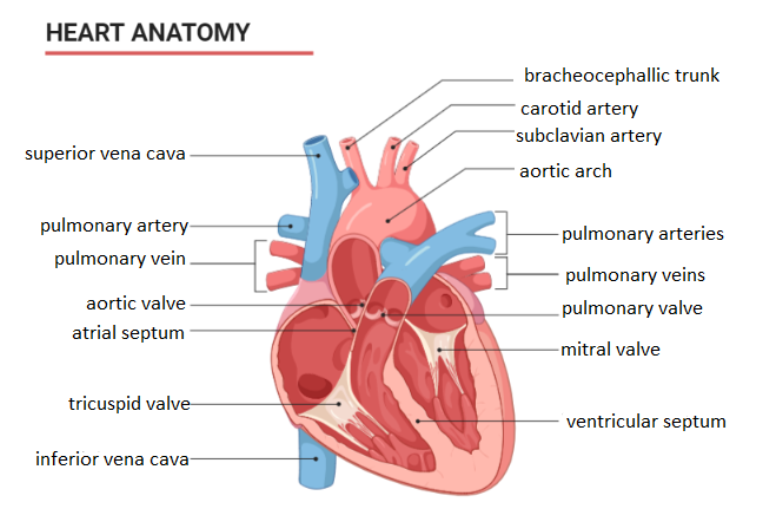
Note: Although veins carry deoxygenated blood and arteries carry oxygenated blood there is an exception in pulmonary arteries and pulmonary veins. Pulmonary arteries carry deoxygenated blood from the right ventricle to the lungs for oxygenation whereas pulmonary veins carry oxygenated blood from the lungs to the left atrium. This type of circulation between the lungs and heart is called pulmonary circulation.
Complete answer: Heart is a hollow muscular organ that consists of four chambers. They consist of two atria and two ventricles. The upper chamber of the heart where the blood is collected is called atria and the lower chambers where the blood is poured from the atria is called ventricles. The right atrium consists of the deoxygenated blood collected by all parts of the body via superior and inferior vena cava. Oxygenated blood is conducted to the left atrium from the lungs via pulmonary veins. The flow of blood from the atria to the ventricles is guarded by a flap-like structure called a valve. Between the right atrium and right ventricle, a flap-like structure called a tricuspid valve is present. It prevents the backward flow of blood and ensures only one-way conduction of the blood. The tricuspid valve is so called because of its three leaflets namely anterior, posterior, and septal leaflets. The tricuspid valve is also called a right atrioventricular valve. The flow of blood from the left atrium to the left ventricle is guarded by a bicuspid valve. The bicuspid valve is also called the mitral valve. The conduction of oxygenated blood to all body parts is done by blood vessels called arteries and the veins carry deoxygenated blood from all parts of the body to the right atrium of the heart by superior and inferior vena cava.
Note: Although veins carry deoxygenated blood and arteries carry oxygenated blood there is an exception in pulmonary arteries and pulmonary veins. Pulmonary arteries carry deoxygenated blood from the right ventricle to the lungs for oxygenation whereas pulmonary veins carry oxygenated blood from the lungs to the left atrium. This type of circulation between the lungs and heart is called pulmonary circulation.
Recently Updated Pages
Master Class 11 English: Engaging Questions & Answers for Success

Master Class 11 Social Science: Engaging Questions & Answers for Success
Master Class 11 Maths: Engaging Questions & Answers for Success
Master Class 11 Chemistry: Engaging Questions & Answers for Success
Master Class 11 Biology: Engaging Questions & Answers for Success
Master Class 11 Physics: Engaging Questions & Answers for Success
Trending doubts
Difference Between Prokaryotic Cells and Eukaryotic Cells
Draw a diagram of nephron and explain its structur class 11 biology CBSE
Net gain of ATP in glycolysis a 6 b 2 c 4 d 8 class 11 biology CBSE
Difference between physical and chemical change class 11 chemistry CBSE
Which of the following is the hottest month AMay BJune class 11 social science CBSE
How do I convert ms to kmh Give an example class 11 physics CBSE