




Where is the hepatic portal Vein?
Answer
 Verified
481.5k+ views
Hint: Veins are known for carrying deoxygenated blood to the body parts and arteries well known for oxygenated blood carriage but exception is pulmonary artery and pulmonary vein does not carry carbon dioxide. veins arising from each lung hilum, receives blood from three or four bronchial veins and piece drains into the left atrium.
Complete answer-
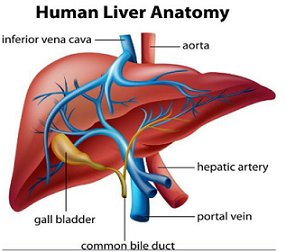
The portal vein or hepatic vein is particularly a blood vessel carrying blood from the gastrointestinal tract, gallbladder, pancreas and spleen to the liver. This blood comes from portal veins containing nutrients and toxins which are being extracted from digested contents.
$75\% $ of hepatic blood flow is draining from the portal vein, while remaining is coming from the arteries. Instead, it is a venous system which ports blood into capillaries. The blood draining from the portal vein goes directly into the hepatic sinusoids from the gastrointestinal tract.
Increment in the pressure of blood in the portal vein known to be portal hypertension. Portal system is often seen intervening the heparin infusion and also in clot treatment when the heparin is low in content.
Rarely, children are born with a less developed portal vein. The condition is called congenital agenesis. Usually, $3 - 4$ inch portal vein measure in length and are formed by merging superior splenic veins leaving behind the upper edge of pancreas.
Note:
The well-known disorder created by portal vein being a defect called cirrhosis and the effect of cirrhosis in liver can be visible by symptoms like- enlargement of body through fluid accumulation in liver and pancreas, blockage of blood flow which stresses the vein. also, can cause high blood pressure as blood is unable to flow.
Complete answer-
The portal vein or hepatic vein is particularly a blood vessel carrying blood from the gastrointestinal tract, gallbladder, pancreas and spleen to the liver. This blood comes from portal veins containing nutrients and toxins which are being extracted from digested contents.
$75\% $ of hepatic blood flow is draining from the portal vein, while remaining is coming from the arteries. Instead, it is a venous system which ports blood into capillaries. The blood draining from the portal vein goes directly into the hepatic sinusoids from the gastrointestinal tract.
Increment in the pressure of blood in the portal vein known to be portal hypertension. Portal system is often seen intervening the heparin infusion and also in clot treatment when the heparin is low in content.
Rarely, children are born with a less developed portal vein. The condition is called congenital agenesis. Usually, $3 - 4$ inch portal vein measure in length and are formed by merging superior splenic veins leaving behind the upper edge of pancreas.
Note:
The well-known disorder created by portal vein being a defect called cirrhosis and the effect of cirrhosis in liver can be visible by symptoms like- enlargement of body through fluid accumulation in liver and pancreas, blockage of blood flow which stresses the vein. also, can cause high blood pressure as blood is unable to flow.
Recently Updated Pages
Master Class 11 Computer Science: Engaging Questions & Answers for Success

Master Class 11 Business Studies: Engaging Questions & Answers for Success
Master Class 11 Economics: Engaging Questions & Answers for Success
Master Class 11 English: Engaging Questions & Answers for Success
Master Class 11 Maths: Engaging Questions & Answers for Success
Master Class 11 Biology: Engaging Questions & Answers for Success
Trending doubts
One Metric ton is equal to kg A 10000 B 1000 C 100 class 11 physics CBSE
There are 720 permutations of the digits 1 2 3 4 5 class 11 maths CBSE
Discuss the various forms of bacteria class 11 biology CBSE
Draw a diagram of a plant cell and label at least eight class 11 biology CBSE
State the laws of reflection of light
Explain zero factorial class 11 maths CBSE