




What is the function of incisor teeth?
Answer
 Verified
554.7k+ views
Hint: In humans, primary teeth start to erupt through gums when a baby turns more than 6 months old. The teeth which are in the front of the mouth are incisors. It has a flat edge designed for shearing or cutting of food.
Complete answer:
Incisors are the bigger teeth in herbivores (the plant eater) and in omnivores (plant and meat eaters). This is because they help by biting off pieces of food before it is chewed with the help of back teeth.
However, in carnivores which are pure meat eaters, they have relatively smaller incisors because they have more pointed canine which helps them to tear meat and shear the bones.
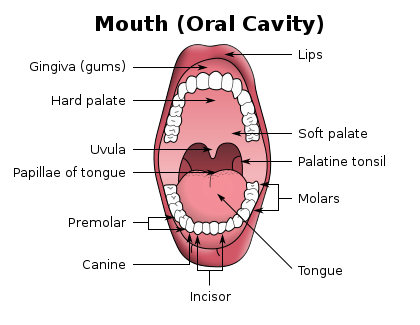
Anatomy of incisor: these are two in number, and are maxillary teeth in the centre in the front of the upper jaw and are the most prominent teeth in the human mouth. They pair with mandibular central incisors in the lower jaw, and together help in motion for biting of food.
Talking about the mandibular incisor’s teeth, they are central and smallest human teeth. Their shape is relatively narrow, and is little longer as compared to toothier winder maxillary counterparts.
Both the pairs have central location, and are flat. They are blade-like which enables them to slice through food as it enters the mouth.
Note:
Children lose their first primary or temporary teeth between the age group of 6 to 12 year old. After that the final and permanent teeth appear. Talking about types of teeth, there are four sets. Molars, premolars, incisors and canines. each of them has a different purpose to support in breaking down the food piece inside the mouth.
Complete answer:
Incisors are the bigger teeth in herbivores (the plant eater) and in omnivores (plant and meat eaters). This is because they help by biting off pieces of food before it is chewed with the help of back teeth.
However, in carnivores which are pure meat eaters, they have relatively smaller incisors because they have more pointed canine which helps them to tear meat and shear the bones.
Anatomy of incisor: these are two in number, and are maxillary teeth in the centre in the front of the upper jaw and are the most prominent teeth in the human mouth. They pair with mandibular central incisors in the lower jaw, and together help in motion for biting of food.
Talking about the mandibular incisor’s teeth, they are central and smallest human teeth. Their shape is relatively narrow, and is little longer as compared to toothier winder maxillary counterparts.
Both the pairs have central location, and are flat. They are blade-like which enables them to slice through food as it enters the mouth.
Note:
Children lose their first primary or temporary teeth between the age group of 6 to 12 year old. After that the final and permanent teeth appear. Talking about types of teeth, there are four sets. Molars, premolars, incisors and canines. each of them has a different purpose to support in breaking down the food piece inside the mouth.
Recently Updated Pages
The given figure shows two endocrine glands marked class 11 biology NEET_UG

Match columnI with columnII and select the correct class 11 biology NEET
Match column I with column II and select the correct class 11 biology NEET_UG
Which floral family has left 9 right + 1 arrangement class 11 biology NEET_UG
Which is not a variety of sheep A Lohi B Beetal C Nellore class 11 biology NEET_UG
Match column I with column II and select the correct class 11 biology NEET_UG
Trending doubts
One Metric ton is equal to kg A 10000 B 1000 C 100 class 11 physics CBSE
Draw a diagram of a plant cell and label at least eight class 11 biology CBSE
Difference Between Prokaryotic Cells and Eukaryotic Cells
Draw a well labelled diagram of reflex arc and explain class 11 biology CBSE
Two of the body parts which do not appear in MRI are class 11 biology CBSE
1 ton equals to A 100 kg B 1000 kg C 10 kg D 10000 class 11 physics CBSE